




Bevelled Glass Round Mirror
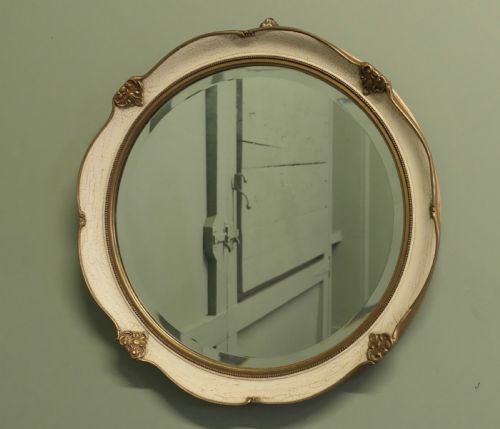
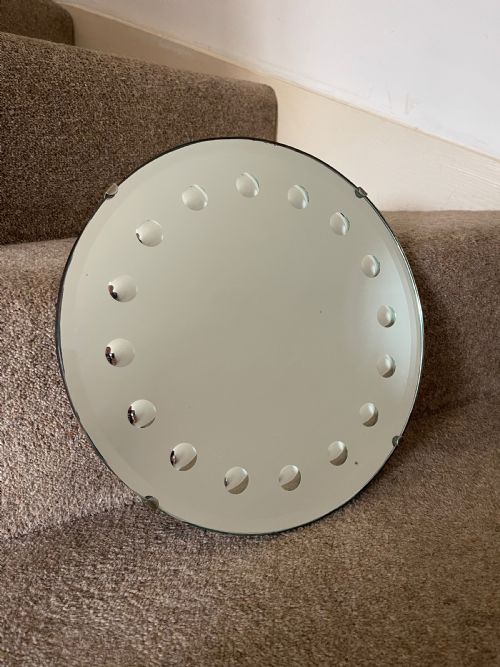
These bevelled glass round mirror pieces bring period focal points and reflected light into a room, spanning Edwardian and Art Deco designs.
Bevelled Glass Round Mirror
A bevelled glass round mirror serves as a circular wall hanging or decorative plate, bringing light and depth into interiors. These items span Edwardian, Arts and Crafts and Art Deco periods, originating from around 1900 to 1930.
You are most likely to encounter Art Deco circular wall mirrors on this page, alongside French variants featuring etched motifs or gilt and cream finishes. Forms also include copper frames, mirror plateaus and wall clocks with integrated circular glass.
The aesthetic ranges from plain geometric frames to ornamental gilt surfaces and Chinoiserie styles. Each piece relies on its circular geometry to soften angular spaces in a room.
How they were made
Makers shaped glass and mounted it into frames constructed from wood, metal or chrome. Surfaces were frequently finished with gesso, gold leaf or etched directly onto the glass plate.
Traditional techniques combined hand-cut mirror plates with angled edge bevelling, set within sturdy timber or cast metal structures. Artisans applied gilt, cream paint or polished copper to achieve the desired period finish.
Listings feature pieces spanning from 1900 to 1930, incorporating Edwardian, Arts and Crafts and French Art Deco styles.
What varies in quality
Quality rests in the crispness of the edge bevel and the integrity of the original frame materials, whether gilt wood, polished copper or applied gesso. Finer examples display precise etching on the glass surface rather than plain, unadorned plates.
The sophistication of the period style separates standard utility pieces from more ambitious decorative works, such as French Art Deco designs or Chinoiserie interpretations. Preservation of the original silvering and surface finish dictates the overall character of the piece.
The Bevelled Glass Round Mirror Glossary
- Bevel
- An angled edge cut along the perimeter of the glass plate. This technique catches the light and adds a decorative border to the reflection.
- Gesso
- A plaster-like mixture applied to wooden frames before gilding or painting. It provides a smooth base for gold leaf and ornamental moulding.
- Mirror Plateau
- A mirrored tray traditionally used as a table centrepiece to display ornaments. These circular surfaces utilise the same bevelled glass techniques found in wall mirrors.
- Silvered Glass
- The reflective coating applied to the rear of the glass plate. Period pieces often exhibit natural ageing in this metallic backing.
Bevelled Glass Round Mirror: Frequently Asked Questions
What is a sorcerer mirror?
A sorcerer mirror refers to a convex circular glass form that creates a wide-angle, distorted reflection of the room. These pieces were popular decorative items during the early twentieth century.
They function primarily as visual points of interest rather than functional dressing mirrors.
How do I clean antique mirror glass?
Use a soft, dry microfiber cloth to gently remove dust from the glass and frame surface. Avoid harsh chemical cleaners that might seep behind the glass and damage the original silvering.
Take particular care around etched areas and vintage frames finished in gold leaf or gesso.
How do I date an Art Deco mirror?
Dating relies on stylistic markers such as geometric framing, etched motifs and materials like chrome or coloured glass. Pieces from this era typically date between 1920 and 1930.
Examine the construction of the reverse frame and any mounting hardware for period characteristics.