



Circular Birch Table
A circular birch table brings pale, figured wood and clean Scandinavian lines straight into a room.
Circular Birch Table
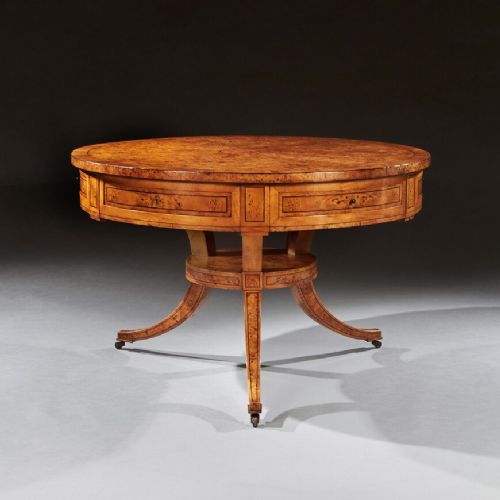
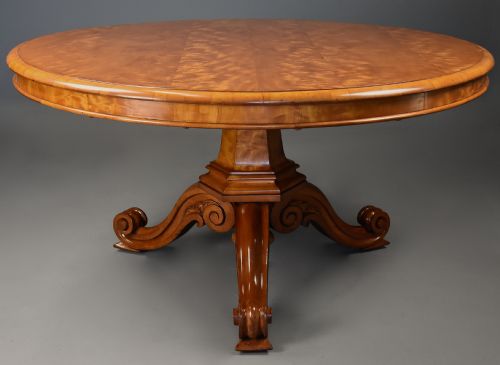
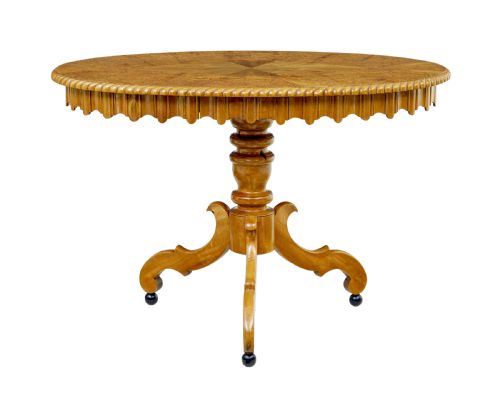
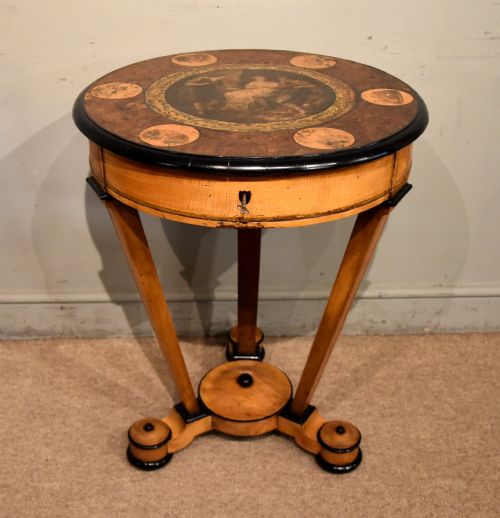
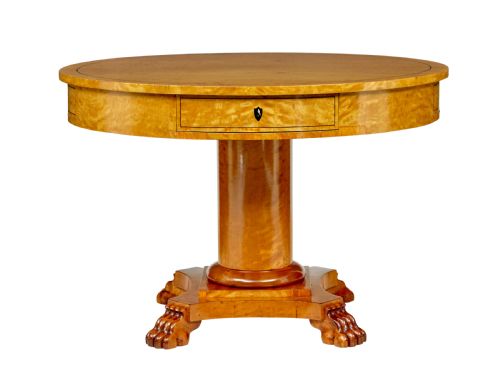
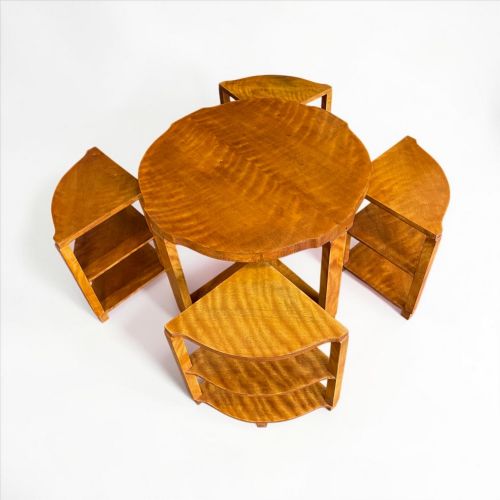
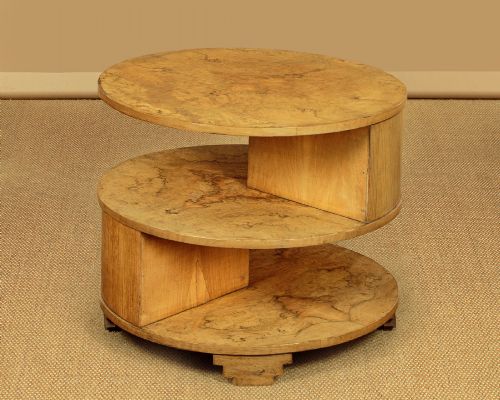
A circular birch table groups together diverse forms ranging from nineteenth century Swedish centre tables to Art Deco coffee tables. These pieces span periods from the Victorian era up to nineteen thirty, taking shapes like occasional tables, breakfast tables, and drum tables.
Scandinavian workshops dominate the selection, bringing Biedermeier, Swedish Grace, and Karl Johan styles alongside British Victorian examples. Buyers will frequently encounter centre tables and smaller occasional tables resting on pedestals or tripod bases.
Makers utilised various forms of the wood, resulting in surfaces of plain birch, satin birch, burr birch, and birch veneer. Some pieces incorporate contrasting materials such as ebonised wood, brass, pine, or Italian specimen marble.
Materials and construction
Craftsmen built these tables using solid birch, satin birch, and burr birch, often applying fine veneers over secondary woods like pine. Selected logs yielded highly figured grain patterns that gave surfaces a distinct optical depth.
Workshops employed specialised turning and joining techniques to create sturdy pedestals, tilt-top mechanisms, and tripod bases. Secondary details frequently involved ebonised wood accents, brass fittings, and carved elements.
Circular Birch Table Retail Price Guide 2026
Typical asking prices for circular birch table among the pieces listed under this phrase on Sellingantiques today, from the lower quarter to the upper quarter. They describe what is for sale here now, not the wider market.
Judging quality in birch furniture
Quality rests primarily on the selection and matching of the birch veneer or solid timber. Finely figured burr birch or satin birch displays intricate natural patterns that elevate the visual presence of a table.
Construction integrity defines the superior examples, particularly in moving parts like tilt-top mechanisms, drum table drawers, or folding butler joints. Proportion and the precision of historical styles such as Biedermeier or Art Deco also determine distinction.
The Circular Birch Table Glossary
- Biedermeier
- A Central European style spanning the nineteenth century known for clean lines and polished veneers. It prioritised utility and elegance over heavy ornamentation.
- Satin Birch
- A timber showing a natural shimmering grain resembling satin. It was favoured for high-status nineteenth-century occasional and breakfast tables.
- Burr Birch
- Wood harvested from tree growths that produce swirling, knotty grain patterns. This material creates highly decorative tabletop surfaces.
- Tilt-Top
- A hinged tabletop mechanism allowing the surface to fold vertical when not in use. This design saved space in nineteenth-century interiors.
- Centre Table
- A freestanding table designed to be viewed from all sides in the middle of a room. These often anchor seating arrangements in nineteenth-century parlours.
Circular Birch Table: Frequently Asked Questions
How do I clean a birch table?
Dust regularly with a soft, dry cloth to protect the polished surface. Avoid harsh chemical cleaners that can damage vintage wood finishes.
Apply a quality furniture wax occasionally to nourish the birch grain and maintain its natural lustre.
Can I use an occasional table daily?
Occasional tables handle everyday items like lamps, books, and cups comfortably. Ensure you use coasters to protect the antique wood from moisture rings.
Heavier items or excessive weight should remain on sturdy centre tables rather than delicate tripod stands.
How do I date an Art Deco birch table?
Art Deco pieces generally date around nineteen thirty and feature streamlined geometric forms. They often combine birch with contrasting woods like elm.
Victorian and Biedermeier counterparts display more traditional turnings, pedestal bases, and historical revival motifs.
Are these tables suitable for small rooms?
Circular occasional tables and lamp tables fit easily into compact corners or beside seating. Their rounded edges improve circulation space in tighter interiors.
Nesting tables offer flexible surface area that expands when needed and tucks away compactly afterward.