






Birch Lamp Tables
Birch lamp tables bring a pale, figured timber and compact surface into a room, serving as versatile occasional stands for a reading light.
Birch Lamp Tables
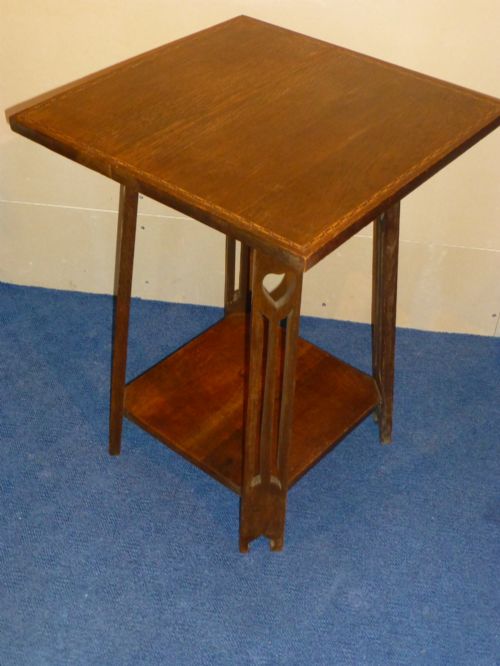
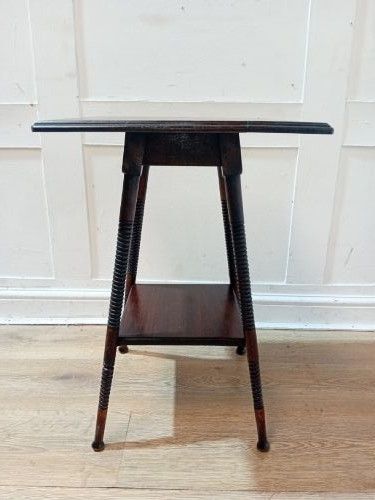
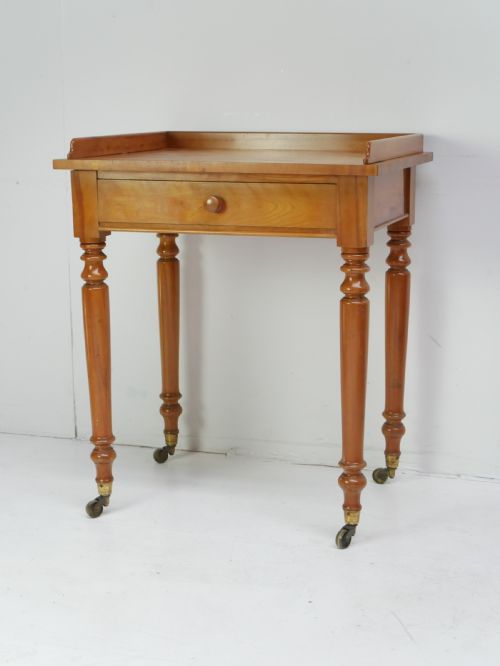
Birch lamp tables appear across several periods including Regency, Victorian, and the early twentieth century, alongside specific movements like Arts and Crafts and Art Deco. These pieces function primarily as side tables, occasional tables, or bedside tables, offering a functional surface in a relatively small footprint.
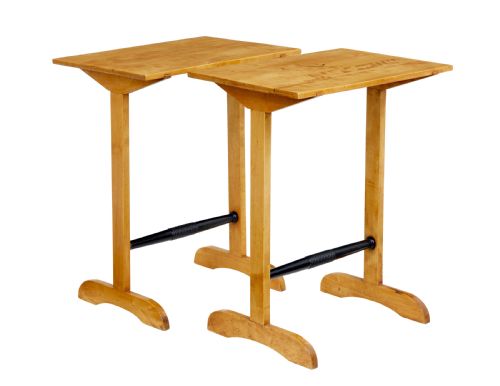
The varieties on this page encompass regional designs, notably Swedish examples in pale birch and Karelian birch, as well as British iterations associated with makers like Liberty and William Birch. Forms range from circular pedestal occasional tables to simple side and lamp tables incorporating brass or wood inlay.
Makers and workshops utilised diverse regional timbers, yielding everything from figured satinbirch to rich birch root and dark oak combinations. Buyers encounter both single lamp tables and matched pairs spanning the nineteenth and early twentieth centuries.
How they were made
Cabinetmakers selected birch and satinbirch for their distinctive grain and pale tone, frequently incorporating contrasting elements like wood inlay, chequered inlay, or specimen marble tops. These materials were shaped into pedestal bases or side tables using traditional joinery methods suited to occasional furniture.
Makers also employed specialised timbers such as Karelian birch and birch root to accentuate the natural figure of the wood, sometimes pairing the light birch with dark oak. Simple stained hardwood or brass details occasionally appear to finish the structure.
Birch Lamp Tables Retail Price Guide 2026
Typical asking prices for birch lamp tables among the pieces listed under this phrase on Sellingantiques today, from the lower quarter to the upper quarter. They describe what is for sale here now, not the wider market.
Listings feature 19th Century, Victorian, Regency, and 1920 periods, utilising birch, satinbirch, brass, oak, and specimen marble.
What varies in quality
The distinction between ordinary and superior pieces rests on the choice of timber and the complexity of the grain, with highly figured satinbirch or Karelian birch commanding greater visual interest. Masterful selection of birch root and the integration of fine wood inlay or specimen marble elevate a piece beyond standard utility.
Proportion and stylistic cohesion also define the upper tier, seen in balanced Swedish designs and attribution to notable workshops like William Birch or Liberty & Co. Clean execution of structural details and harmonious pairing in sets of side tables indicate superior craftsmanship.
William Birch·Liberty & Co
The Birch Lamp Tables Glossary
- Satinbirch
- A specific variety or finish of birch timber exhibiting a smooth, lustrous sheen that catches the light. It was favoured by nineteenth-century cabinetmakers for decorative occasional tables.
- Karelian birch
- A decorative timber sourced from the Karelian region, known for its dense, swirling burl patterns. It appears frequently on early twentieth-century Art Deco pieces.
- Chequered inlay
- A decorative technique involving small alternating squares of contrasting dark and light wood set into the surface. This detail adorns Arts and Crafts tables.
- Birch root
- A highly figured wood derived from the root growth of the birch tree, displaying intense natural patterning. It is utilised to create striking table tops with organic movement.
- Pedestal table
- A standalone table supported by a central pillar or column rising from a stable base. This form allows maximum legroom around circular occasional surfaces.
Birch Lamp Tables: Frequently Asked Questions
What periods do birch lamp tables come from?
These tables span the Regency and Victorian eras, alongside the Arts and Crafts movement and early twentieth-century Art Deco. Swedish designs from the nineteenth and early twentieth centuries feature prominently.
Cabinetmakers utilised various forms of birch across these decades, ranging from plain side tables to highly figured occasional pieces.
How do I identify satinbirch?
Satinbirch displays a naturally reflective, silk-like sheen across its pale surface, setting it apart from standard plain timber. It was widely used during the nineteenth century for decorative occasional and bedside furniture.
The wood catches light differently depending on the angle, highlighting the fine grain beneath the polish.
Are these tables sturdy enough for daily use?
Constructed as side, lamp, and occasional tables, these pieces were built to support small items like lamps and books. Their solid timber construction provides adequate stability for everyday placement beside a chair or bed.
Care should be taken with antique surfaces, using coasters to protect the polished wood from moisture.
What is Karelian birch?
Karelian birch is a distinctive northern European timber characterised by swirling, eye-like grain patterns and rich tonal variation. It appears on early twentieth-century modernist and Art Deco pieces.
The distinct patterning makes each table top visually unique, requiring minimal additional ornamentation.