


Swedish Birch Side Table
A swedish birch side table brings pale, figured timber and clean Scandinavian lines into a room, offering both practical surface space and distinct historic character.
Swedish Birch Side Table
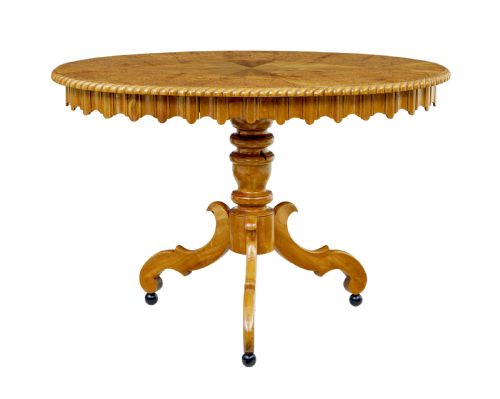
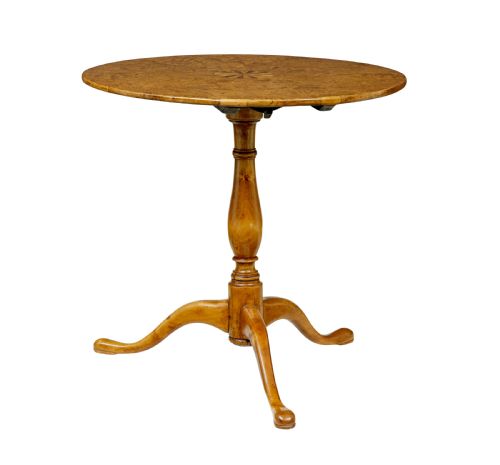
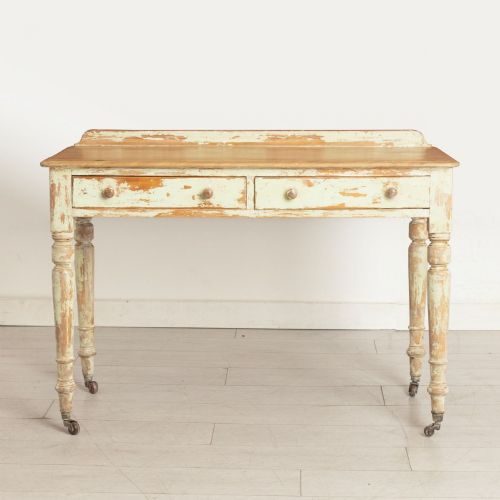
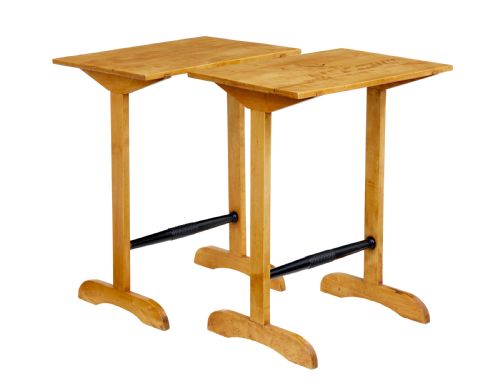
The selection on this page relies heavily on nineteenth-century craftsmanship, alongside early twentieth-century and Art Deco variations. Common functional types include occasional tables, tripod tables, and tea tables alongside dedicated side tables.
Nineteenth-century items often reflect periods such as Biedermeier, Karl Johan, Empire Revival, and Rococo Revival, showcasing diverse regional interpretations of classic furniture forms. Later twentieth-century pieces shift toward simpler surfaces and satin or Karelian finishes.
How they were made
Makers utilised native Scandinavian timbers, primarily relying on plain birch, burr birch, and figured varieties like Karelian birch and satin birch. These choice veneers and solid woods are frequently combined with secondary structural timbers such as pine.
Surface enhancement often involved careful inlay work, contrasting ebonised wood details, or painted finishes. Metal components appear selectively, with brass fittings and hardware utilised on specific writing and tea tables.
Current listings feature nineteenth-century and early twentieth-century pieces, spanning periods from the 1800s through the 1920 Art Deco era.
What varies in quality
The visual impact of a swedish birch side table depends largely on the choice of timber and the complexity of its figuring. Highly figured burr birch, birch root, and Karelian birch display rich natural patterns that elevate the overall presence of the piece.
Construction techniques and stylistic detailing also distinguish individual examples. Inlaid elements, sophisticated turnings on tripod bases, and faithful period revivals separate standard utility pieces from more ambitious workshop productions.
The Swedish Birch Side Table Glossary
- Burr birch
- A growth deformity in the birch tree that produces highly figured, swirling wood grains. This timber is sliced into veneer to create decorative patterned surfaces on tabletops.
- Karelian birch
- A distinct birch variety native to northern Europe known for its unique knotted and dappled figuring. It appears frequently in twentieth-century Scandinavian furniture.
- Tripod table
- A small freestanding table supported by a central pillar resting on three spreading feet. This form is common among nineteenth-century occasional and tea tables.
- Biedermeier
- A dominant Central European and Scandinavian design style spanning the nineteenth century, favouring clean lines, utility, and minimal ornamentation that highlights natural wood grains.
- Drum table
- A circular table featuring a deep frieze band containing drawers around the perimeter. These pieces sit on central pedestal supports.
Swedish Birch Side Table: Frequently Asked Questions
What is a swedish birch side table used for?
These tables function as versatile surface spaces in living areas, hallways, or bedrooms for lamps, books, and decorative objects. Their compact footprints allow them to fit easily beside seating or against walls as console surfaces.
Historically, specific variants served dedicated domestic rituals such as tea service or evening writing. Today, they integrate smoothly into contemporary interiors requiring understated wooden furniture.
How do I date a swedish birch side table?
Dating relies on observing construction methods, timber treatments, and stylistic markers tied to specific historic periods. Nineteenth-century examples often show Biedermeier, Empire Revival, or Rococo Revival influences.
Early twentieth-century and Art Deco pieces display smoother profiles, minimalist geometry, and distinct satin or Karelian birch veneers. Comparing the base form against recorded nineteenth and twentieth-century designs clarifies the timeline.
How do I care for historic birch furniture?
Historic birch furniture requires stable indoor environments away from direct heat sources and strong sunlight to prevent timber warping and veneer cracking. Regular dusting with a soft, dry cloth preserves the polished surface.
Avoid using harsh chemical polishes or excessive moisture on antique wood surfaces. Periodically applying appropriate natural waxes helps maintain the lustre of the nineteenth and twentieth-century finishes.