



Circa 1900 Afghan Rug
A circa 1900 afghan rug brings rich tribal character and enduring natural dyes into a room, offering tactile history through traditional woven motifs.
Circa 1900 Afghan Rug
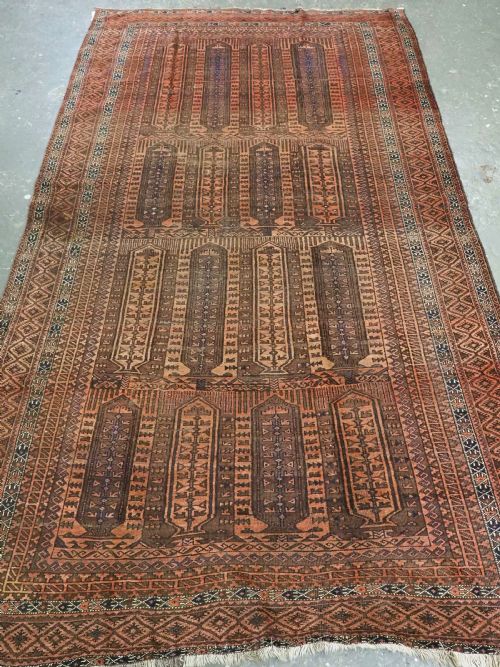
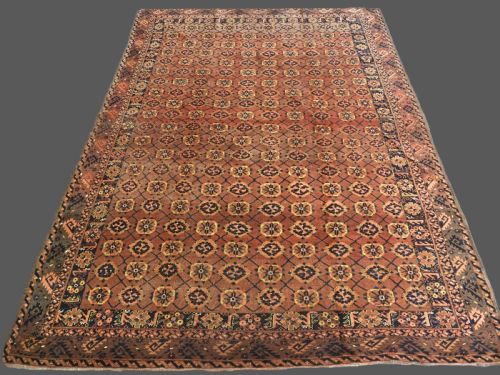
When searching for a circa 1900 afghan rug, collectors encounter authentic tribal and village weaves originating from nineteenth and early twentieth-century nomadic and settled groups across the region. These pieces encompass large room-sized carpets, long runners, specialised prayer rugs, and domestic trappings created by distinct tribal confederations.
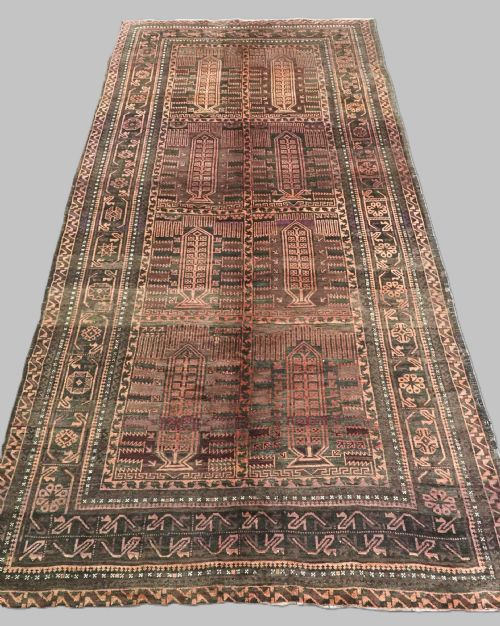
The selection ranges from expansive Ersari Turkmen carpets featuring bold guls to intricate Baluch and Taimani prayer rugs displaying mihrabs and geometric lattice patterns. Buyers also find smaller utilitarian formats, including salt bags, animal covers, and flatwoven kilims.
Produced primarily around 1900 alongside examples from the decades immediately following, these textiles represent the pinnacle of traditional village and tribal weaving before synthetic dyes became widespread.
How They Were Made
Weavers utilised hand-spun wool, often combined with structural elements of cotton, goat hair, or camel hair to build durable foundations and plush pile surfaces. This local wool provides a soft handle and deep lanolin content that contributes to the resilience of the textile.
The characteristic warmth and depth of colour come from natural dyes derived from plants and minerals, creating rich reds, browns, and dark grounds that soften gracefully over generations.
Circa 1900 Afghan Rug Retail Price Guide 2026
Typical asking prices for circa 1900 afghan rug among the pieces listed under this phrase on Sellingantiques today, from the lower quarter to the upper quarter. They describe what is for sale here now, not the wider market.
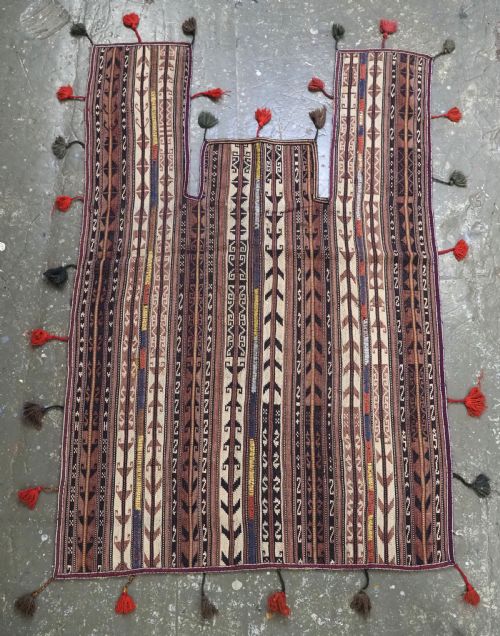
Several wedding camels managed to keep their decorative horse headdresses intact for over a century.
What Varies In Quality
The superiority of a piece rests upon the fineness and density of the knotting, which dictates the crispness of tribal motifs such as the turreted gul or pencil box design. Superior handles depend on the purity and preparation of the hand-spun wool.
Colour saturation and the harmonious variation of natural dyes elevate certain examples above standard village production, creating luminous depth across the field and borders.
The Circa 1900 Afghan Rug Glossary
- Gul
- A primary medallion motif characteristic of Turkmen and related tribal weaving. These repeated octagonal or gabled medallions often identify the specific sub-tribe of the maker.
- Mihrab
- A arched niche design used predominantly in prayer rugs, directing the user toward Mecca. Variations include single, double, or multiple stepped arches.
- Kilim
- A flatwoven textile produced without a pile by tightly interweaving warp and weft threads. These pieces often feature sharp geometric bands and crisp horizontal patterning.
- Sofreh
- A woven eating cloth or spread utilised by nomadic households for meals and food preparation. They display functional layouts framed by characteristic tribal borders.
- Chuval
- A large storage bag face woven for domestic use within nomadic tents. Collectors prize these surviving panels for their detailed secondary guls and rich wool quality.
Circa 1900 Afghan Rug: Frequently Asked Questions
What is an Ersari carpet?
An Ersari carpet is a large woven floor covering produced by the Ersari Turkmen tribe residing in northern regions. These pieces are celebrated for generous proportions and deep warm red colour palettes.
They frequently display large primary guls and are constructed to serve as substantial country house or village carpets.
How do I identify a prayer rug?
Prayer rugs are distinguished by the inclusion of a mihrab, an architectural arch motif at one or both ends of the central field. These formats were designed for personal devotional use.
Common variations across this selection include single arches, double niches, and multiple stepped mihrabs.
Where were Baluch rugs made?
Baluch rugs were produced by nomadic and village groups inhabiting the western borderlands and desert regions of the country. Weavers utilised dark camel ground wool and rich natural dyes.
These pieces often feature distinctive lattice layouts, tree of life motifs, and geometric prayer designs.
What are tribal trappings?
Tribal trappings are functional items created for animal transport, tent decoration, and household storage. Examples include horse blankets, camel headdresses, and grain bags.
Collectors value these smaller formats for their concentrated design elements and uncompromised nomadic utility.