
Church Pew Seat
A church pew seat brings the linear gravity and historic timber of ecclesiastical interiors straight into domestic hallways and kitchens.
Church Pew Seat
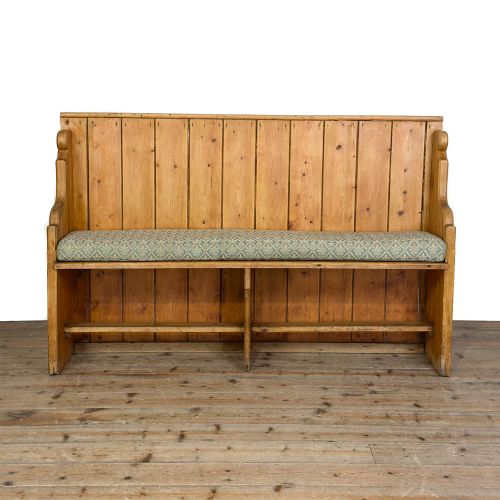
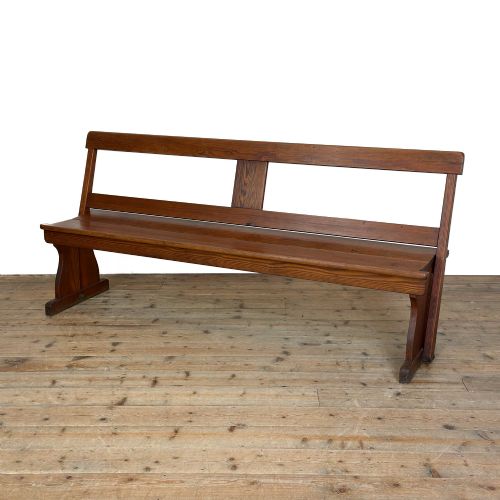
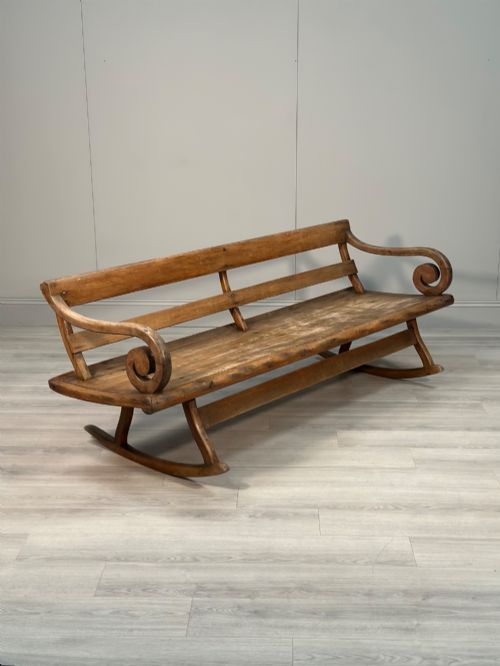
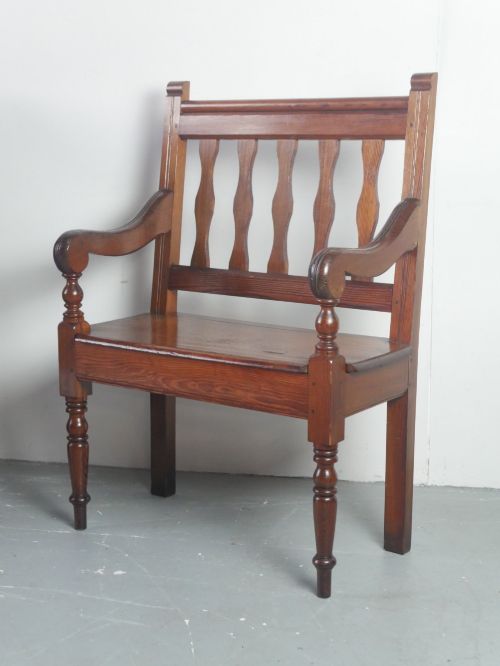
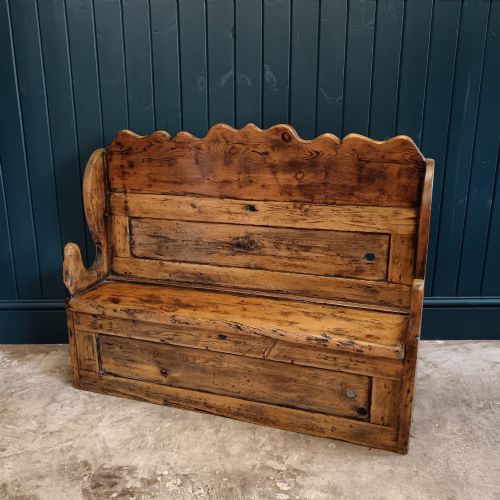
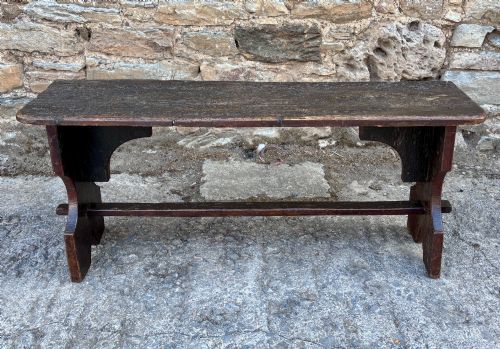
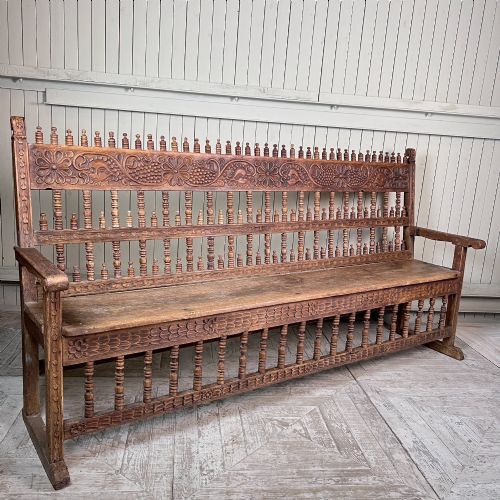
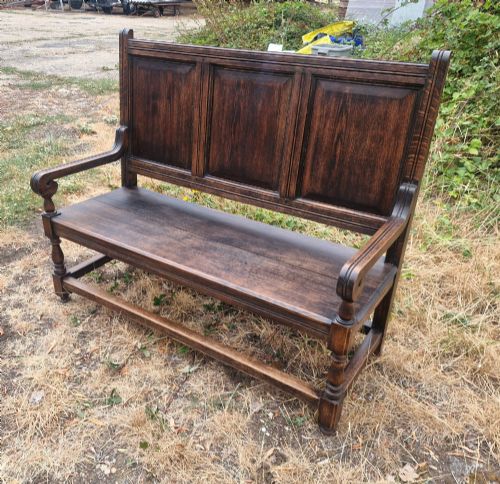
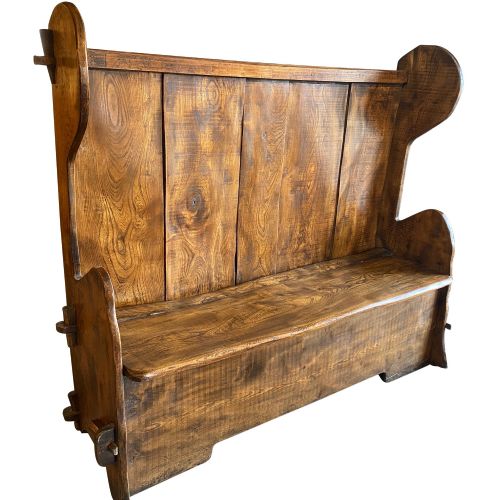
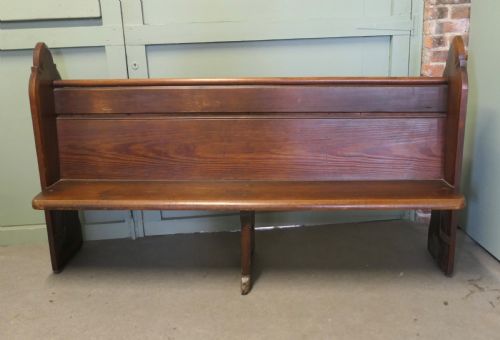
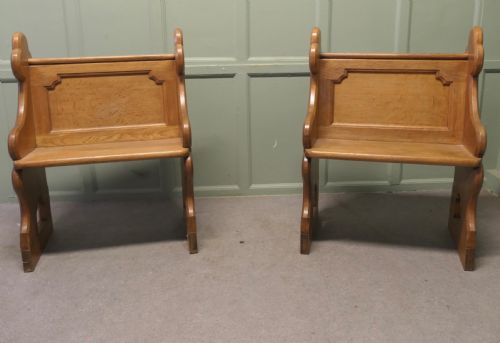
A church pew seat is a substantial bench originally built for congregational seating in chapels, churches, and cathedrals. The pieces found here span the nineteenth century and the Edwardian era, taking forms such as high-back settles, chapel benches, and compact hall seats. They range from utilitarian pine seating to architectural oak designs intended for both public worship and domestic hallways.
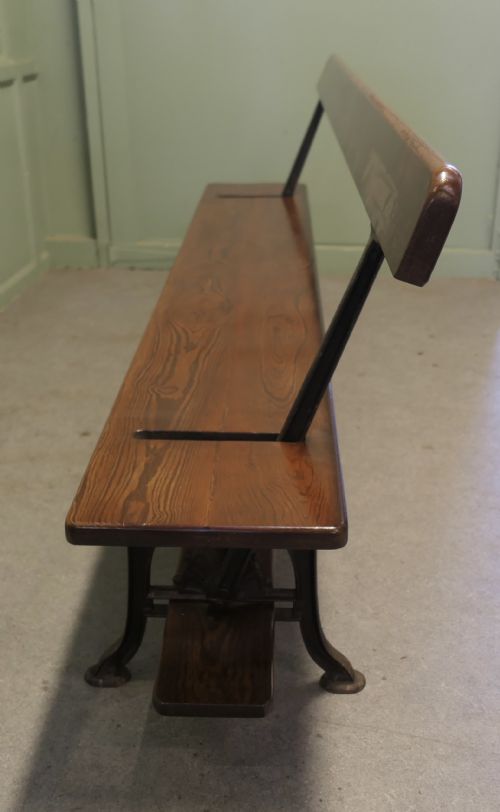
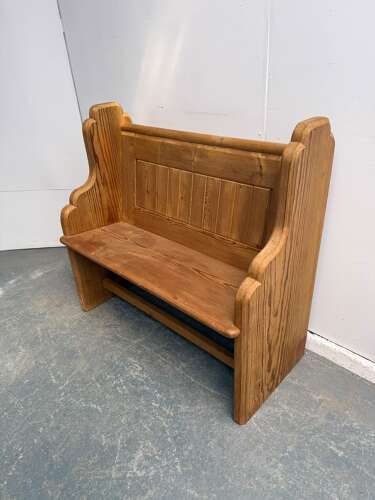
Buyers will most frequently meet pine and pitch pine examples dating from the Victorian period, often retaining their original waxed finishes or painted surfaces. These range from single-seater organ benches and small chapel seats to longer multi-seater forms built to accommodate several people along a wall. Alongside standard pews, the selection includes related variants like flip-over benches, box settles with storage, and curved Gothic forms.
How they were made
Makers constructed these seats using sturdy native timbers, relying predominantly on solid pine, pitch pine, and heavy oak, with occasional use of elm, chestnut, and hardwood. Joinery was built to endure heavy public use, employing robust panelled backs, stout trestle supports, and pegged joints to maintain stability over decades of sitting.
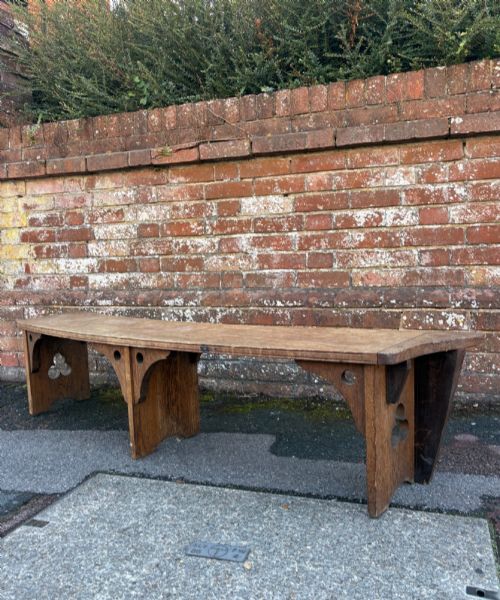
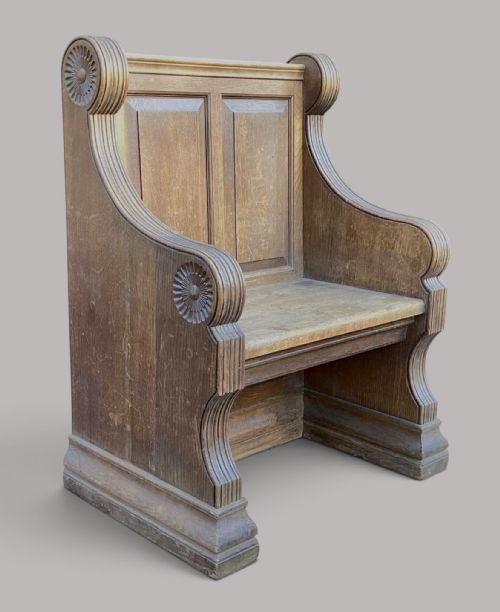
Surface treatments developed naturally through decades of handling, leaving behind waxed patinas, honey-brown tones, and traces of original paint or blue pigments. More decorative iterations incorporated carved architectural elements, such as trefoil supports and Gothic Revival tracery, reflecting the stylistic movements of the nineteenth century.
Some pews still bear the quiet scars of generations of congregation members carving initials into the timber.
What varies in quality
Quality in a church pew seat rests upon the integrity of the timber and the architectural ambition of the design. Simpler utilitarian pine benches rely on honest, unpretentious construction, while finer pieces display deliberate Gothic Revival detailing, superior oak boards, and specialised forms like curved backs or integrated storage boxes.
The degree of original character heavily dictates distinction. Pieces retaining provenance, untouched honey-brown patina, or traces of original church markings hold greater visual weight than heavily altered or stripped equivalents.
St Pauls Cathedral London
The Church Pew Seat Glossary
- Settle
- A wooden bench with a high back, solid arms, and often an enclosed base designed to keep out drafts. It provides substantial seating and sometimes incorporates under-seat storage.
- Pitch pine
- A dense, resinous softwood widely utilised in Victorian ecclesiastical joinery for its durability and strong grain pattern. It ages to a warm tone with prominent growth rings.
- Box settle
- A bench featuring a hinged seat opening onto a deep storage compartment beneath. This form combines the function of a seat with a chest for linens or household goods.
- Flip-over bench
- A dual-facing seating form with a reversible backrest that allows sitters to change their orientation. This ingenious mechanism was frequently utilised in transport and flexible interior spaces.
Church Pew Seat: Frequently Asked Questions
What is a church pew seat?
A church pew seat is a long wooden bench originally designed for congregational seating in religious buildings. They are typically built from heavy timber to withstand decades of heavy daily use.
Today, these benches are repurposed as hallway seating, dining benches, or architectural statement pieces in homes. Their linear proportions make them particularly well suited for placement against long walls or behind dining tables.
How do I style a church pew in a hallway?
A church pew seat fits naturally into narrow spaces due to its shallow depth and high backrest. Placing one in a hallway provides a convenient spot for removing shoes while utilising vertical wall space.
Pair the bench with simple wall hooks above for coats or leave the back exposed to highlight the grain of the timber. Adding a simple seat cushion can soften the look while introducing texture to the space.
How can I tell the age of a church pew?
Dating relies on examining the timber selection, construction methods, and stylistic cues present in the woodwork. Nineteenth-century examples often feature solid pine, pitch pine, or heavy oak with hand-cut joinery marks.
Stylistic details also provide clues, such as Gothic Revival tracery pointing towards the mid-to-late Victorian period. Patina and wear patterns accumulated over generations further indicate age.
Are church pews comfortable to sit on?
Traditional church pew seats feature firm wooden boards shaped with slight angles to support posture during services. While built for durability rather than lounging, their upright support suits short-term seating.
To increase comfort for daily domestic use, many owners place loose woollen runners, sheepskins, or custom upholstered squab cushions along the seat base.