
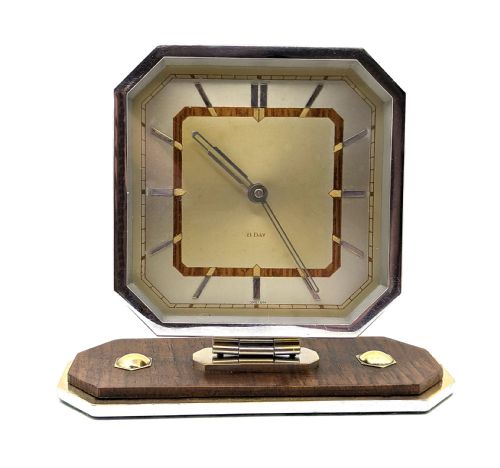


Chrome Table Clock
A chrome table clock brings the sharp geometry and bright polished metal of the early twentieth century directly to a desk or mantel.
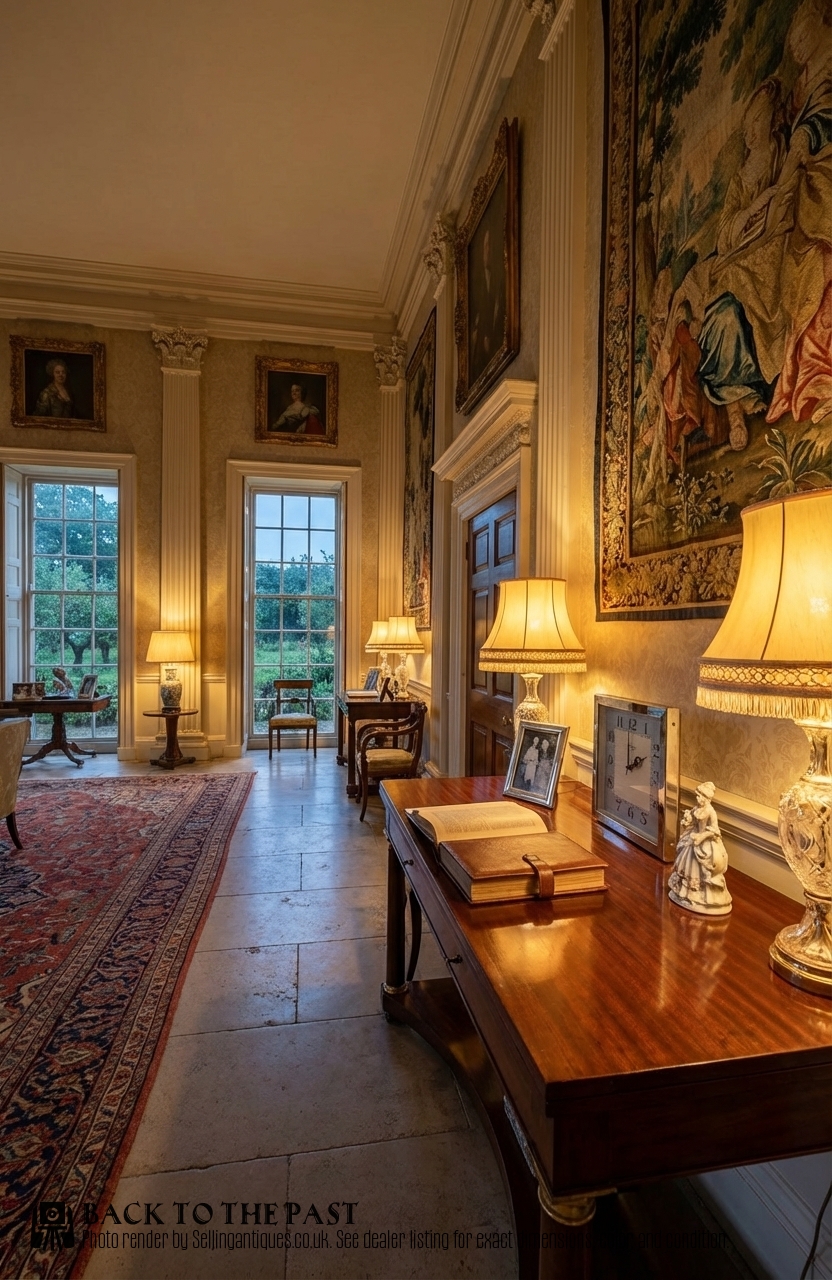
Chrome Table Clock
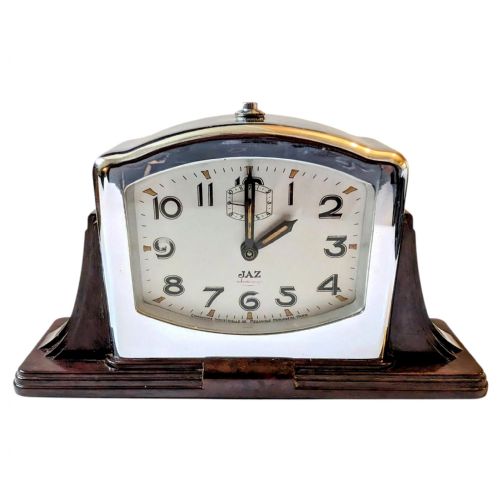
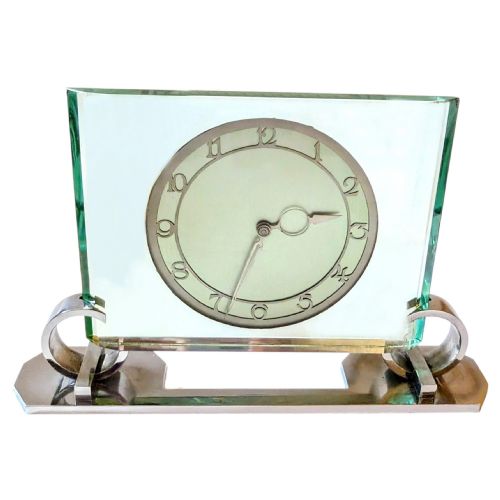
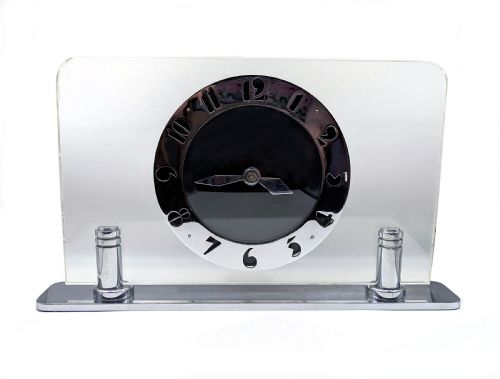
A chrome table clock is primarily a functional timepiece defined by the stylistic vocabulary of the Art Deco and Mid-Century Modern periods. These objects span desk clocks, mantel clocks, and travel clocks designed to sit firmly on flat surfaces.
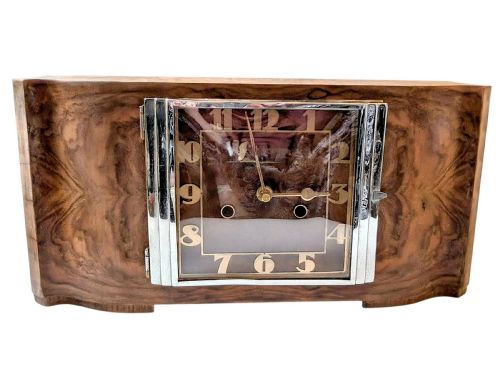
Most examples found here originate from the 1920s, 1930s, and 1950s, reflecting the industrial optimism and design innovations of those decades. The most common variation on this page pairs a polished metal housing with glass, wood, or bakelite elements.
Manufacturers ranged from specialist clockmakers to high-end retailers who commissioned timepieces for their clientele. The resulting forms vary from simple geometric desk accessories to large chiming mantel pieces.
How they were made
Makers utilised chrome plating over base metals to achieve a durable and reflective finish that resisted tarnish. This metallic skin was often combined with contrasting materials such as walnut, marble, brass, and coloured glass.
The internal movements relied on mechanical 8-day springs, wind-up mechanisms, or early electric systems. Dials and bezels were framed by glass panels, sometimes utilising peach mirror glass, opaline uranium glass, or bakelite components for visual impact.
Chrome Table Clock Retail Price Guide 2026
Typical asking prices for chrome table clock among the pieces listed under this phrase on Sellingantiques today, from the lower quarter to the upper quarter. They describe what is for sale here now, not the wider market.
Listings feature clocks from the 1920s to the 1960s, combining chrome with walnut, marble, brass, and bakelite.
What varies in quality
The distinction between ordinary production pieces and superior examples rests on the integration of materials and the reputation of the maker. Clocks signed by notable watchmakers and luxury retailers demonstrate finer finishing on both the exterior housing and the internal movement.
Design ambition separates basic timepieces from exceptional specimens, particularly where unusual configurations like mystery movements, pivoting cases, or skyscraper silhouettes are employed. The preservation of original glass, uncompromised chrome plating, and branded dials elevate an object above standard utilitarian production.
Smiths Clockmakers·Mappin & Webb·Harrods of London·Jaeger-LeCoultre·Junghans
The Chrome Table Clock Glossary
- Chrome
- An electroplated coating of chromium applied over metal to provide a bright, corrosion-resistant finish. It defines the metallic sheen characteristic of modernist design.
- Bakelite
- An early form of synthetic plastic prized for its durability and rich dark tones. It frequently appears alongside metal in interwar clock cases.
- Movement
- The internal mechanical or electrical mechanism that drives the gears and keeps time. These range from simple wind-up calibres to complex 8-day systems.
- Opaline glass
- A semi-translucent glass that diffuses light softly, often produced in pale green or white shades during the interwar period.
- Mystery clock
- A timepiece where the hands appear to float without any visible mechanical connection to the movement, achieved through transparent glass discs.
Chrome Table Clock: Frequently Asked Questions
How do 8 day movements work?
An 8 day movement requires winding only once a week to maintain accurate timekeeping through a spring-driven gear train.
This system offered practical convenience for domestic and office use during the early twentieth century.
What is a mystery clock?
A mystery clock conceals the mechanism driving the hands, often mounting them within clear glass plates.
This clever optical illusion creates the impression that the hands float independently without support.
How do I date these clocks?
Dating relies on stylistic markers such as modernist geometry, materials like bakelite, and specific maker signatures.
Most surviving examples date from the interwar period through the mid-twentieth century.
Where were these clocks used?
These timepieces sat on office desks, bedside tables, and living room mantelpieces as functional ornaments.
Some portable versions also served travellers as compact desk or bedside accessories.