



Chrome and Glass Light
A chrome and glass light brings geometric clarity and polished reflection to a room, spanning wall lights, table lamps, and grand ceiling pendants.
Chrome and Glass Light
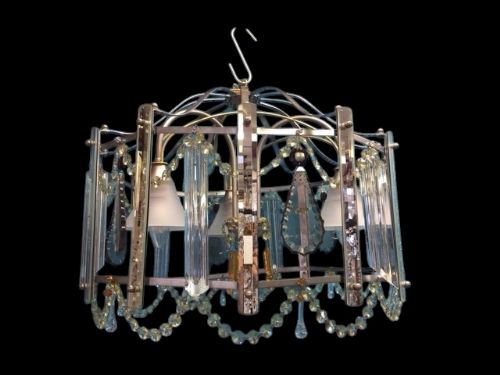
A chrome and glass light encompasses a wide variety of fixtures designed to illuminate interiors with distinct period character. When exploring chrome and glass light options, buyers encounter everything from modest wall sconces to substantial multi-tiered chandeliers.
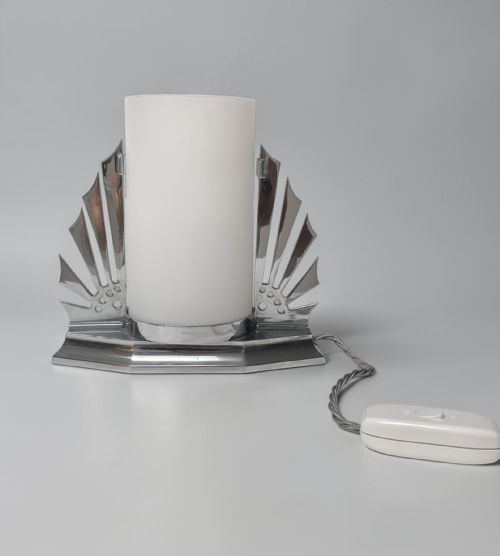
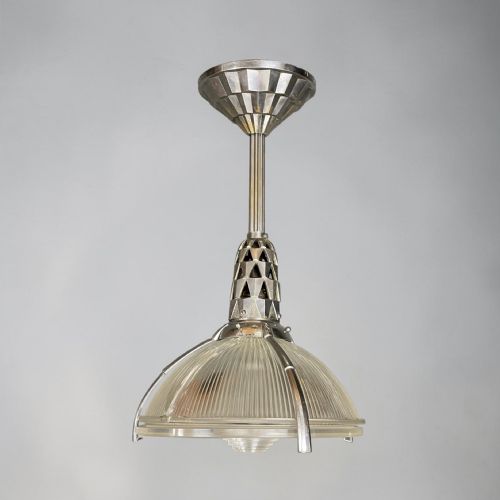
The prevailing aesthetic leans heavily towards Art Deco and Modernist movements, originating predominantly from the 1920s, 1930s, and 1940s. Table lamps, floor lamps, and pendant lights dominate the offerings, often displaying geometric lines and symmetrical forms.
Makers utilised specific regional traits, such as French Chateau influences or Italian craftsmanship, alongside domestic Edwardian interpretations. These pieces serve functional lighting needs while acting as focal sculptural elements within a space.
Materials and construction methods
Construction relies on the pairing of polished or plated metal with diverse forms of glass. Chrome plating provides a durable, reflective metallic surface over steel or brass cores, offering a sleek contrast to the transparency or opacity of the glass components.
Glass elements range from heavy pressed satin glass and opaline varieties to intricately cut crystal and moulded frosted shades. Techniques such as acid etching and pressing allowed makers to achieve repeating patterns like fish scales or reeded textures.
Associated materials like Bakelite, catalin, and brass frequently appear in structural mountings, galleries, and switches. Metal components were cast, spun, or tubular-formed before being assembled with screws or galleries to secure the glass shades.
Several table lamps feature athletic human figures, including a nude balancing on a ball and an energetic athlete hoisting a sphere aloft.
Distinctions in construction and finish
Quality in a chrome and glass light rests upon the thickness of the metal plating and the integrity of the underlying substrate. Superior examples maintain a deep, unblemished metallic lustre without extensive pitting or flaking to the chrome surface.
The weight and clarity of the glass shade further differentiate production standards, with pressed satin and heavy opaline glass offering a more substantial feel than thin, mass-produced alternatives. Precision in the fitting between metal galleries and glass edges indicates careful assembly.
Originality of components, such as matching sets of sconces or intact period electrical fittings, elevates the integrity of the piece. Fine pairing in matching suites demonstrates a higher initial tier of manufacture compared to assembled sets.
Émile-Jacques Ruhlmann·Kaza
The Chrome and Glass Light Glossary
- Torchiere
- An uplighter floor lamp designed to direct illumination toward the ceiling. These fixtures often feature large glass bowls supported by tall metallic stems.
- Opaline glass
- A milky, semi-translucent glass type that diffuses light evenly. It was widely utilised across pendants and wall lights during the interwar period.
- Bakelite
- An early synthetic thermosetting plastic frequently employed for switch housings, bases, and decorative accents. Its dark, dense finish contrasts sharply with bright chrome.
- Gallery
- The metal ring or framework designed to hold a glass shade in place. Galleries often feature thumb screws to secure the collar of the shade.
Chrome and Glass Light: Frequently Asked Questions
How do I clean chrome and glass lights safely?
Maintenance requires gentle cleaning methods to preserve both the metallic plating and the delicate glass surfaces. Use a soft, dry microfiber cloth to remove dust from the chrome without scratching the finish.
For the glass components, detach them if possible and wash them in lukewarm water with mild soap. Avoid abrasive scouring pads or harsh chemical cleaners that can strip the plating or etch the glass.
Are these lights suitable for modern electrical systems?
Many vintage fixtures are rewired to meet contemporary safety standards while retaining their original aesthetic appeal. Qualified electricians can easily adapt older fittings to accept modern LED or standard bulbs.
Buyers should inspect the internal wiring status of any prospective purchase. Professional rewiring ensures compliance with current domestic regulations without altering the exterior character of the piece.
How do I identify Art Deco lighting features?
Art Deco lighting is characterised by strong geometric shapes, symmetrical layouts, and streamlined industrial influences. Look for stepped designs, zig-zag motifs, and cylindrical or tubular forms.
The combination of polished chrome with frosted, pressed, or opaline glass is a definitive marker of this era. Pieces often embrace themes of speed and modernity, visible in figural bases or streamlined shades.
Where should I place a wall sconce in a room?
Wall lights function best when mounted at eye level to provide balanced ambient or task illumination. They are commonly positioned flanking mirrors, framing doorways, or distributed evenly along hallway walls.
Pairing matching sconces creates a sense of architectural symmetry within a dining room or living space. Ensure the installation height accommodates the downward or upward cast of the specific glass shade.