




Chippendale Style Tripod Stand
Chippendale style tripod stand designs combine slender pillar supports with carved tripod feet, offering stable elegance for lamps, plants and tea.
Chippendale Style Tripod Stand
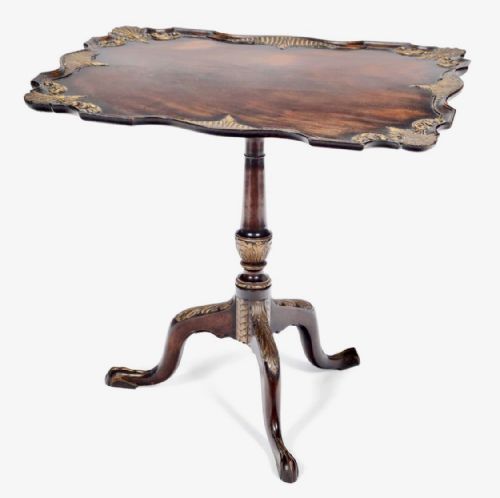
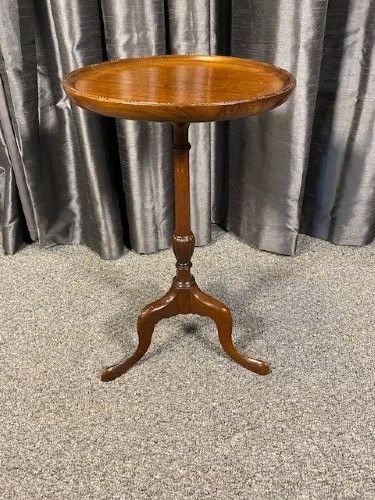
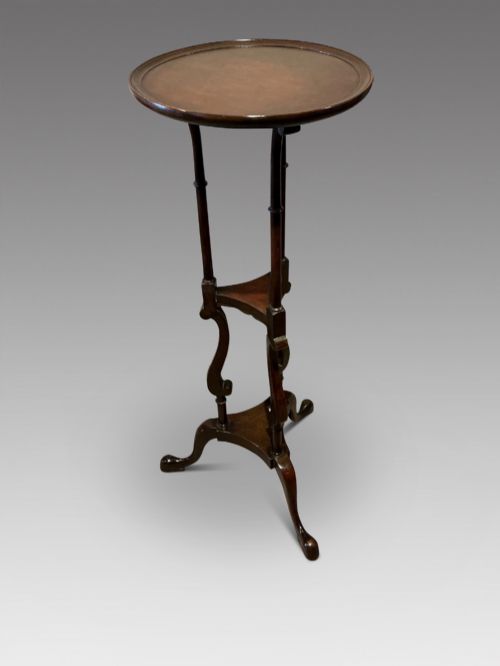
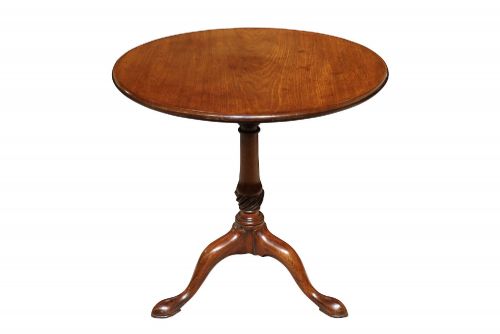
A Chippendale style tripod stand is a versatile form designed for holding small items, appearing frequently as wine tables, torcheres, plant stands and occasional tables. These pieces span several centuries of production, drawing on 18th-century George III forms as well as later Georgian Revival interpretations from the early decades of the 20th century.
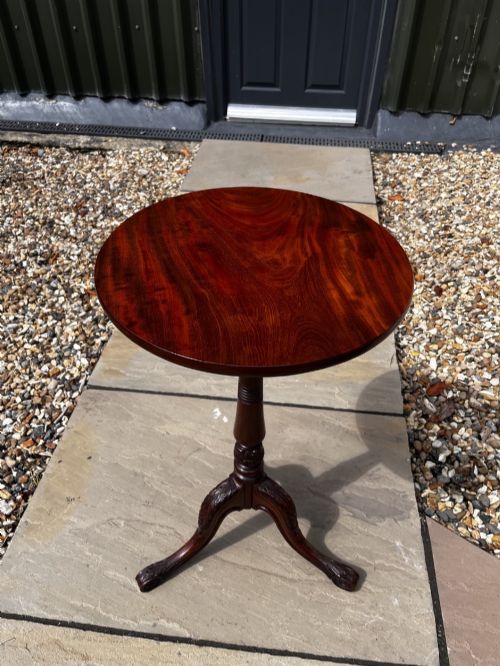
The format relies on a central pillar resting upon three spreading legs, which often terminate in pad, claw and ball, or carved scroll feet. Makers fashioned these tables to be easily moved around a room, serving practical domestic uses ranging from holding candlesticks to displaying decorative plants.
Assessing quality and craftsmanship
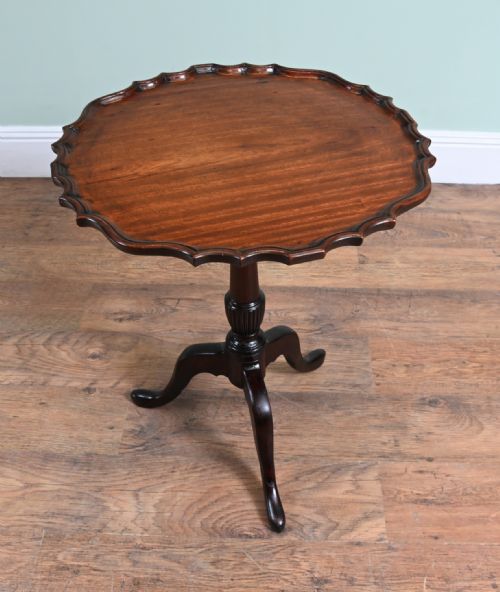
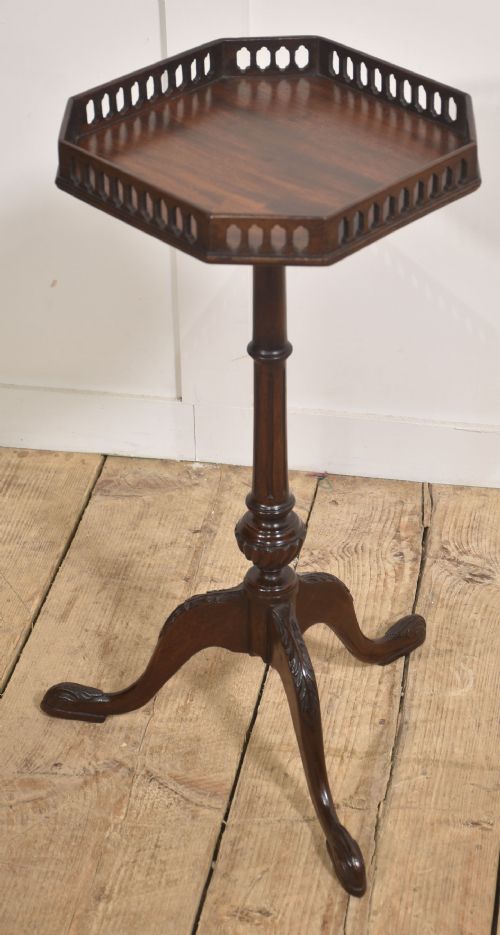
Quality rests in the crispness of the carving on the legs and the proportion between the top and the supporting pedestal. Pieces featuring detailed pie crust edges, pierced galleries or finely turned columns represent a higher standard of cabinet-making.
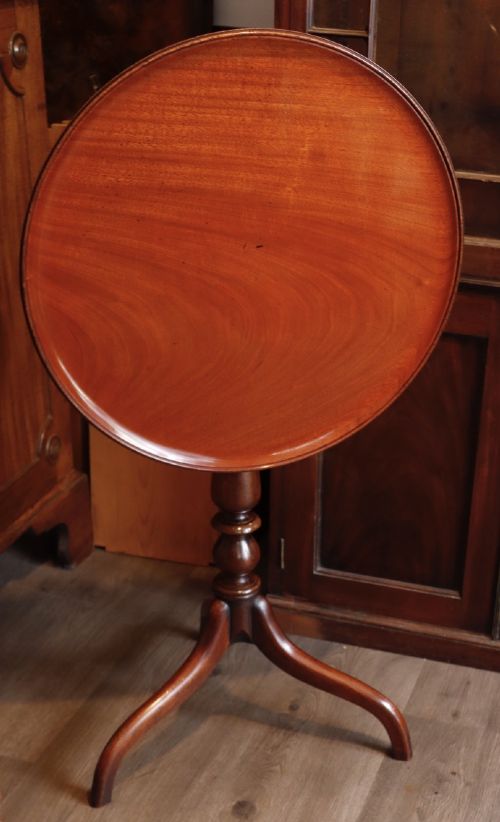
The integrity of the tilt-top mechanism and the snugness of the joints where the legs meet the pillar indicate the original builder's skill and subsequent care.
Some tabletops tilt vertical so the stand can hug the wall like a polite guest waiting for the tea party to begin.
The Chippendale Style Tripod Stand Glossary
- Tripod table
- A small occasional table supported by a central pillar and three legs. This form became popular during the Georgian period for tea drinking and card games.
- Torchere
- A tall, slender stand designed to hold a candle or lamp. They frequently feature decorative carving on the shaft and a small upper platform.
- Birdcage
- A wooden framework beneath the tabletop that permits the surface to rotate and tilt. It uses small turned spindles resembling a cage.
- Pie crust edge
- A raised, scalloped perimeter carved directly from the solid wood of the tabletop. This decorative detail is often found on tea and wine tables from the 18th century and later revivals.
Chippendale Style Tripod Stand: Frequently Asked Questions
How were tripod stands originally used?
These pieces served adaptable functions in historic parlours and drawing rooms, holding portable items like tea caddies, candles and reading materials.
Because they were lightweight, inhabitants moved them around the room as needed throughout the day.
How do I style a torchere stand?
A torchere stand works well in empty corners or beside seating areas to provide ambient lighting via a small lamp or plant display.
Its vertical height draws the eye upward without occupying significant floor space in smaller rooms.
How to tell an 18th century stand from a revival piece?
Distinguishing between periods involves examining the tool marks, timber shrinkage and structural wear inherent in older woods.
Revival pieces from the Edwardian era and 1920s often show different secondary woods and more uniform machine assistance in the turning.