



Chippendale Style Tray Table
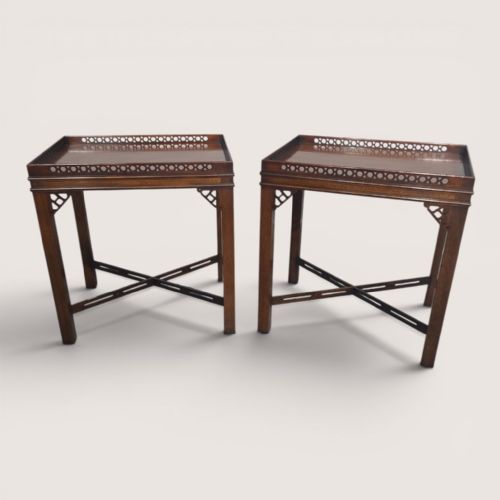
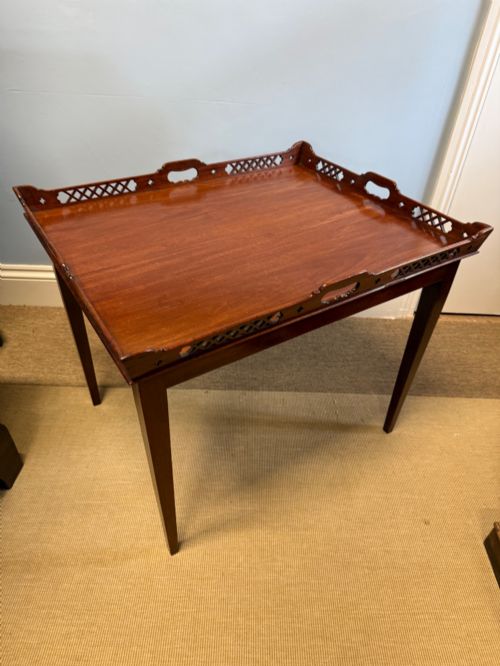
These Chippendale style tray table pieces bring sophisticated display and serving surfaces into the home, prized for their raised edges and elegant timber frames.
Chippendale Style Tray Table
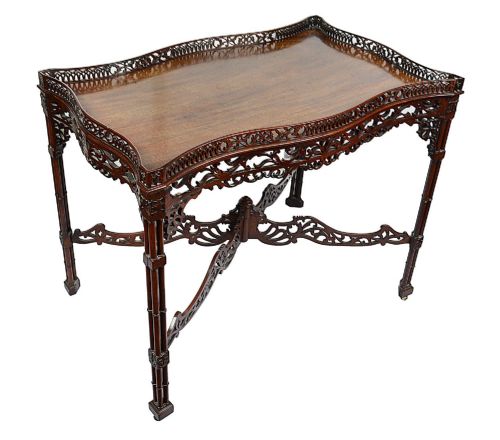
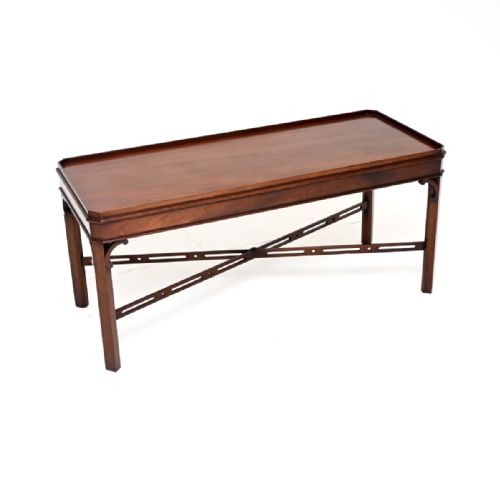
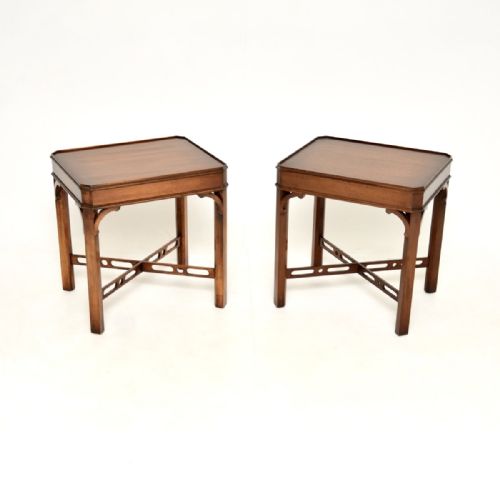
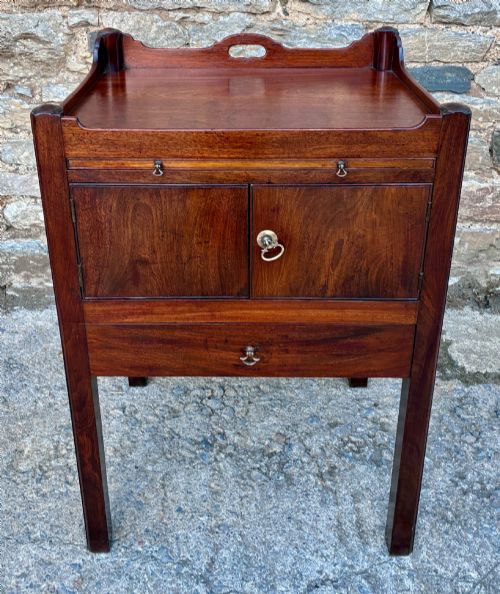
A chippendale style tray table combines the practical raised borders of a traditional serving tray with a sturdy occasional or side table frame. Buyers searching this phrase encounter forms ranging from authentic eighteenth century examples to later revival pieces from the Edwardian period and the early twentieth century.
The inventory demonstrates remarkable variety in function, spanning dedicated silver tables, bedside lamp tables, wine tables, and coffee tables. Most surviving examples are constructed from rich timbers, whilst occasional pieces utilise contrasting finishes like black lacquer.
Originating in the eighteenth century and reinterpreted through Victorian and Edwardian revivals, these tables serve flexibly as display surfaces or low side tables. The selection balances formal Georgian proportion with the lighter domestic requirements of later revival eras.
Materials and Construction
Mahogany forms the primary structural material across the majority of these pieces, providing a dense and durable base for intricate carving and polished surfaces. Walnut appears alongside mahogany, sometimes finished with black lacquer to achieve a distinct decorative aesthetic.
Chippendale Style Tray Table Retail Price Guide 2026
Typical asking prices for chippendale style tray table among the pieces listed under this phrase on Sellingantiques today, from the lower quarter to the upper quarter. They describe what is for sale here now, not the wider market.
Evaluating Quality and Craftsmanship
Quality rests upon the crispness of the timber carving and the fidelity of the period style, distinguishing exceptional eighteenth century work from simpler revival interpretations. The integration of the tray top into the supporting frame requires precise joinery that maintains stability without compromising elegance.
The selection of timber grain and the depth of the hand-polished finish separate standard production from superior examples. Finer pieces exhibit thoughtful proportion, harmonious brass mounts where applicable, and well-preserved surface patination developed over centuries of use.
The Chippendale Style Tray Table Glossary
- Silver table
- A distinct form of side table designed in the eighteenth century for displaying silver tea services or presentation pieces. These tables frequently feature raised gallery edges to secure precious vessels.
- Tray-top
- A tabletop surface constructed with a raised rim or gallery on all sides, originally intended to prevent items from sliding off during service. This defining feature is central to the identity of these tables.
- Chippendale revival
- A stylistic movement spanning the Victorian and Edwardian eras where cabinetmakers recreated or reinterpreted the distinctive furniture designs of Thomas Chippendale. These later pieces emulate eighteenth century proportions and carving.
- Occasional table
- A versatile, small-scale table designed to be moved easily and used for specific, temporary domestic purposes. They appear frequently within this furniture category.
- Gallery edge
- A raised decorative border surrounding the perimeter of a tabletop, pierced or solid in construction. It serves both an ornamental and a practical retaining function.
Chippendale Style Tray Table: Frequently Asked Questions
What is a silver table?
A silver table is a specific eighteenth century form designed to hold tea services and display valuable plate. They typically feature raised gallery edges and sturdy legs suited to supporting heavy metal items.
Over time, these tables transitioned from strict utility into decorative parlour furnishings, maintaining their raised rims even when used for general display or lighting.
How do I date a revival table?
Dating revival pieces requires examining timber maturity, secondary woods, and construction tool marks beneath the surface. Edwardian and Victorian makers often used machine-assisted joinery alongside hand finishing.
Comparing the proportion and carving style against authenticated eighteenth century prototypes helps establish whether a piece originates from the Georgian period or a later revival.
Where should I place this table?
These tables function effectively as bedside lamp stands, small side tables in a drawing room, or dedicated display surfaces for collections. Their compact footprints allow them to fit into tight spaces whilst providing a useful surface.
The raised tray edge also makes them practical for holding drinks or small accessories safely without risk of items sliding off the perimeter.
Are these tables sturdy enough for daily use?
Most examples are constructed from dense timbers like mahogany and walnut, making them structurally robust for everyday domestic placement. However, fragile gallery edges and antique joints require sensible handling.
Placing items carefully and avoiding excessive weight ensures these historical tables remain functional and secure within a modern interior.