
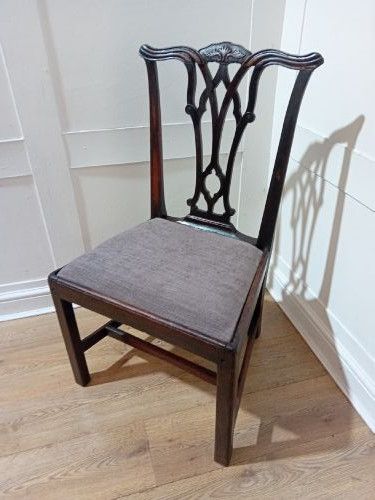
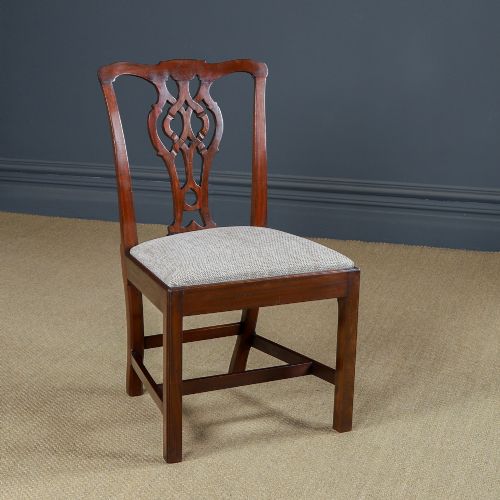
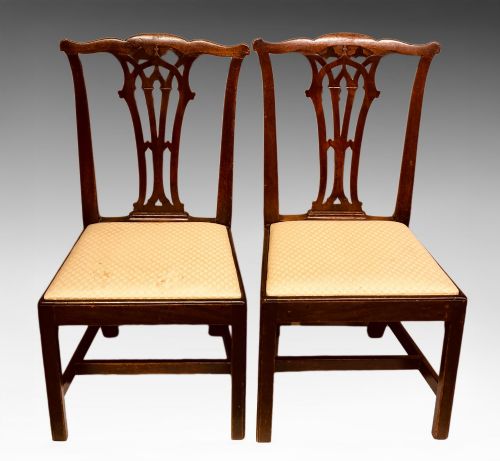
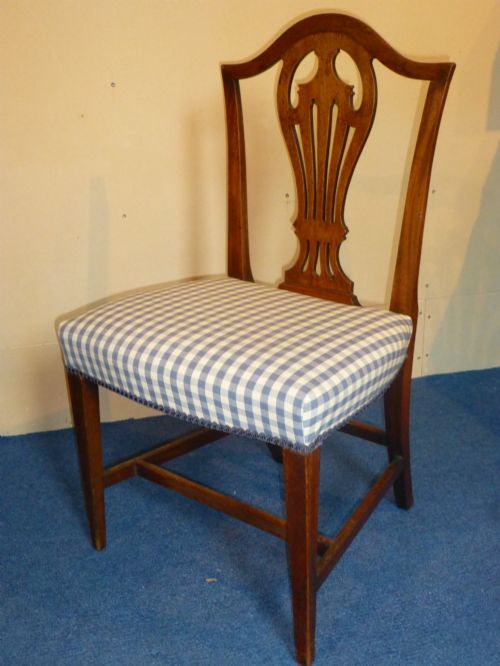
Chippendale Style Side Chairs
Chippendale style side chairs bring carved mahogany frames and ribbon backs into dining rooms, offering sturdy seats rooted in eighteenth-century design.

Chippendale Style Side Chairs
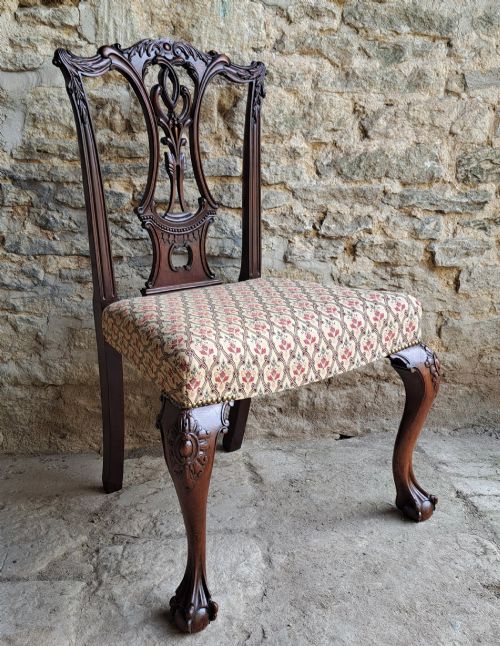
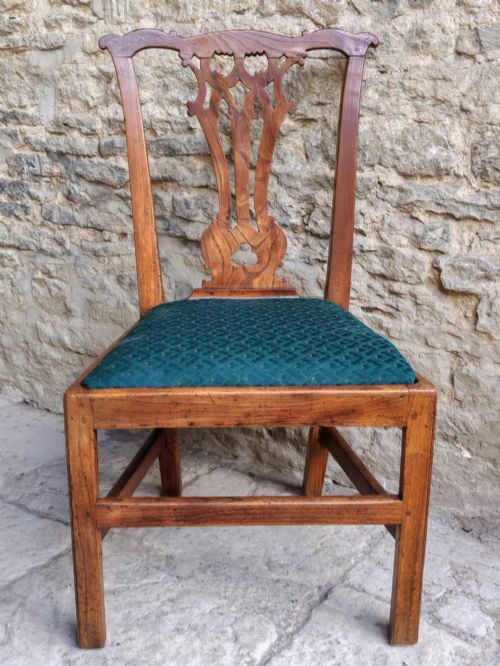
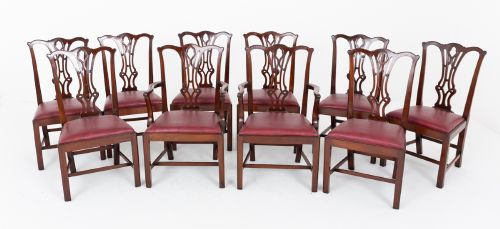
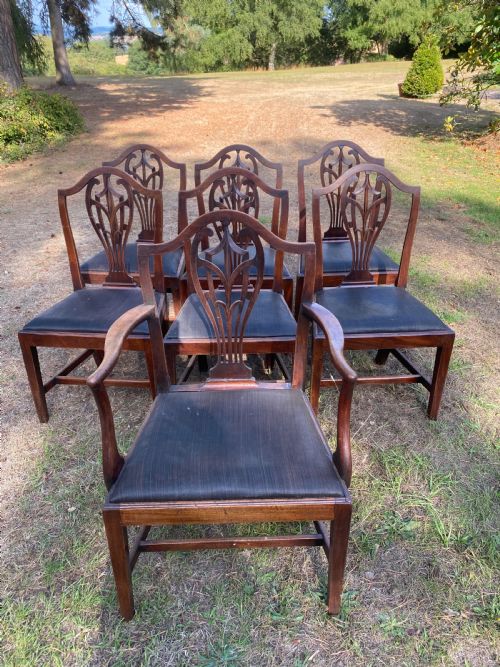
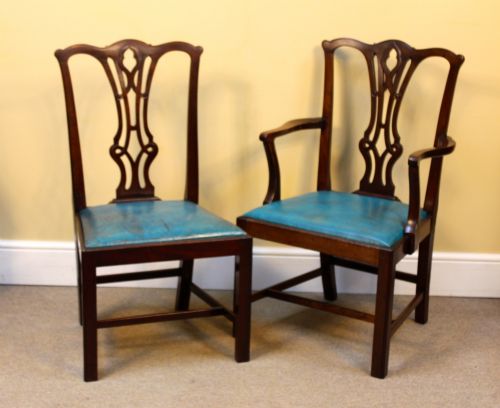
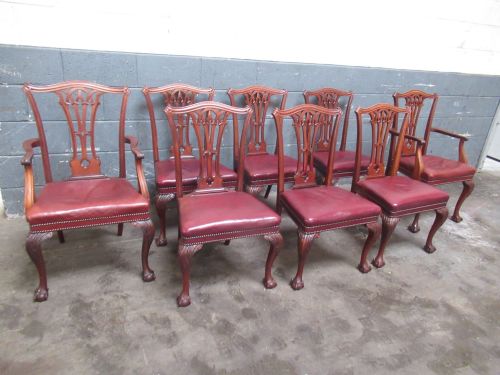
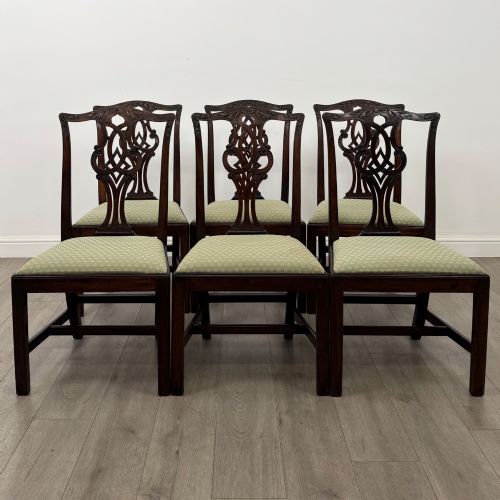
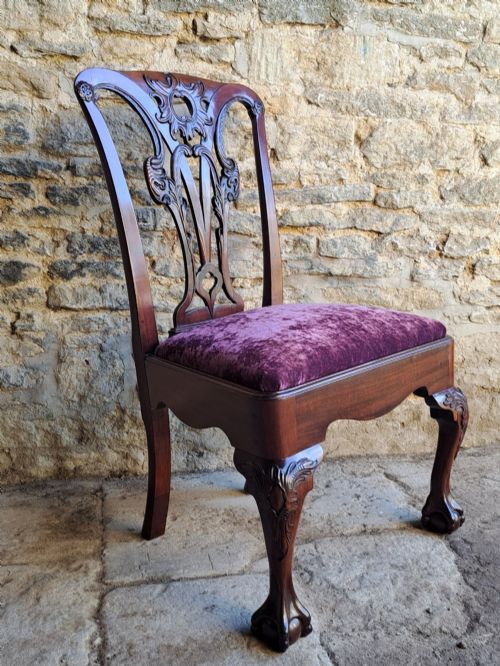
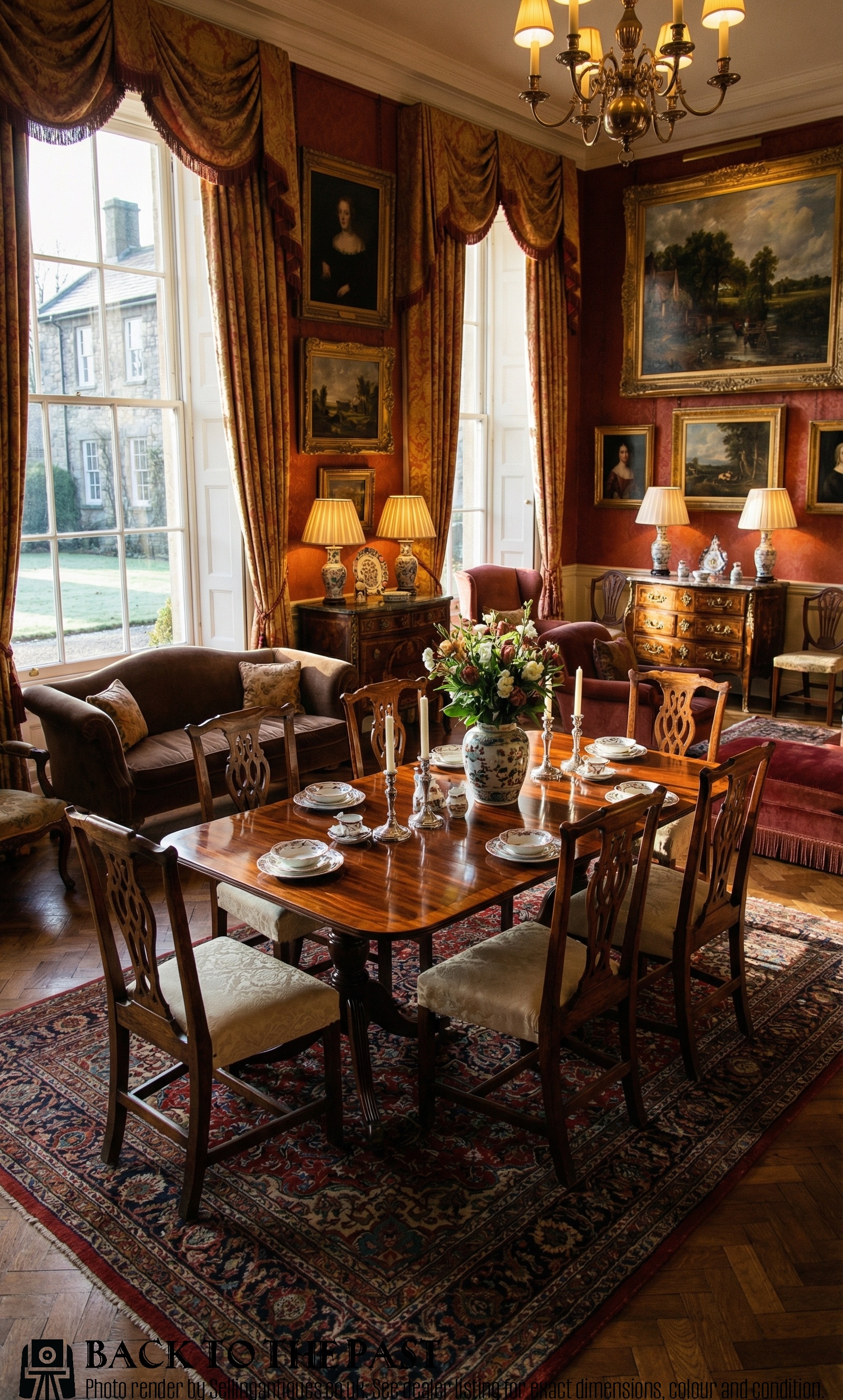
Chippendale style side chairs are seating pieces defined by carved wooden splats, cabriole or straight legs, and upholstered drop-in seats. You will frequently encounter mahogany examples spanning the eighteenth, nineteenth, and early twentieth centuries on this page.
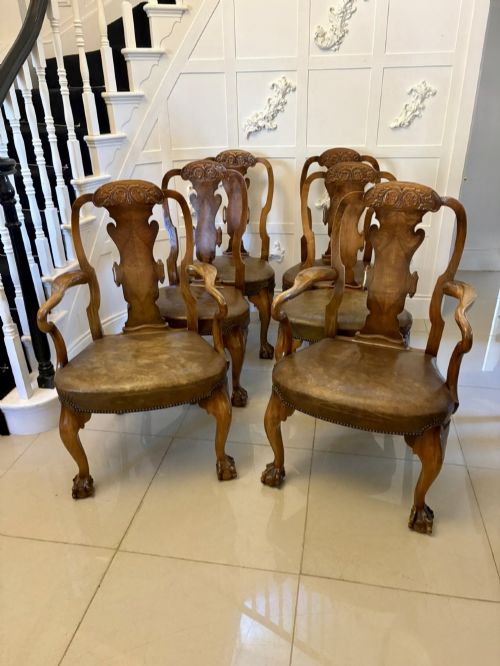
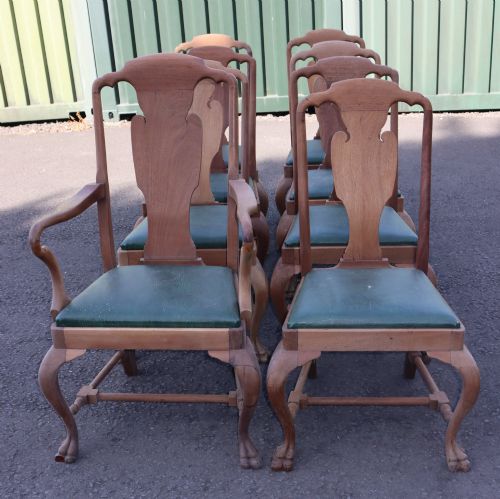
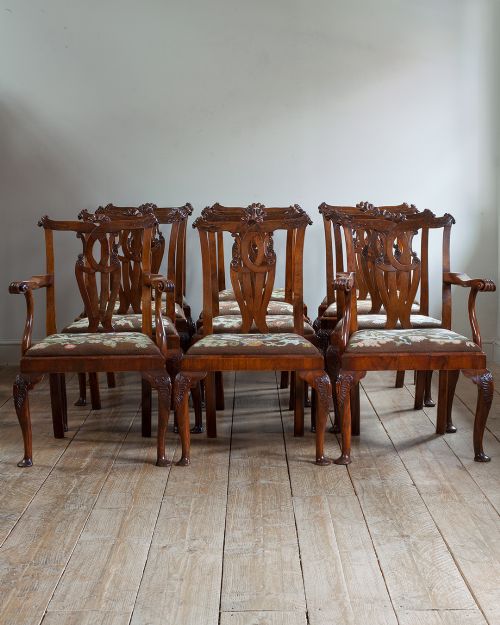
The selections range from individual pieces originating around seventeen-eighty to large matched sets produced during the Edwardian revival period. Forms include dining chairs, hall chairs, and desk chairs originating from English, Irish, and Scottish workshops.
Makers drew inspiration from Thomas Chippendale's published designs, incorporating Gothic, French, and Chinese motifs into the pierced splats of the chair backs. These seating options served dining rooms, libraries, and halls across multiple eras of British domestic life.
How They Were Made
Cabinetmakers worked primarily in dense hardwoods such as mahogany, walnut, oak, elm, and fruitwood, selecting timber capable of supporting intricate pierced carvings. Joinery relied on mortise and tenon frames secured with corner blocks to withstand daily weight at the dining table.
Upholstered drop-in seat frames used webbing and horsehair stuffing beneath coverings of leather, velvet, fabric, or tapestry. Carvers shaped the top rails, stiles, and splats by hand using gouges and chisels before applying finishes.
Chippendale Style Side Chairs Retail Price Guide 2026
Typical asking prices for chippendale style side chairs among the pieces listed under this phrase on Sellingantiques today, from the lower quarter to the upper quarter. They describe what is for sale here now, not the wider market.
Listings feature woods spanning mahogany, walnut, oak, elm, and fruitwood across Georgian, Victorian, and Edwardian eras.
What Varies in Quality
Depth and crispness of hand-carving on the splat and top rail separate standard production from superior examples. Timber selection dictates the weight and grain figure of the frame, with dense Cuban mahogany and figured walnut sitting at the upper end.
Completeness of original sets influences desirability, particularly when twelve or more matching chairs survive together. The integrity of the underlying frame joinery and the presence of period upholstery materials determine how well a piece maintains its structural form.
Waugh And Son·Gill And Reigate·Wheelers Of Arncroach
The Chippendale Style Side Chairs Glossary
- Splat
- The vertical wooden strip down the centre of a chair back, often pierced and carved in Chippendale designs. It provides lumbar support while displaying the cabinetmaker's decorative skill.
- Drop-in seat
- A removable wooden frame upholstered separately and dropped into the seat rails of the chair. This construction method allows easy reupholstery without dismantling the main frame.
- Cabriole leg
- A furniture leg that curves out at the knee and tapers inward to an ankle, finishing in a pad or claw-and-ball foot. It draws on classical proportions adapted by eighteenth-century designers.
- Giltwood
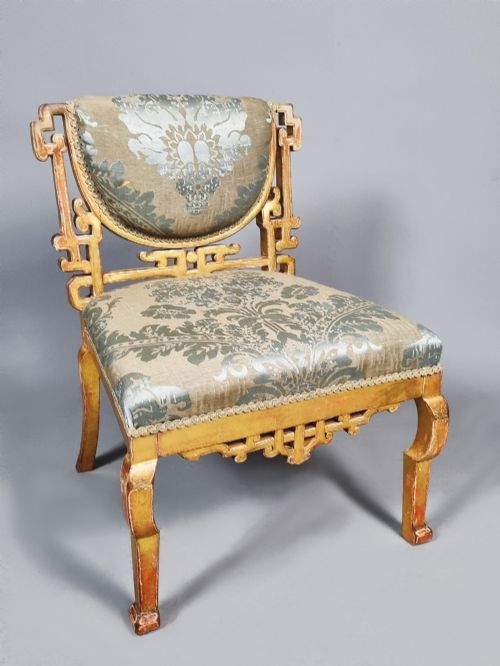
- Wood that has been coated with a thin layer of gold leaf. It appears on high-status decorative seating intended for formal reception rooms.
- Stile
- The upright vertical post forming the outer edge of a chair back. It connects the top rail to the seat frame.
Chippendale Style Side Chairs: Frequently Asked Questions
How do I spot an eighteenth-century original?
Examine the timber shrinkage, hand-cut joinery marks, and the wear patterns on the inner seat rails. Eighteenth-century pieces display subtle asymmetries and tool marks consistent with manual hand-tool production.
Compare the carving depth and wood density with later revival pieces. Earlier timber often feels heavier and displays patination developed over centuries of handling.
What is Chinese Chippendale style?
Chinese Chippendale style incorporates lattice fretwork, straight legs, and pagoda-inspired silhouettes derived from eighteenth-century pattern books. Makers applied these geometric fret patterns to chair backs and leg stretchers.
This aesthetic reflected European fascination with Asian design during the Georgian era. Revival makers later reproduced these airy, fretted frameworks during the Victorian and Edwardian periods.
Can I use these chairs daily?
Solid hardwood frames and sturdy mortise joinery make these chairs suitable for regular dining room use. Check that the frame joints remain tight and stable before seating guests.
Modern seating comfort depends on the internal webbing and padding condition. Professional upholsterers can reinforce the seat foundation without altering the historic wooden frame.
How do I care for antique mahogany?
Maintain antique mahogany by dusting with a dry, soft cloth and keeping pieces away from direct heat sources and sunlight. Extreme temperature shifts cause timber to dry out and split.
Apply occasional specialist wax polish to nourish the timber and preserve the patina. Avoid silicone sprays that build up and damage the historic polish surface.