






Chippendale Style Reading Chair
When you search for a chippendale style reading chair, you find sturdy mahogany seating designed for libraries and studies, upholstered in leather or fabric.
Chippendale Style Reading Chair
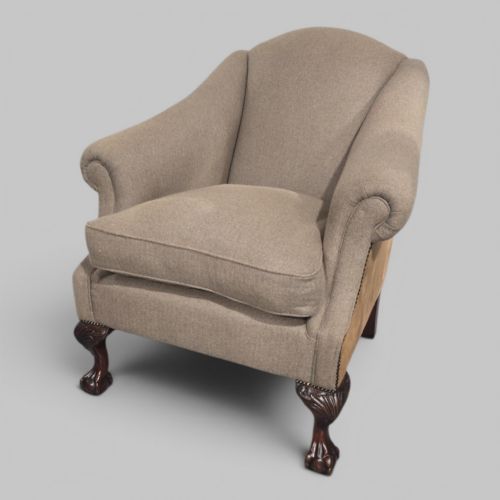
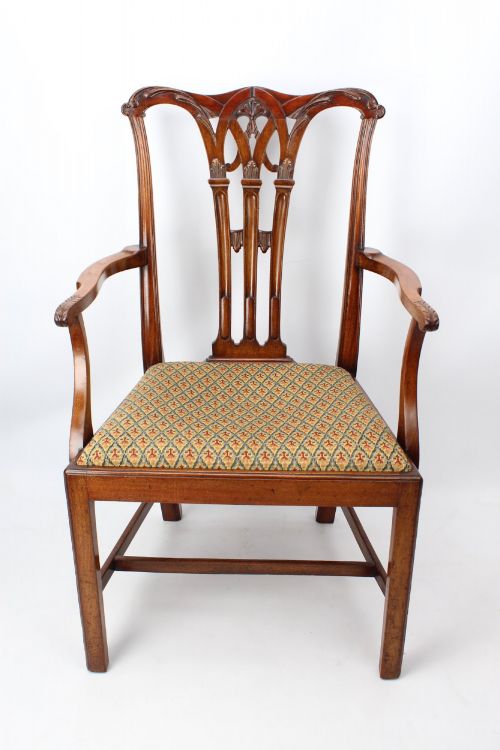
A chippendale style reading chair is a substantial seat built for libraries, studies, and morning rooms, originating in forms from the eighteenth century. When you search for this phrase, you encounter large mahogany armchairs, wingback chairs, and open library seats.
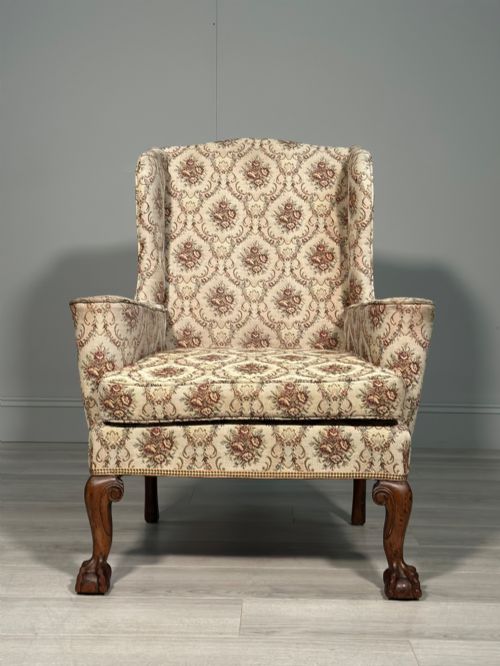
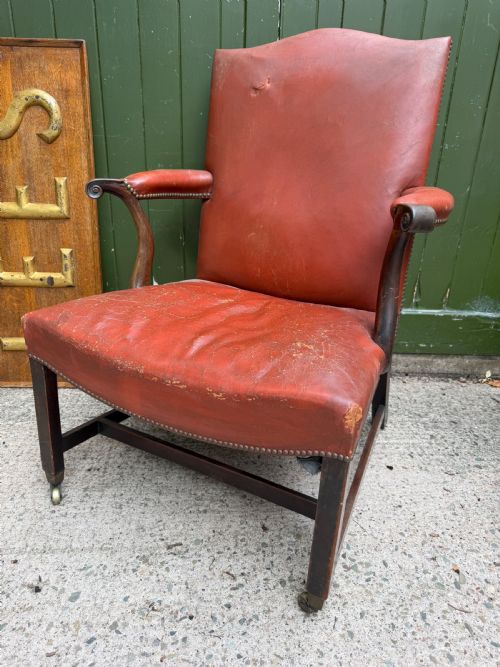
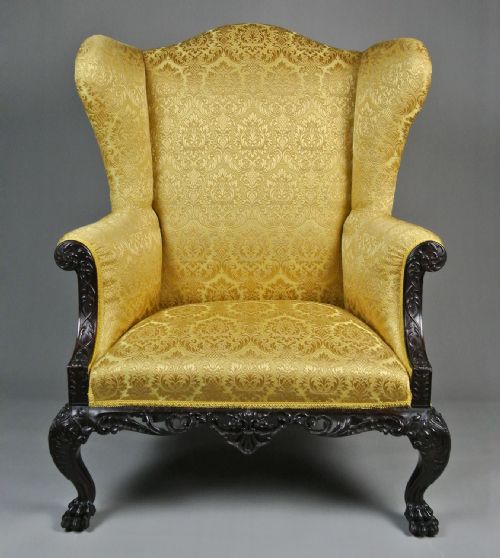
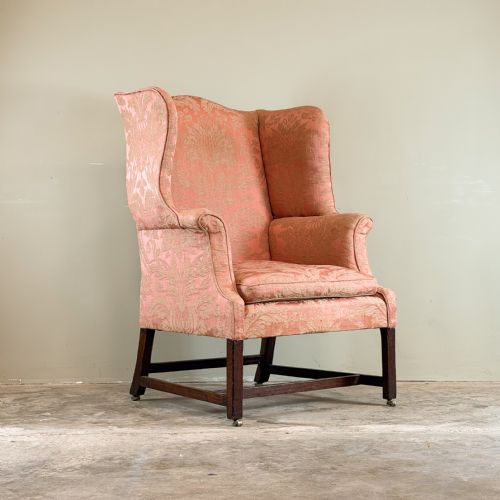
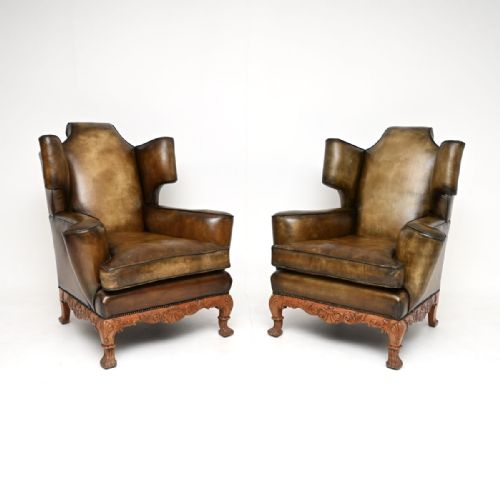
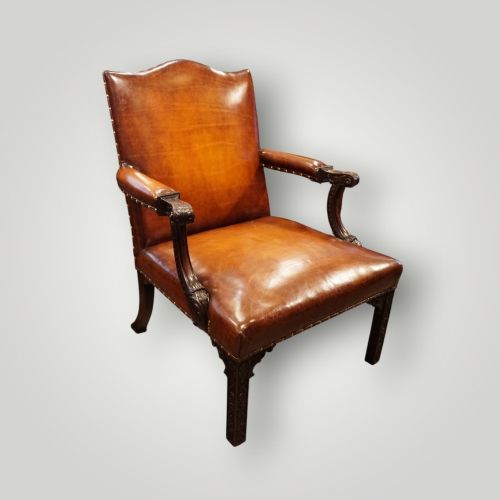
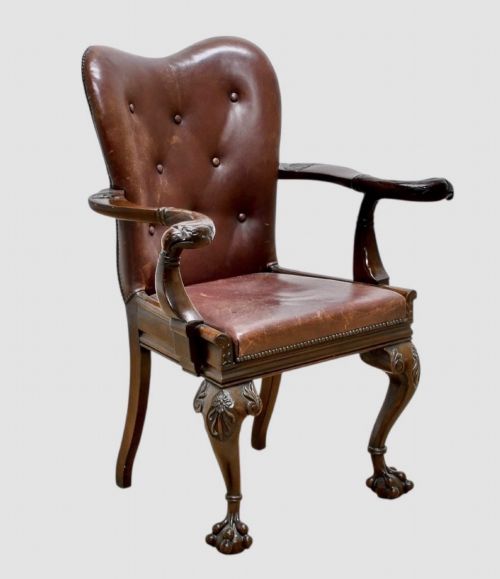
The versions most common on this page span the Georgian period, the nineteenth century, and revival eras up to the nineteen thirties. These include open Gainsborough chairs, wing chairs, and elbow desks chairs designed for comfortable seated reading.
Many examples combine mahogany frames with traditional upholstery such as hand-dyed hide, red leather, velvet, damask, or calico. The proportions are typically generous, featuring carved wooden details and supportive high backs.
Materials and construction methods
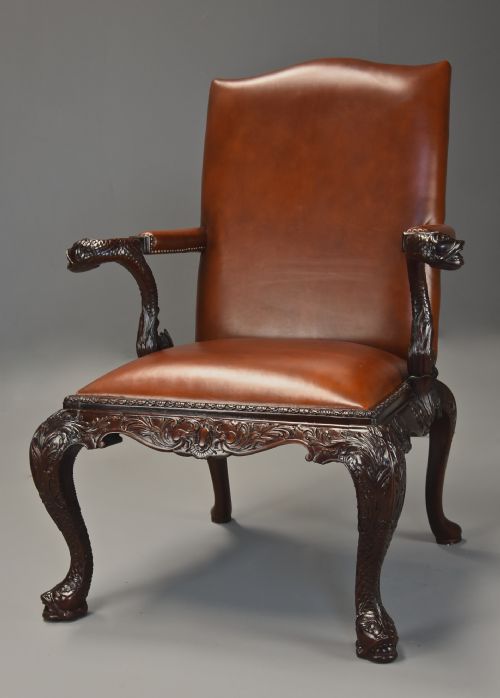
Makers constructed these chairs primarily using solid mahogany for the exposed wooden frames, legs, and arm supports. Skilled carpenters applied detailed hand carving, such as blind fretwork and shaped rails, directly into the dense timber.
Upholstery forms a major part of the construction, utilising traditional stuffing materials enclosed in leather, buttoned hides, damask, velvet, or plain fabric. Brass tacking often secures the outer edges of the leather or fabric to the mahogany frame.
Chippendale Style Reading Chair Retail Price Guide 2026
Typical asking prices for chippendale style reading chair among the pieces listed under this phrase on Sellingantiques today, from the lower quarter to the upper quarter. They describe what is for sale here now, not the wider market.
Listings feature mahogany frames paired with leather, velvet, and damask across Georgian, Victorian, and early twentieth century periods.
Quality differences in reading chairs
Quality varies significantly in the crispness and depth of the wood carving on the mahogany frames and legs. Superior chairs display sharp, well-defined hand-carved details, whereas lesser examples show softer, flatter moulding.
The choice and execution of the upholstery material dictate the overall standard of the piece. Top tier pieces utilise thick, hand-dyed English hide leather or heavy damask, fitted tightly to robust internal webbing and springs.
The Chippendale Style Reading Chair Glossary
- Gainsborough chair
- An open-armed, upholstered easy chair with a wide seat and low back, designed for writing desks and libraries during the eighteenth century.
- Wingback chair
- An armchair featuring side panels attached to the arms and back to shield the sitter from draughts near a fireplace.
- Blind carving
- Carved ornamentation worked in low relief onto a flat surface of wood, often seen on chair rails in the Chinese Chippendale taste.
- Elbow chair
- A traditional term for an armchair with wooden supports for the arms, frequently used at a desk or in a morning room.
Chippendale Style Reading Chair: Frequently Asked Questions
What is a Gainsborough chair?
A Gainsborough chair is a wide, open-armed upholstered armchair designed in the eighteenth century for reading or sitting at a desk.
These chairs feature mahogany frames, open padded arms, and upholstered seats and backs.
How do I identify a Georgian chair?
Georgian chairs display the architectural proportions, dense mahogany timber, and traditional joinery characteristic of the reigns of Georges one through four.
Key indicators include hand-carved details like blind fretwork, claw and ball feet, or plain Marlborough legs.
Where were these chairs used?
These chairs were placed in libraries, studies, morning rooms, and parlours for reading, writing, and formal conversation.
The sturdy construction and comfortable upholstered backs suited prolonged sitting in domestic interiors.
Are all these chairs eighteenth century?
While the style originates in the eighteenth century, many pieces on this page date from nineteenth century revivals and early twentieth century workshops.
Revival furniture often replicates earlier Georgian forms using the same solid mahogany and traditional upholstery methods.