

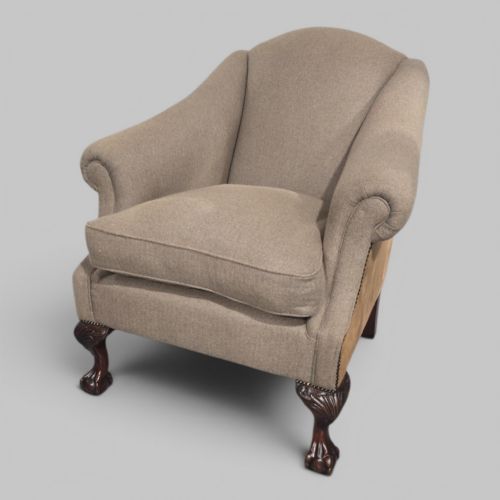


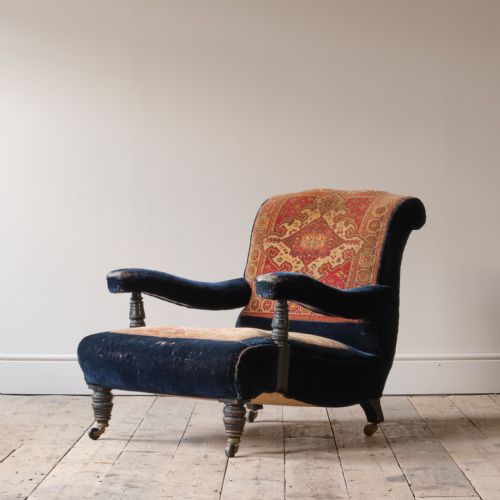


Upholstered Gentleman Seat
An upholstered gentleman seat offers generous proportions and robust framing, providing the supportive comfort that collectors and period interior enthusiasts seek.
Upholstered Gentleman Seat
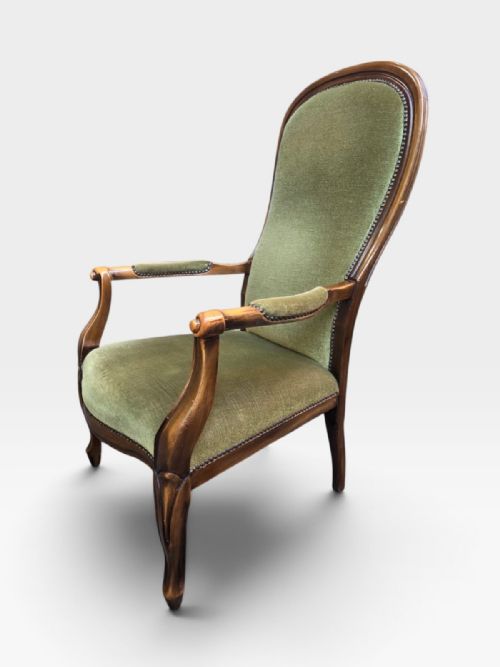
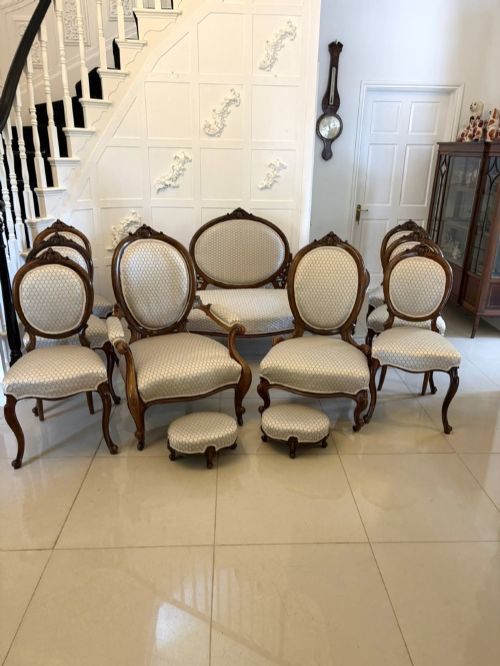
An upholstered gentleman seat typically takes the form of a substantial armchair or forms part of a larger salon suite dating from the Victorian and Georgian eras. When buyers search for an upholstered gentleman seat, they encounter sturdy wooden frames paired with deep padding, designed to offer commanding seating in libraries, parlours and drawing rooms.
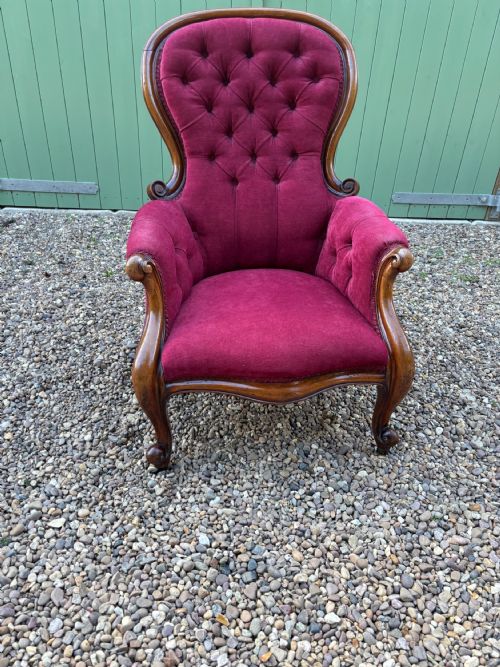
The pieces on this page span the nineteenth century, including Regency library chairs, George II revival armchairs and mid Victorian walnut or mahogany examples. These range from single open armchairs to matched pairs and larger parlour suites complete with button backs and carved details.
Materials and construction methods
Makers constructed the primary frames of an upholstered gentleman seat using dense hardwoods such as mahogany, walnut and occasionally oak. These timbers were selected for their structural strength, allowing carvers to execute detailed mouldings, scrollwork and lion motifs along the arms and legs.
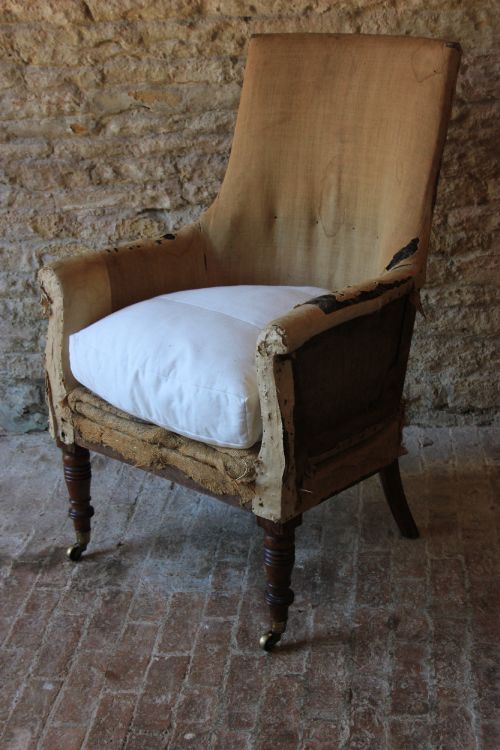
Traditional upholstery techniques underpin these pieces, utilising durable interior foundations like hessian, supporting metal or brass hardware where necessary, and finishing the surface in fabrics including velvet and calico. Button backing appears frequently on Victorian examples to keep the interior stuffing evenly distributed and firm.
Upholstered Gentleman Seat Retail Price Guide 2026
Typical asking prices for upholstered gentleman seat among the pieces listed under this phrase on Sellingantiques today, from the lower quarter to the upper quarter. They describe what is for sale here now, not the wider market.
Lion carved arms stand ready to guard your reading room from unruly paperweights.
Distinguishing quality across examples
The standard of a piece rests heavily upon the crispness of the woodwork carving and the integrity of the timber frame. Superior examples display deeply sculpted walnut or mahogany frames with confident lines, whereas simpler pieces rely on plain turned legs and more modest proportions.
Another measure of quality involves the scale of the timber and the complexity of the suite, particularly when armchairs form part of a matching set with settees. Heavier, dense woods and integrated design motifs throughout a set indicate a higher grade of craftsmanship.
The Upholstered Gentleman Seat Glossary
- Button back
- An upholstery method where the fabric is pulled tight and secured with recessed buttons in a geometric pattern. This technique creates deep tufting and keeps the interior padding stable over years of use.
- Open arm
- A chair design featuring un-upholstered wooden arms that expose the carved grain and structural framing. These arms often terminate in scroll or carved handholds.
- Salon suite
- A matched grouping of seating furniture, typically comprising a settee and several armchairs designed for formal entertaining. These suites share uniform wood types, carving styles and upholstery.
- Library chair
- A heavy, durable armchair built with robust timber frames intended for reading rooms and studies. They frequently feature wide armrests and supportive upright backs.
Upholstered Gentleman Seat: Frequently Asked Questions
What defines an upholstered gentleman seat?
These pieces are substantial nineteenth century armchairs or parlour chairs built with sturdy timber frames and deep upholstery. They were designed to provide comfortable, upright seating for men in studies and drawing rooms.
The listings here demonstrate that they frequently appear in mahogany or walnut, often featuring carved details and button back padding that mark them out from standard side chairs.
How do I date an antique armchair?
Dating relies on observing the timber choice, the style of the carving and the construction methods visible on the frame. Victorian pieces often use walnut with heavy button backs, while Regency and Georgian examples tend to feature lighter mahogany lines or revival styling.
Examining the underlying materials such as hessian and the framing joints also helps confirm whether a piece belongs to the mid nineteenth century or an earlier period.
Where should I place these chairs at home?
An antique armchair suits rooms that benefit from a strong focal point, such as a study, library or living space. Their generous proportions mean they require adequate floor space to let the carved wooden arms and frame remain visible.
Pairing a single gentleman chair with a reading lamp or placing a matching pair by a fireplace highlights their traditional silhouette and sturdy construction.
Are these chairs comfortable for daily use?
These seats were originally constructed for substantial support, combining dense internal stuffing with robust hardwood frames. Their firm posture and wide armrests make them well suited for reading and relaxing.
Buyers should inspect the condition of the internal webbing and upholstery layers to ensure the padding meets their personal comfort requirements for everyday seating.