



Dark Wood Occasional Armchair
These dark wood occasional armchairs are compact, timber-framed seating pieces designed for flexibility around the home, offering both period character and practical utility.
Dark Wood Occasional Armchair
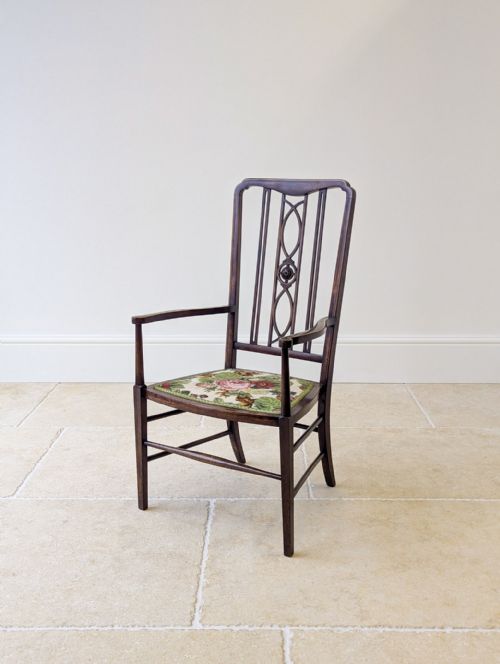
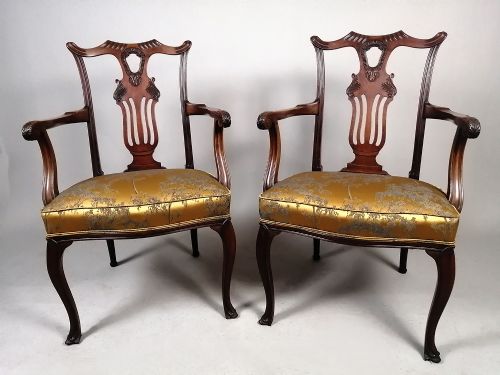
A dark wood occasional armchair functions as a versatile seat suited to bedrooms, halls, reception rooms, and studies, featuring open arms and compact proportions rather than heavy bulk.
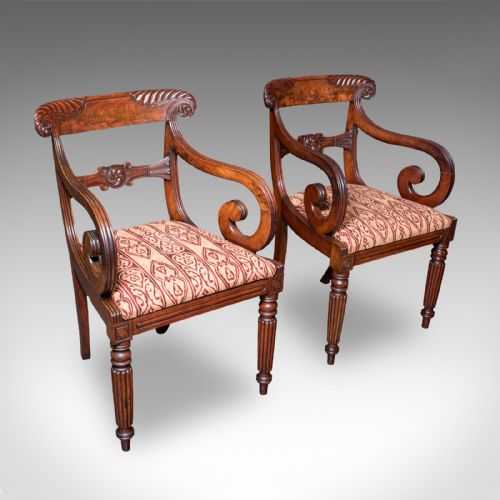
The versions encountered on this page span from the Regency and William IV periods through the Victorian era and into Edwardian and early twentieth-century revivals.
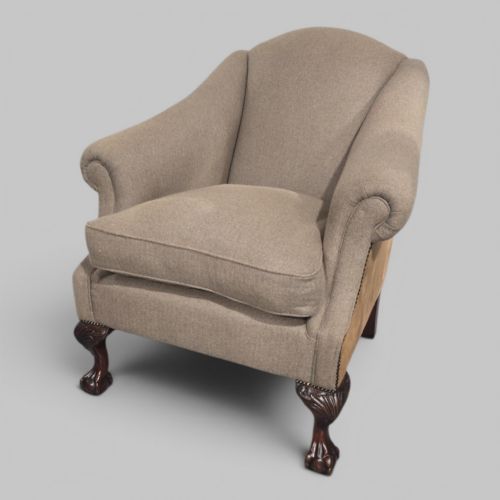
Common forms include morning room elbow chairs, tub chairs, bobbin corner chairs, stickback designs, and inlaid spindle-backed desk or dressing table chairs.
Materials and construction
Construction relies heavily on mahogany, ebonised wood, simulated rosewood, and Indian hardwood, often enhanced by brass inlay or delicate wood marquetry.
Many examples incorporate textured elements such as woven cane panels, turned bobbin members, and traditional fabric upholstery or wool padding.
Dark Wood Occasional Armchair Retail Price Guide 2026
Typical asking prices for dark wood occasional armchair among the pieces listed under this phrase on Sellingantiques today, from the lower quarter to the upper quarter. They describe what is for sale here now, not the wider market.
Design styles represented include Sheraton Revival, Chippendale Revival, and Scottish Country vernacular alongside standard Victorian and Edwardian forms.
Assessing quality and craftsmanship
Quality reveals itself in the crispness of the timber carving, the precision of brass or inlaid details, and the structural integrity of the frame joints.
Finer pieces display sophisticated stylistic revivals, such as Sheraton or Chippendale influences, alongside well-proportioned woodwork that balances decorative flair with daily durability.
Wheelers of Arncroach
The Dark Wood Occasional Armchair Glossary
- Elbow chair
- A seating piece with low arms designed to support the elbows, commonly used in studies, bedrooms, and reception spaces. These chairs offer a lighter footprint than standard armchairs.
- Tub chair
- An upholstered seat featuring a continuous curved back and arms that form a protective, rounded enclosure. This form became popular during the nineteenth century for bedroom and library use.
- Corner chair
- A square-seated chair designed to fit neatly into room corners, often supported by diagonal leg placements and a curved rail resting on turned pillars.
- Campaign chair
- A portable seating form designed for easy folding and transport, frequently constructed with hinged frames and robust hardware for travel.
- Inlay
- A decorative technique where contrasting materials such as brass or lighter woods are set flush into the dark wood surface to create geometric or floral patterns.
Dark Wood Occasional Armchair: Frequently Asked Questions
Where should I place a dark wood occasional armchair?
These compact chairs suit spaces where a full-sized armchair feels too heavy, such as a bedroom dressing area, a hallway, or beside a writing desk.
Their open arms and lighter frames allow them to move easily between rooms as needed.
How do I identify a Regency dark wood armchair?
Regency and William IV examples often feature classical proportions, scrolled lyre backs, and polished mahogany surfaces sometimes accented with fine brass inlay.
They reflect earlier neoclassical tastes with a clean, architectural line.
Are Edwardian occasional armchairs comfortable?
Edwardian versions prioritize refined utility, often combining polished mahogany with upholstered drop-in seats or cane panels for a lighter sit.
They function well for reading or desk work rather than deep lounging.