

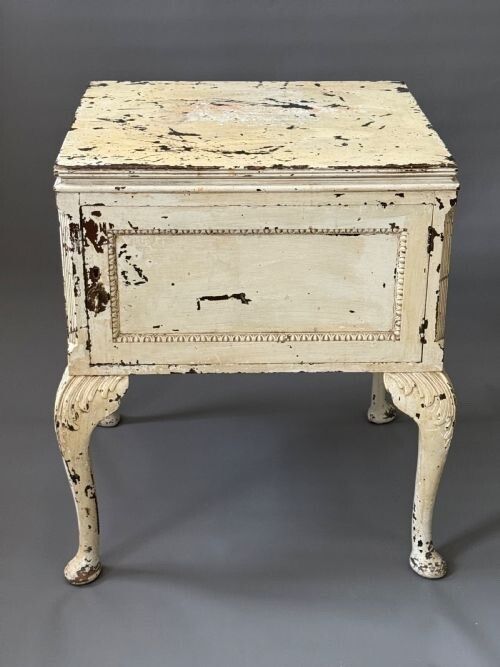
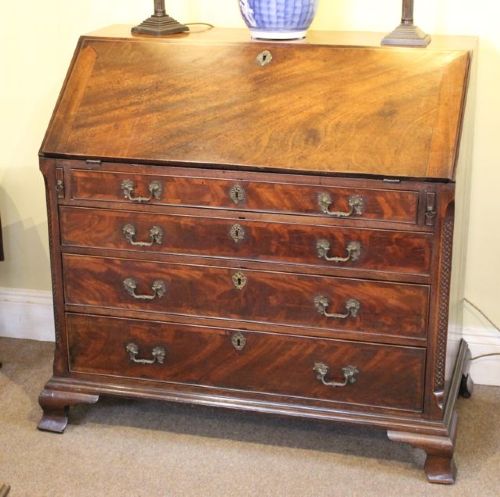
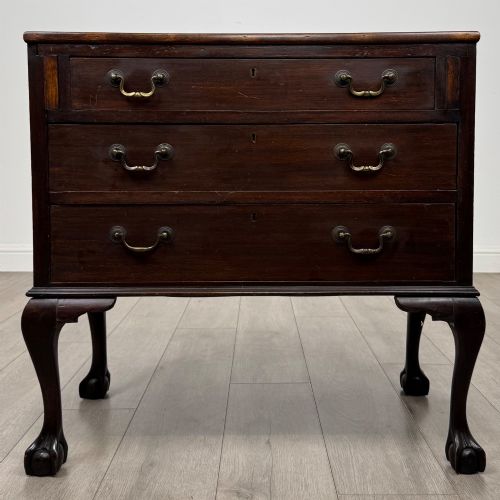
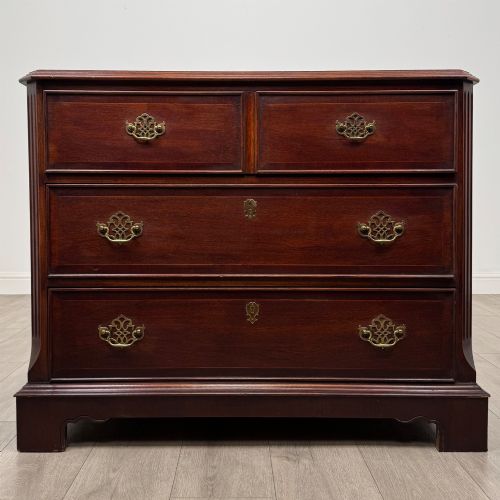


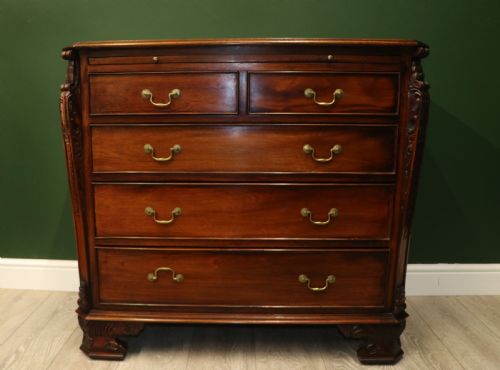
Chippendale Style Drawers
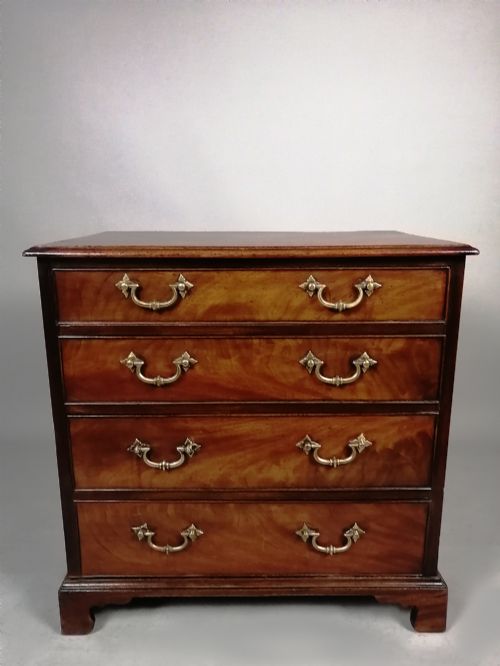
These Chippendale style drawers bring sculptural proportion and figured mahogany into a room, offering robust storage shaped by eighteenth-century design.
Chippendale Style Drawers
When searching for Chippendale style drawers, buyers encounter pieces spanning the eighteenth century through later revival periods including the Edwardian era and the nineteen-twenties.
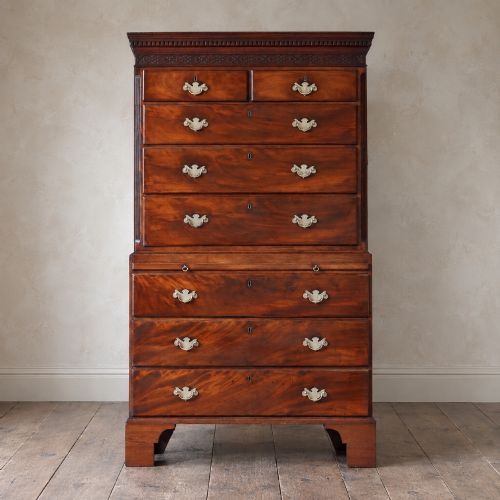
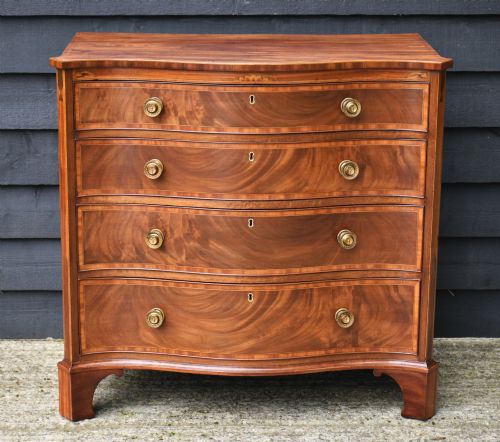
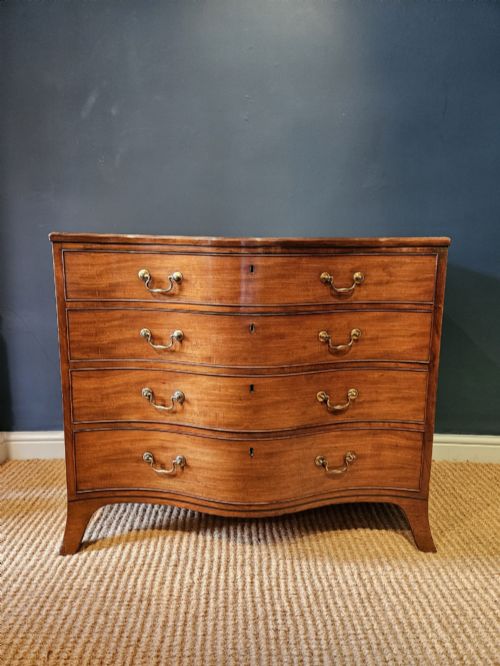
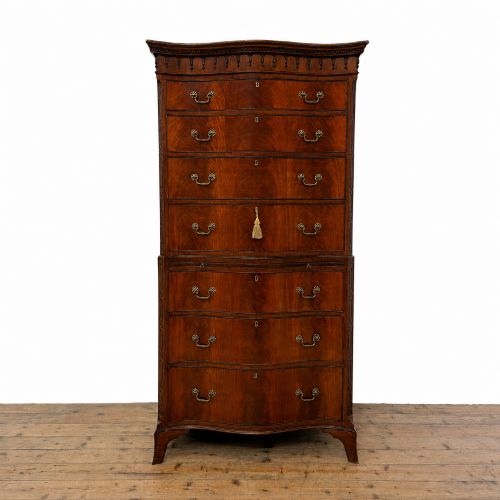
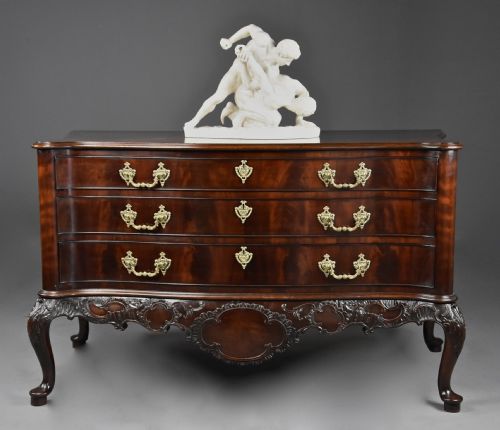
The primary forms appearing on this page are chest of drawers, chest on chest, and serpentine commodes, alongside occasional variations such as bachelors' chests with brushing slides.
Originating from Georgian design principles, these items frequently employ mahogany, Cuban mahogany, and occasionally yew wood or satinwood to achieve substantial presence.
Materials and construction
Makers utilised solid mahogany and figured veneers applied over secondary timbers, often pairing dense woods with brass hardware and leather inserts.
Serpentine fronts and chests on chests required advanced cabinet-making techniques to curve drawer fronts and assemble tall, multi-tier carcases.
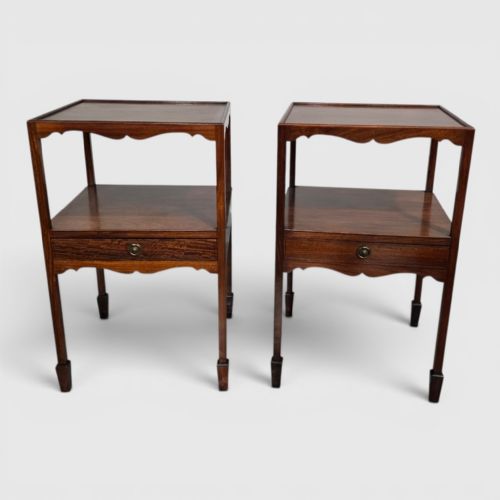
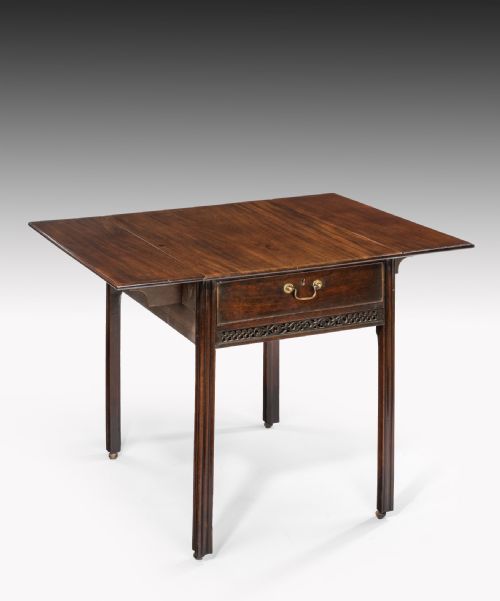
Object types span bedside cabinets, bookcases, bureaux, and side tables in addition to standard drawer chests.
Judging quality
Quality rests upon the depth of the mahogany grain, the crispness of carved details on serpentine or straight fronts, and the presence of original patination.
Finer examples integrate architectural proportions with functional additions like sliding writing shelves, contrasting with simpler revival pieces.
Gillows·Waring S Gillows·Muirhead Moffat Co
The Chippendale Style Drawers Glossary
- Serpentine
- A front profile curving outward in the centre and inward at the sides. This shape requires skilled carpentry to shape thick timber.
- Brushing slide
- A pull-out shelf positioned above the top drawer. It served as a surface for grooming or writing before drawers were opened.
- Chest on chest
- A tall storage unit comprising an upper chest resting directly upon a larger lower chest. It is also known as a tallboy.
- Patina
- The surface sheen and colour developed by wood over decades of handling and polishing. Original patina indicates age and gentle upkeep.
- Baton
- A narrow strip of wood used internally to reinforce joints or drawer runs. Good examples retain sound structural framing.
Chippendale Style Drawers: Frequently Asked Questions
How do I identify a genuine period piece?
Study the construction methods, drawer linings, and timber choice. Eighteenth-century pieces show hand-cut dovetails and distinct ageing in the mahogany.
Revival pieces from later eras often use machine-cut joints and different secondary woods underneath the primary surfaces.
Where should I place a serpentine chest?
These chests suit bedrooms, reception rooms, or hallways as focal points. Their curved fronts demand space to be seen properly.
Keep them away from direct heat sources and strong sunlight to protect the mahogany finish and prevent timber splitting.
What is a brushing slide used for?
The pull-out slide acts as a temporary writing or dressing surface just above the main drawers. It provides utility without occupying extra floor space.
Buyers find this feature particularly desirable on bachelors' chests and smaller Georgian models.
How do I care for mahogany surfaces?
Dust regularly with a soft cloth and apply quality wax sparingly to maintain the sheen. Avoid silicone sprays which damage old finishes.
Stable indoor humidity levels prevent the wood and veneer from expanding or contracting.