


Chippendale Style Couch
A chippendale style couch brings enduring proportion and carved mahogany framework into a room, offering the classic silhouette collectors seek.
Chippendale Style Couch
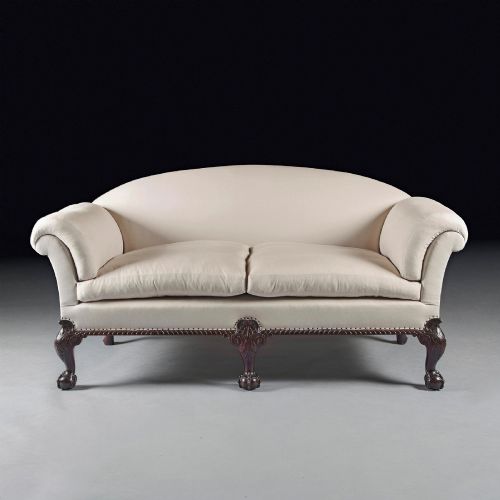
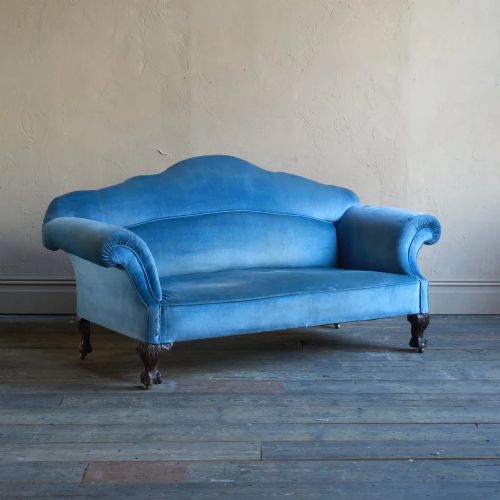
When searching for a chippendale style couch, buyers encounter seating shaped by revival movements alongside period forms, spanning the eighteenth through the early twentieth centuries. These pieces appear as sofas, settees, and benches, often showcasing the characteristic camel back profile or triple-back arrangement.
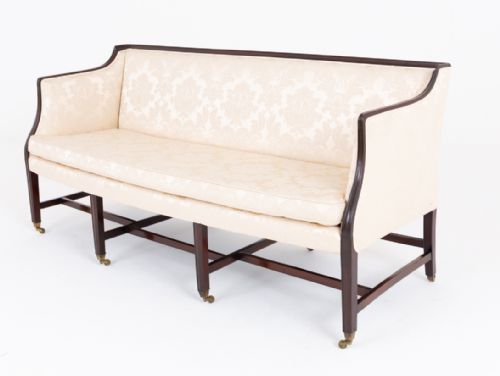
The versions met most frequently on this page date from the nineteenth and early twentieth centuries, including Edwardian and Victorian interpretations. Mahogany forms the primary structure, matched with varied upholstery choices ranging from simple cotton calico to damask, velvet, and leather.
Crafting the wooden frame and upholstery
Makers constructed these frames predominantly from solid mahogany and walnut, employing traditional joinery to support the substantial weight of the timber. Hand-carving defines the decorative elements, particularly on the legs where ball and claw or hawk claw motifs emerge directly from the wood.
Upholstery techniques varied across periods, utilising fabric, damask, velvet, and cotton calico stretched over internal padding. Caning also appears on specific lounge suites, adding textural contrast to the carved wooden arms and rails.
Listings feature mahogany and wood structures paired with diverse textile options including velvet, damask, and cane.
Distinguishing quality in timber and carving
Quality separates through the crispness and depth of the hand-carving on the frame, particularly around the knees and feet of the legs. Sharply defined ball and claw details indicate superior execution by the maker compared to softer, more rounded profiles.
The selection of timber grain and the integrity of the structural proportions dictate the standing of a piece. Finer examples maintain balanced serpentine lines and robust mahogany construction that withstands decades of domestic use.
Howard and Sons·J. S. Kinsey
The Chippendale Style Couch Glossary
- Camel back
- A serpentine curved top rail on a sofa or settee that resembles the hump of a camel. This profile became a defining feature of eighteenth-century seating design.
- Ball and claw
- A foot motif depicting a bird's talon clutching a ball, carved directly onto the base of a cabriole leg. Craftsmen drew inspiration from Chinese art when adopting this detail.
- Serpentine front
- A curved front rail that undulates inward and outward in a continuous wave. It adds visual movement and complexity to the base of the seat.
- Bergere
- An enclosed upholstered armchair or sofa featuring exposed wooden frames and woven cane panels. This French-influenced style appears in early twentieth-century lounge suites.
Chippendale Style Couch: Frequently Asked Questions
How do I identify a revival piece?
Revival pieces are identified by the timber characteristics, tool marks, and secondary woods that align with nineteenth or early twentieth-century manufacturing methods rather than the eighteenth century.
Examining the construction beneath the upholstery often reveals the true age of the framework and helps distinguish between a Georgian original and a later interpretation.
Where were these settees placed?
These settees served in principal reception rooms, libraries, and drawing rooms as formal seating for guests and family members.
Larger lounge suites accommodated multiple sitters, while individual window seats or couches were tailored for specific alcoves within the home.
What fabrics suit this furniture?
Traditional upholstery choices recorded in these pieces include damask, velvet, cotton calico, and leather, which complement the dark tones of mahogany and walnut frames.
Selecting a textile often depends on whether the goal is to replicate a period appearance or to integrate the seating into a contemporary interior scheme.
How do I care for the mahogany?
Mahogany requires minimal intervention beyond dusting with a soft cloth and avoiding placement near direct heat sources that can dry out the timber.
Maintaining stable room humidity protects both the polished wood surfaces and the integrity of the traditional joinery over time.