
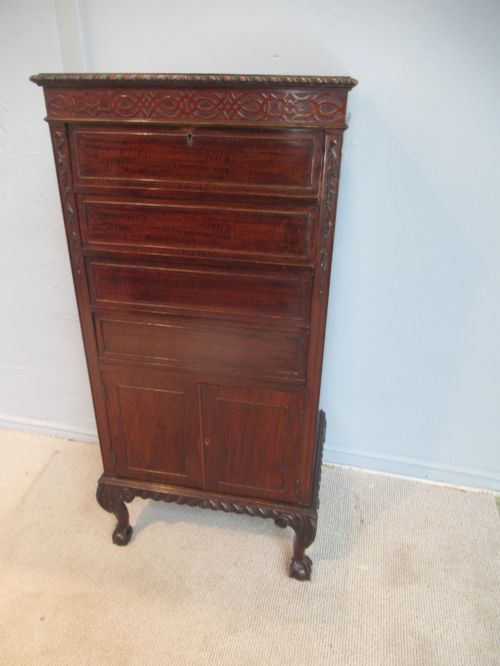
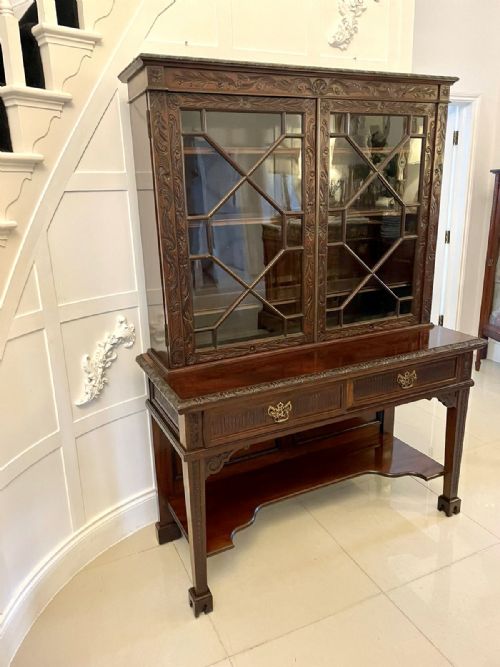


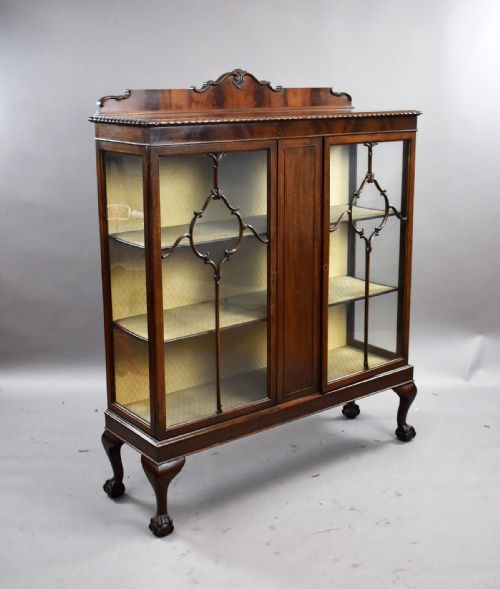


Chippendale Standing Cabinet
These chippendale standing cabinet pieces bring structural presence and refined glazing to a room, offering both display space and storage.
Chippendale Standing Cabinet
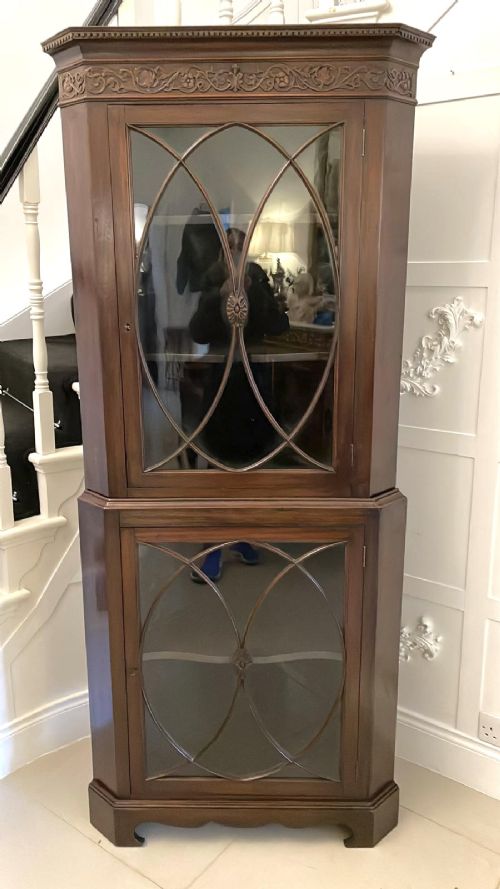
A chippendale standing cabinet encompasses tall display pieces, bookcases, cabinets on stands, and corner cabinets that echo the proportions of the 18th century. Buyers searching this phrase meet both authentic Georgian pieces and later revivals from the Victorian and Edwardian eras.
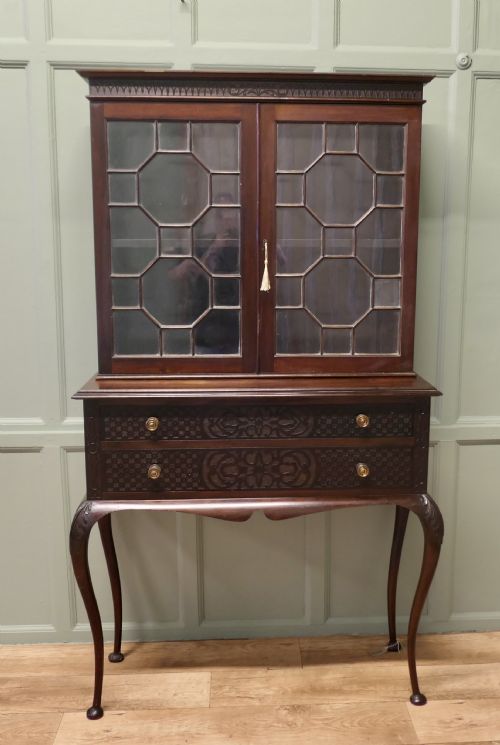
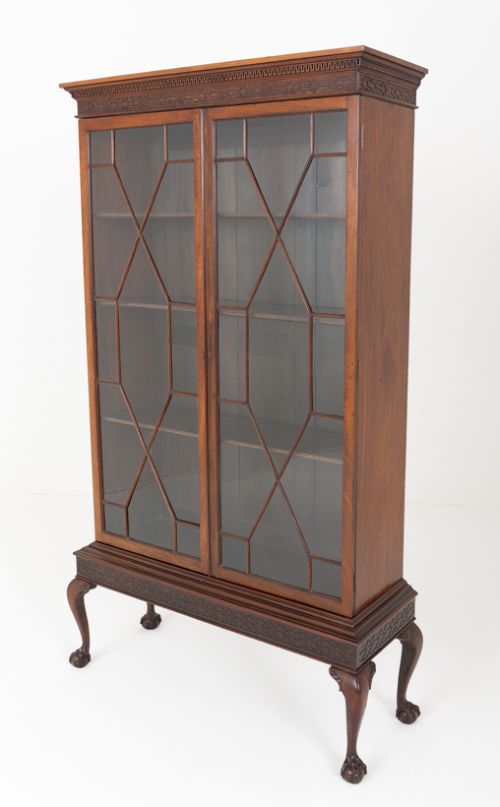
The version most commonly encountered on this page is the Chippendale revival display cabinet or bookcase in mahogany, often featuring glazed doors and carved details. These revival iterations span the late 19th century through the early 20th century.
Origins stretch from Georgian workshops to later London cabinet makers interpreting the style with glazed upper sections or raised stands. Form follows function through display cabinets, bookcases, and side cabinets designed to showcase or store prized possessions.
Materials and construction
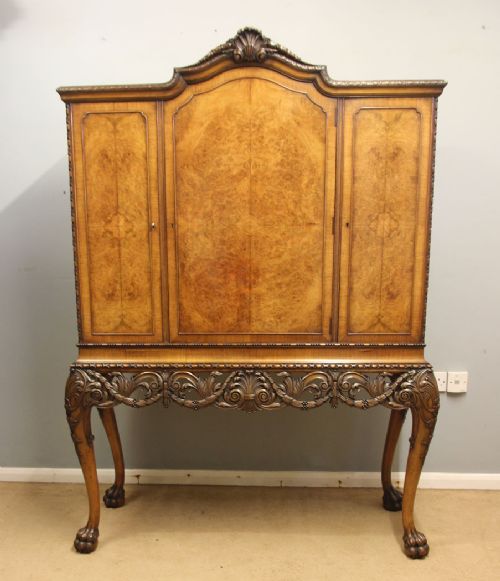
Mahogany serves as the primary timber across the pieces, supplemented by burr walnut veneer and oak in select structures. Timber selection dictates the grain pattern and structural integrity of each standing cabinet.
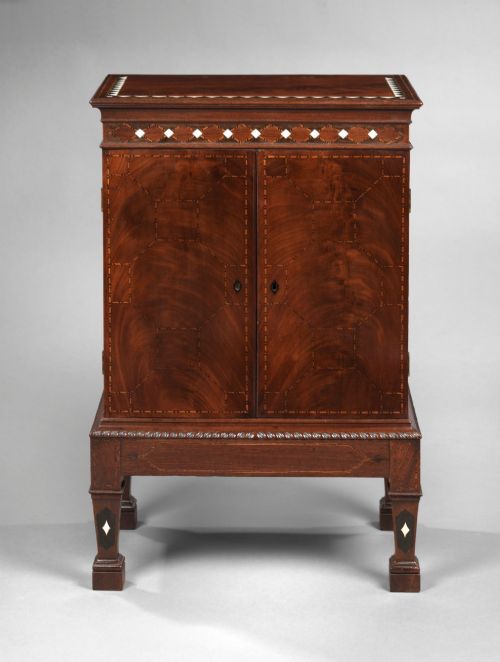
Glass is integrated into astragal glazed doors to protect contents while allowing visibility. Brass hardware and occasional bone inlay provide functional fastenings and decorative contrast against the dark wood.
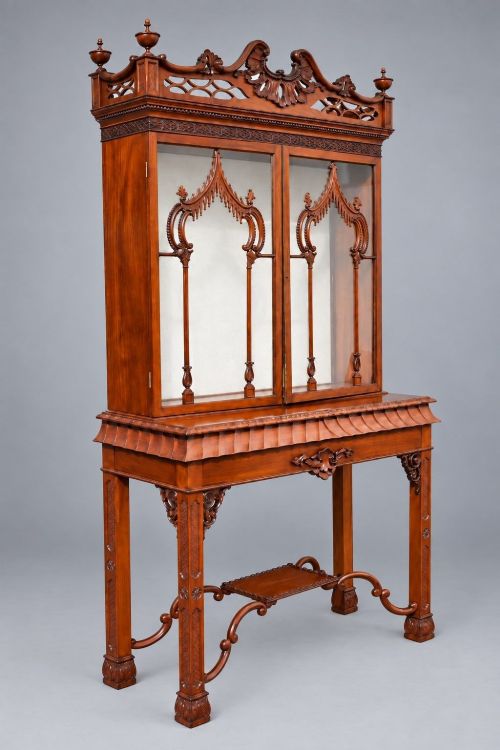
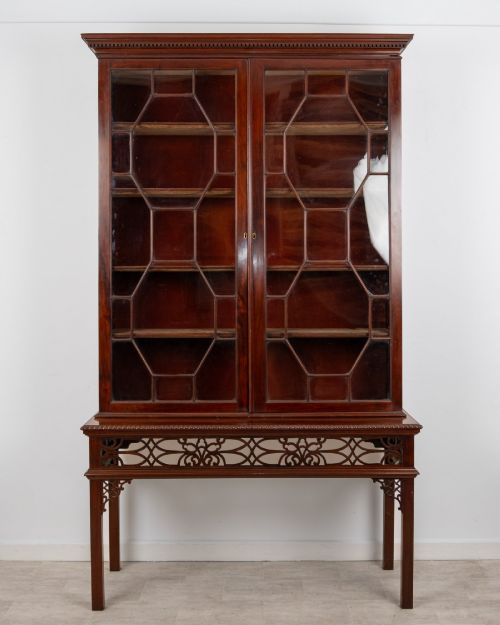
Carving defines the stylistic ornamentation, from classical motifs to Chinese Chippendale fretwork and pierced galleries. Joinery relies on traditional cabinet-making techniques to support heavy glazed doors and stands.
Listings feature mahogany predominantly, alongside oak and burr walnut veneer across various display cabinets and bookcases.
The markers of distinction
Depth of carving and sharpness of detail separate standard production from exceptional work. Master carvers achieved crisp lines in the mahogany ornamentation that lesser workshops replicated with softer, shallower incisions.
Proportion and scale dictate the visual harmony of a cabinet on stand or breakfront bookcase. The most successful examples maintain balanced proportions between the upper display area and the supporting base or legs.
James Winter And Sons·Edwards And Roberts·Walker And Hall·Warings
The Chippendale Standing Cabinet Glossary
- Astragal glazed
- Glass doors divided by slender wooden mouldings into small panes. These glazing bars create a structured grid pattern typical of period bookcases and display cabinets.
- Cabinet on stand
- A cabinet form raised upon a separate base with legs. This configuration lifts the storage volume off the floor to create lighter proportions.
- Chinese Chippendale
- A sub-style featuring fretwork, pagoda motifs, and lattice patterns inspired by Chinese design. It gained popularity during the Georgian period and saw revivals in the Victorian era.
- Breakfront
- A piece of furniture where the central section projects forward from the outer wings. This architectural arrangement adds depth and shadow to large bookcases and cabinets.
- Tray-top
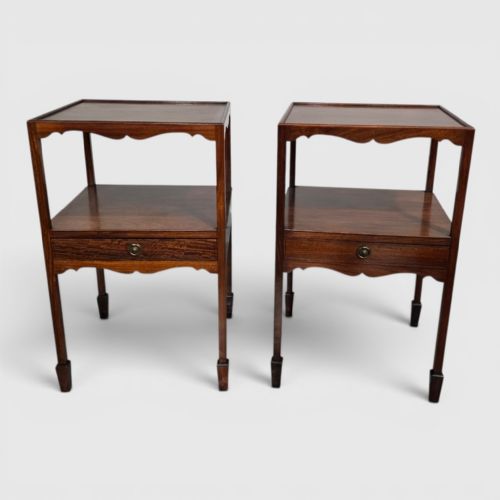
- A tabletop finished with a raised rim or gallery edge. This detail prevents items placed on top from sliding off.
Chippendale Standing Cabinet: Frequently Asked Questions
What is a chippendale standing cabinet?
A chippendale standing cabinet is an upright storage or display piece influenced by the designs of Thomas Chippendale. These items range from genuine Georgian pieces to later revival bookcases and cabinets on stands.
They provide vertical storage while serving as decorative focal points within a room. The category includes glazed display cabinets, corner units, and bureaux.
How do I tell Georgian from revival pieces?
Authentic Georgian pieces exhibit the timber shrinkage, hand-cut joinery, and patina consistent with 18th-century use. Revival pieces from the Victorian and Edwardian eras show standardised construction methods and machinery marks.
Secondary woods and hardware styles also help distinguish period originals from 19th and 20th-century interpretations. Examining the interior construction reveals the true manufacturing era.
Where should I place a standing cabinet?
Standing cabinets require stable wall space away from direct sunlight to protect mahogany timbers and antique glass. Tall display cases work well in reception rooms or libraries where their glazed doors can be appreciated.
Ensure the floor is level, particularly for tall breakfront bookcases or cabinets on stands. Adequate clearance allows doors to open fully without obstruction.
How do I care for mahogany cabinetry?
Maintain a stable indoor climate with moderate humidity to prevent timber splitting or veneer warping. Dust surfaces regularly with a soft, dry cloth rather than applying silicone-based polishes.
Keep cabinets away from direct heat sources such as radiators and fireplaces. Gentle cleaning preserves the natural finish and historical patina of the wood.