



Chippendale Ribbon Back Chairs
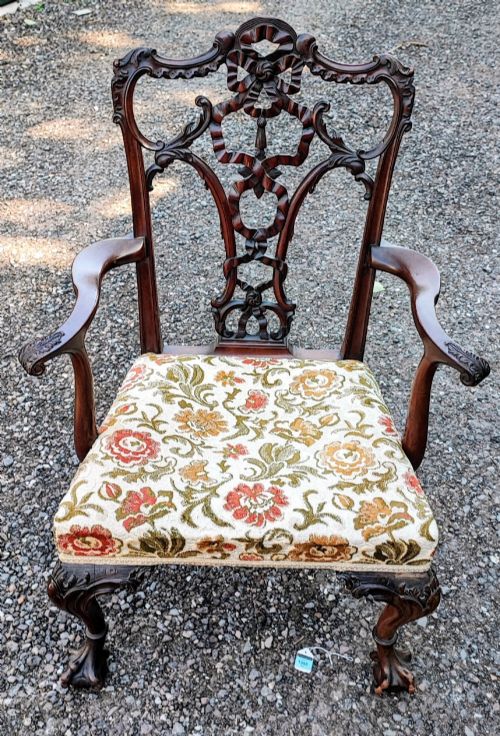
Chippendale ribbon back chairs combine classical carved mahogany frames with intricate interlaced splats, offering elegance for dining and sitting rooms.

Chippendale Ribbon Back Chairs
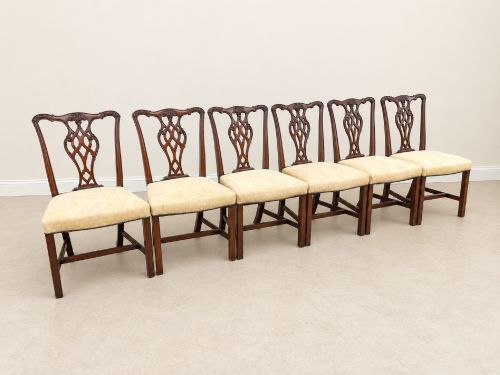
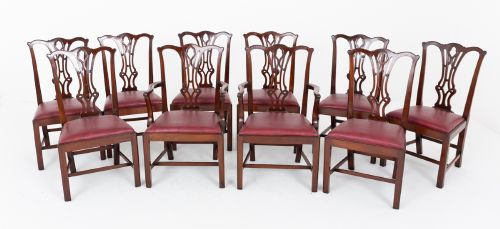
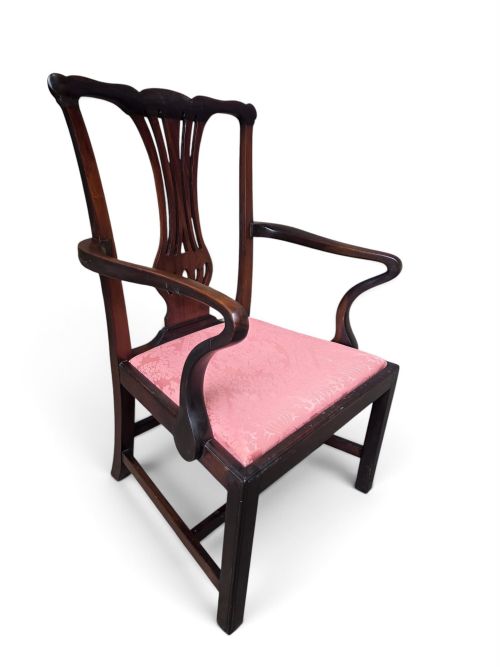
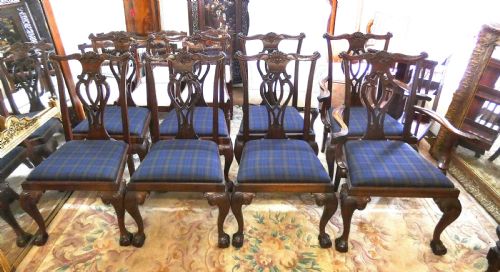
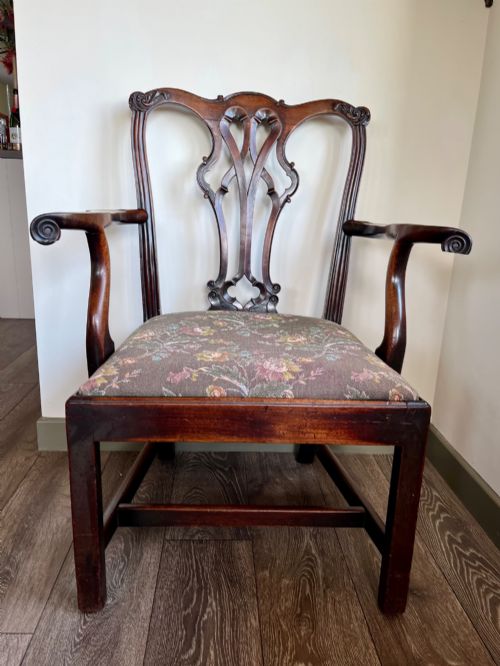
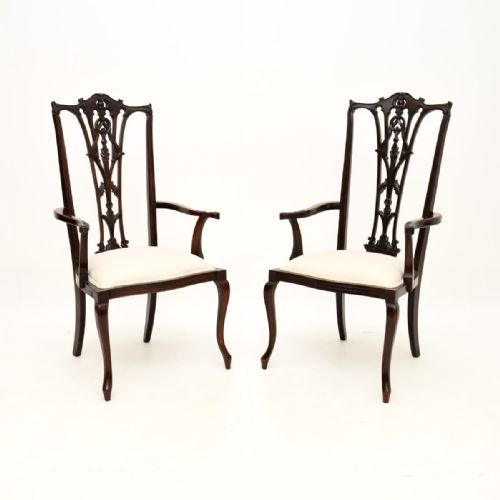
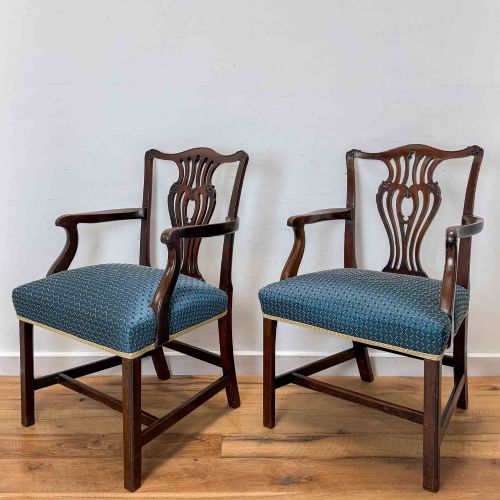
Chippendale ribbon back chairs include single dining seats, carvers, and desk chairs shaped in revival and 18th-century idioms. The forms survive as individual pieces, pairs, and extensive matched sets spanning the Georgian era through to the 20th century.
Most examples met on this page date from the Victorian period, the late 19th century, and the early 20th century. These revival pieces adopt the distinctive pierced splat design modelled on carved ribbons.
Dining chairs appear commonly in sets of six, eight, ten, or twelve, often incorporating armchairs alongside single chairs. Desk chairs and open armchairs complete the range of surviving seating forms.
Materials and construction
Makers shaped these chairs primarily from solid mahogany, utilising its dense grain to support deep carving along the splats, rails, and cabriole legs. Walnut appears in select Georgian pieces.
Upholstery materials include fabric, leather, velvet, and damask. Drop-in seats or fixed pads conceal internal webbing and stuffing beneath top covers secured with brass tacks.
Victorian craftsmen carved ribbons into wood so convincingly that guests occasionally reach out to untie them.
Assessing quality
Quality rests in the crispness and depth of the carved ribbon splat and the joinery of the frame. Superior examples display sharp contours and balanced proportions across the entire set.
The integrity of the timber and the retention of original upholstery foundations distinguish finer examples from later replacements. Sets maintaining uniform colour and matching grain patterns command greater interest.
The Chippendale Ribbon Back Chairs Glossary
- Ribbon back
- A chair splat carved to resemble interlaced ribbons tied in a bow. This ornamental design defines the specific style.
- Carver
- An armchair designed with elbow supports, frequently used at the head of a dining table or as a desk chair. Pairs often accompany sets of single chairs.
- Drop-in seat
- A removable frame upholstered separately and dropped into the seat rails. This construction allows easy reupholstery without dismantling the chair.
- Splats
- The vertical central strip of wood within a chair back. Ribbon back versions feature intricate openwork carving.
- Chippendale revival
- Furniture produced in the 19th and 20th centuries copying 18th-century designs. These pieces emulate Georgian craftsmanship.
Chippendale Ribbon Back Chairs: Frequently Asked Questions
How do I date a ribbon back chair?
Dating relies on timber characteristics, tool marks, and construction methods. Georgian originals display period wear and specific joinery, whereas revival pieces often show late 19th-century or early 20th-century workshop traits.
Style nomenclature and secondary woods help confirm whether a piece dates to the 18th century or belongs to later revival periods.
Are these chairs suitable for daily dining?
Solid mahogany frames provide sturdy support for regular dining use. Many sets survive precisely because robust construction suited daily domestic life.
Checking joint stability ensures the frame handles daily sitting without loosening over time.
What is the difference between single and arm chairs?
Single chairs feature back and seat structures intended for standard placement around a table. Armchairs include integrated arm supports for the head of the table or desk use.
Sets often combine six single chairs with two armchairs to form a matched dining arrangement.
How do I care for mahogany frames?
Maintaining mahogany involves dusting with a dry cloth and avoiding direct sunlight. Wax polish preserves the finish without building up heavy residues.
Stable indoor humidity prevents timber movement and protects the integrity of the carved details.