
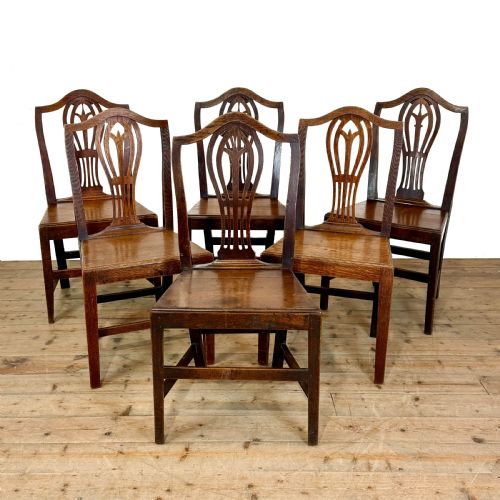
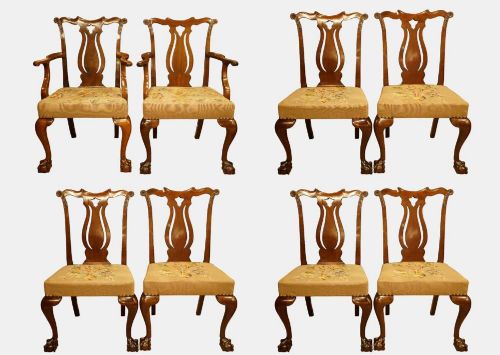


Chippendale Revival Dining Chairs
Chippendale revival dining chairs capture the elegance of eighteenth-century proportion through nineteenth and twentieth-century cabinetmaking.
Chippendale Revival Dining Chairs
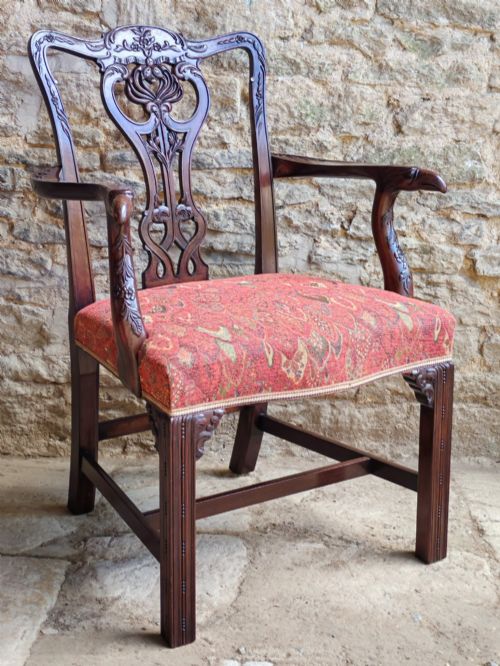
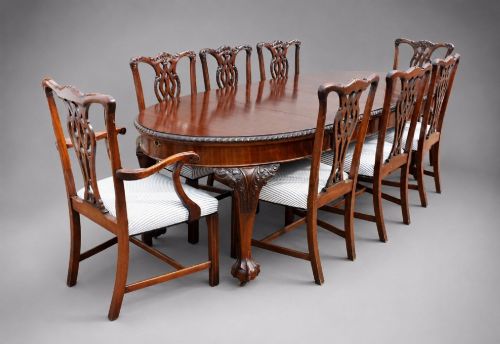
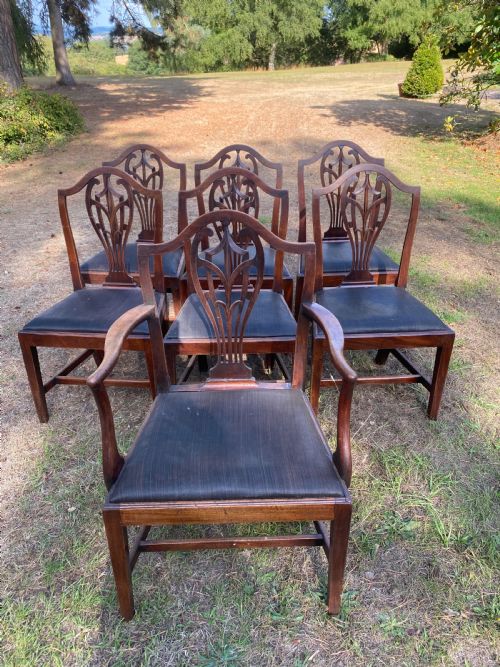
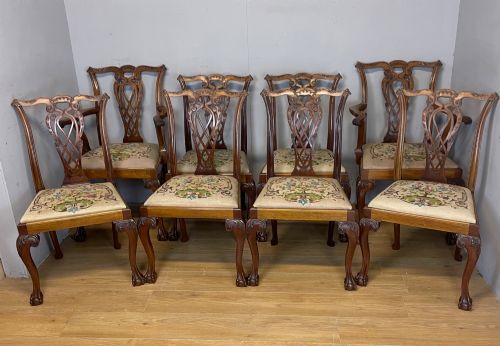
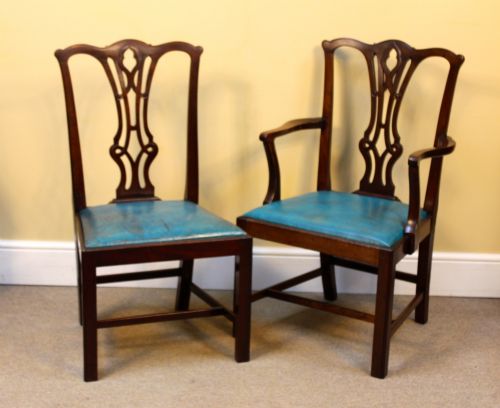
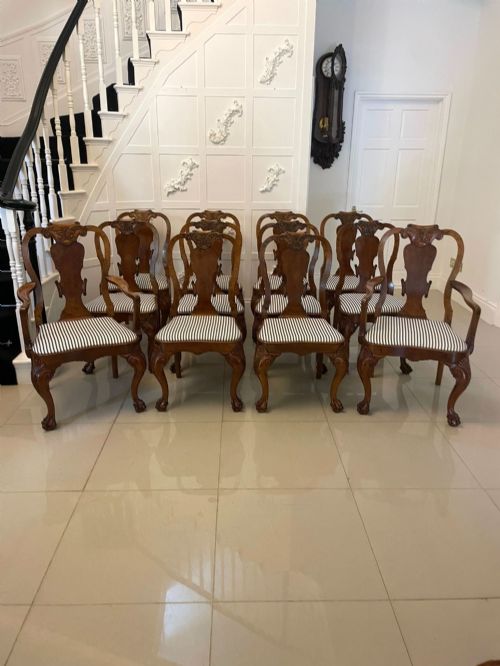
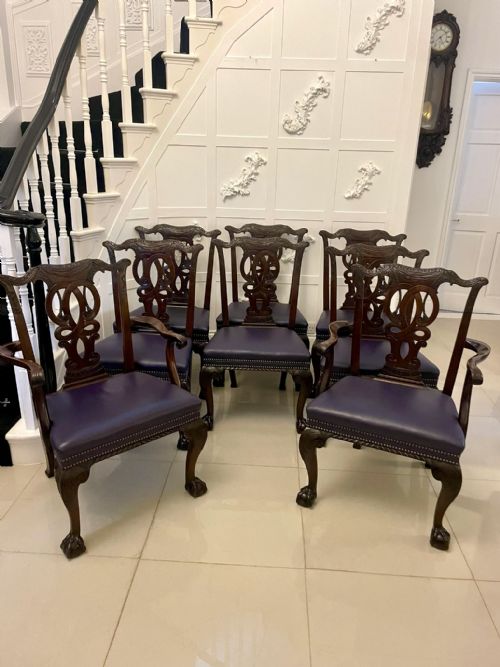
Chippendale revival dining chairs draw upon the mid-eighteenth-century pattern books of Thomas Chippendale, reinterpreted during the Victorian, Edwardian, and later periods. These seating pieces typically appear as sets of side chairs alongside matching carvers or armchairs featuring open arms.
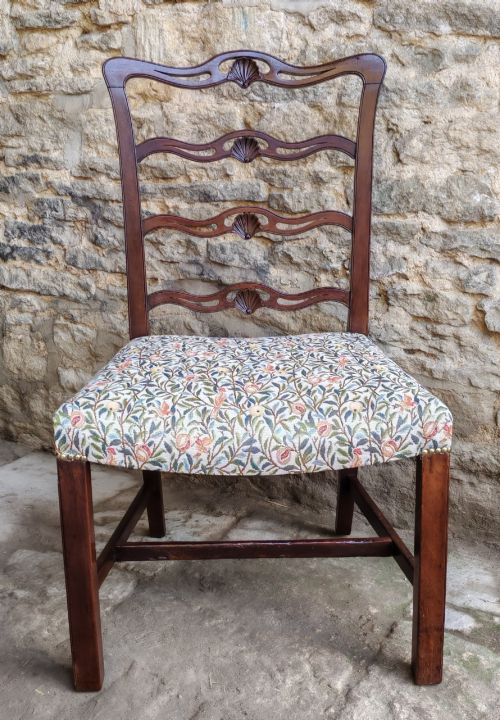
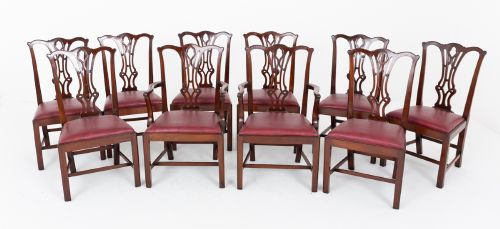
The selections span single chairs for smaller tables up to long sets numbering ten or twelve pieces. Alongside standard dining formats, occasional iterations include hall chairs and ladderback variants produced in mahogany and oak.
How They Were Made
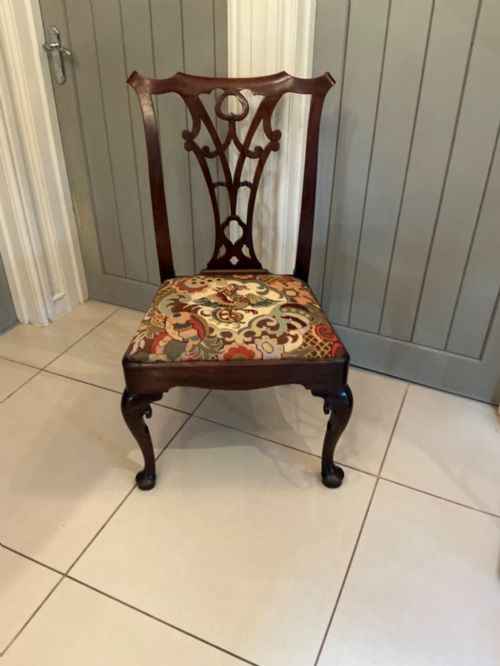
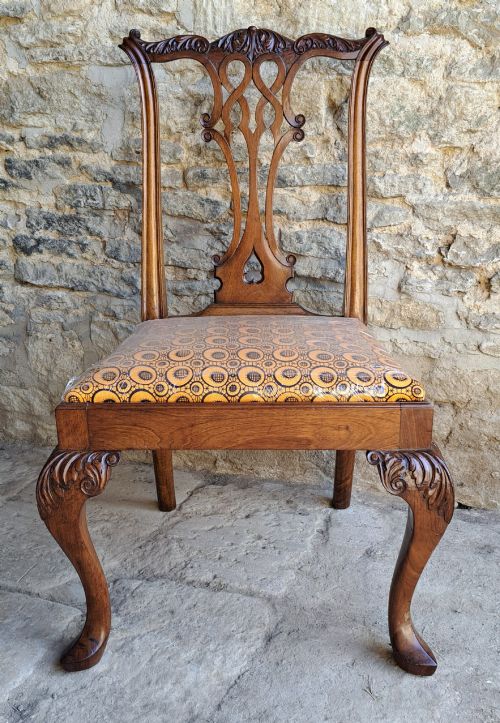
Makers relied predominantly on solid mahogany and oak, often shaping the timber through hand-carving to achieve intricate interlaced ribbon splats and scrolled top rails. Frames were joined using traditional tenon and mortise construction to withstand daily dining use.
Seating portions integrated drop-in pads or upholstered foundations covered in leather, velvet, or woven tapestry secured with brass tacks.
Listings show production dates spanning the Victorian, Edwardian, and interwar eras, executed primarily in solid mahogany with leather or tapestry upholstery.
What Varies in Quality
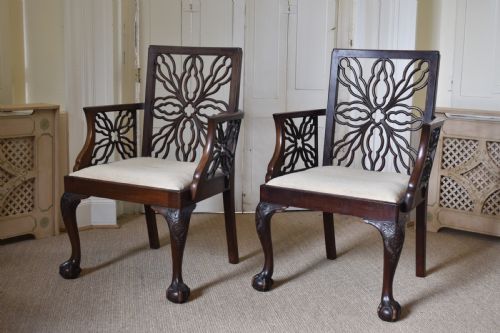
The depth and crispness of the timber carving dictate distinction, with superior examples displaying sharp relief work on the knees and claw-and-ball feet rather than soft, shallow detailing. Coherence across large sets also matters greatly, as matching timber grain and uniform patination distinguish unified workshop production from assembled suites.
The structural integrity of the frame joints and the retention of original upholstery materials influence the standing of individual pieces within the market.
Howard and Sons·Warings·Robert Strahan Dublin·Phillips and Jones·S and H Jewell of London
The Chippendale Revival Dining Chairs Glossary
- Carver
- An armchair designed with open sides to accommodate formal dining attire. These often accompany larger sets of single chairs.
- Splat
- The vertical wooden strip positioned centrally within the backrest. It receives elaborate piercing and carving in revival iterations.
- Ball and claw
- A foot motif depicting a bird talon grasping a sphere. It terminates the cabriole legs of many refined seating examples.
- Cabriole leg
- An outward-curved leg mimicking animal limbs, tapering downward to a foot. This form defines much of the revival aesthetic.
- Ladderback
- A chair back featuring multiple horizontal cross rails. The design recurs across nineteenth-century revival iterations.
Chippendale Revival Dining Chairs: Frequently Asked Questions
How do I identify a revival chair?
Revival pieces exhibit machine-assisted precision alongside hand-carving, utilising denser nineteenth-century mahogany stocks rather than eighteenth-century pine secondary woods.
Examination of the joinery and underside timber generally reveals the later production window.
Can I mix carvers with side chairs?
Original dining suites frequently paired two armchairs with six or eight single side chairs for head-of-table placement.
Matching the carved splat motifs and leg styles ensures visual harmony when combining disparate seating.
What maintenance do leather seats need?
Leather upholstery benefits from periodic application of specialist wax conditioner to prevent cracking across the surface.
Keeping frames away from direct heat sources protects the timber joints from separating over time.
Are oak versions as common as mahogany?
Mahogany forms the vast majority of surviving inventory, reflecting nineteenth-century preferences for imported hardwoods.
Oak iterations appear less frequently, usually tied to specific vernacular or arts-influenced revival interpretations.