


Mahogany Ladder Back Seating
Mahogany ladder back seating is robust domestic furniture built for dining and sitting, combining disciplined timber frames with horizontal slats.
Mahogany Ladder Back Seating
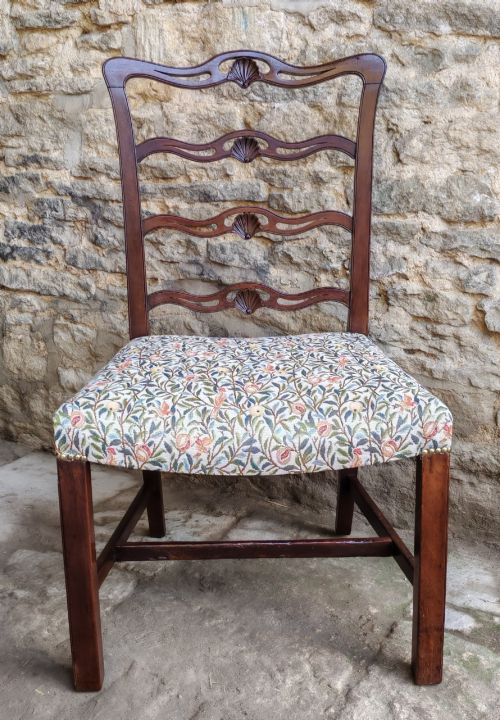
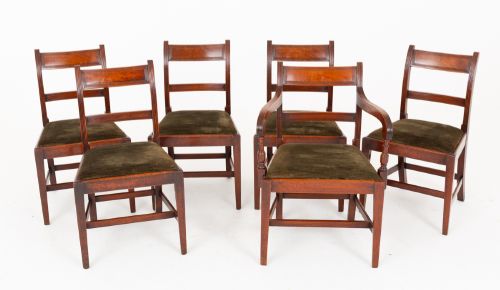
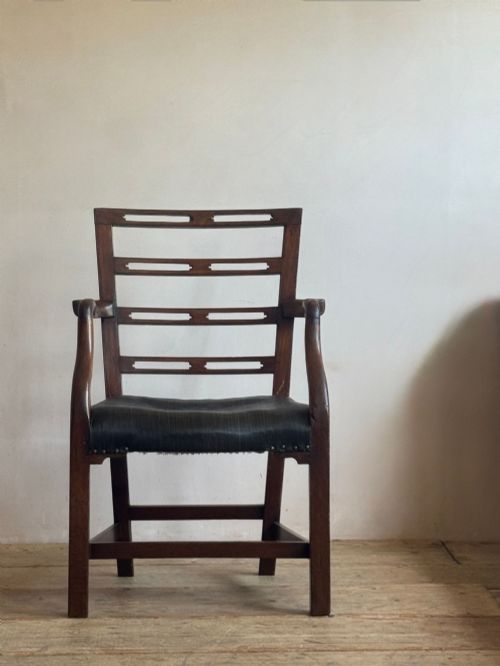
Mahogany ladder back seating encompasses dining chairs, armchairs, settees, and rocking chairs built primarily for domestic interiors. When exploring mahogany ladder back seating, buyers encounter pieces spanning the eighteenth century through to the early twentieth century, including Georgian and Victorian examples.
The core form relies on distinct horizontal slats across the backrest, often shaped or pierced. Surviving pieces frequently appear in sets of single dining chairs alongside matching armchairs from the same period.
Revival styles surface regularly alongside earlier work, reflecting Georgian, Chippendale, Hepplewhite, and Art Nouveau influences. Scottish and Irish regional variants also appear within the selection.
Seating surfaces vary widely across these items, featuring drop-in pads upholstered in fabric, leather, velvet, and tapestry, alongside woven rush bases.
Materials and construction methods
Makers utilised dense mahogany timber for the primary frames, ensuring structural stability for daily dining use. Wood selection dictated both the weight of the chair and the crispness achievable in carved details.
Joinery techniques relied on traditional mortise and tenon joints to secure the uprights and horizontal ladder rails. Seat frames were constructed to accommodate drop-in pads or woven rush inserts.
Upholstery materials such as leather, velvet, tapestry, and fabric were secured with brass tacks over stuffing. Decorative elements like pierced slats and carved top rails required skilled hand woodworking.
Some ladder back rocking chairs provide nineteenth-century comfort for sitters who preferred gentle motion while dining or resting.
Judging quality and craftsmanship
Quality rests upon the calibre of the timber selection and the precision of the joinery within the frame. Heavier, denser mahogany yields sturdier structural performance over centuries of use.
The refinement of the slat shaping separates standard production from superior craftsmanship. Pierced or intricately carved ladder rails demand greater artisan skill than plain horizontal boards.
Originality of components and surface finish dictate historical standing. Chairs retaining their initial timber patination and matching upholstery configurations hold greater integrity.
The Mahogany Ladder Back Seating Glossary
- Ladder back
- A chair back featuring multiple horizontal wooden slats resembling the rungs of a ladder. This design evolved through various regional and stylistic periods.
- Drop-in seat
- A removable upholstered frame that fits tightly into the seat rails of a chair. It allows for straightforward reupholstery without dismantling the main structure.
- Chippendale
- A mid-eighteenth-century English design style characterised by carved cabriole legs and intricate back splats. Later Victorian revivals reinterpreted these motifs.
- Rush
- A marsh plant woven tightly to create a durable, textured seating surface. It appears frequently on traditional vernacular chair frames.
- Settee
- A long wooden seat with a backrest and arms, designed to accommodate multiple people. These match the aesthetic of associated dining chair sets.
Mahogany Ladder Back Seating: Frequently Asked Questions
How do I care for mahogany furniture?
Mahogany frames require stable indoor humidity and protection from direct sunlight to prevent timber drying and splitting. Regular dusting with a dry, soft cloth maintains the natural surface patination.
Avoid placing these chairs near direct heat sources, which can destabilise traditional glue joints and dry out upholstered seat pads.
Are these chairs suitable for daily use?
Solid mahogany frames offer robust structural integrity suitable for regular dining room use. Checking the stability of the leg joints ensures safe daily seating.
Original upholstered drop-in pads may require modern foam replacement for sustained comfort during extended dining sessions.
How do I identify a revival piece?
Revival pieces replicate earlier eighteenth-century styles like Chippendale or Hepplewhite but date from the Victorian or Edwardian eras. Timber finish, internal construction marks, and tool methods often distinguish nineteenth-century interpretations from Georgian originals.
Stylistic elements sometimes blend periods, such as Victorian interpretations incorporating heavier proportions and distinct carved accents.
What seat materials should I expect?
Seating surfaces include upholstered pads covered in fabric, leather, velvet, or tapestry, alongside woven rush inserts. Many dining chairs feature drop-in upholstered frames.
The choice of material often reflects the period and whether the piece was intended for formal dining or relaxed library use.