
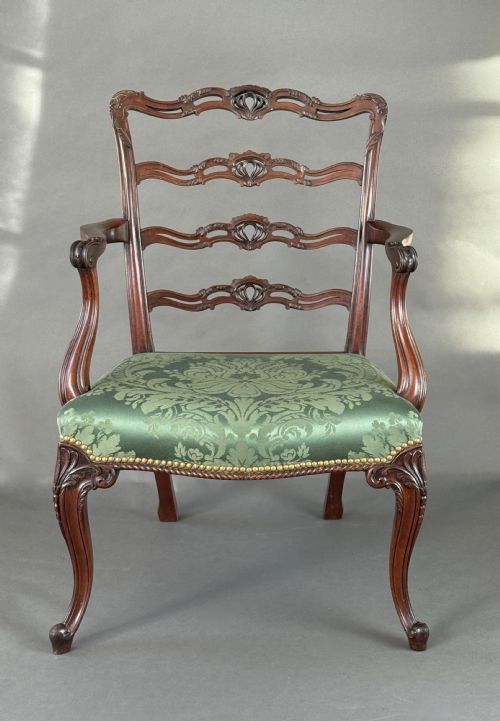


Georgian Style Ladderback Chairs
Georgian style ladderback chairs combine timeless structural elegance with practical seating, offering both period charm and durable utility for modern dining rooms.
Georgian Style Ladderback Chairs
When you search for georgian style ladderback chairs, you encounter seating solutions spanning the eighteenth century through to later revival periods like the 1920s and 1930s. The selection comprises individual armchairs, desk chairs, sofa seats, and matched sets of dining chairs originating from British cabinet-making traditions.
The dominant material on this page is mahogany, frequently paired with rush seating or upholstered pads in velvet, tapestry, and various fabrics. You will find examples ranging from authentic George III and Chippendale period pieces to Edwardian and later revival interpretations.
Dining chairs appear most frequently in sets, while armchairs and desk chairs survive as single items or pairs. These pieces serve primarily as functional dining furniture and statement office or reception seats.
How they were made
Cabinet makers utilised dense timbers such as mahogany and oak to construct the robust frames essential for supporting repetitive daily use. Woodworking techniques of the period relied on mortise and tenon joinery to ensure long-term structural stability without relying on modern fasteners.
Seating surfaces incorporated woven rush or drop-in frames covered in textiles like velvet, tapestry, and upholstery fabric. Brass detailing occasionally appears on specific desk chairs and armchairs to reinforce high-stress joints or provide decorative accents.
Listings incorporate items spanning the eighteenth, nineteenth, and twentieth centuries, using mahogany, oak, rush, and diverse upholstery fabrics.
What varies in quality
Quality in these chairs rests upon the crispness of the carved horizontal slats and the selection of well-figured mahogany timber. Pieces exhibiting refined proportions and balanced joinery demonstrate superior craftsmanship compared to simpler utilitarian versions.
The integrity of the original wood grain and the finesse of the joinery elevate certain chairs into the upper tier of desirability. Later revival pieces vary according to how closely they adhere to eighteenth-century proportions and hand-carving standards.
The Georgian Style Ladderback Chairs Glossary
- Ladderback
- A chair back featuring a series of horizontal wooden slats resembling the rungs of a ladder. This design gained prominence in English country and formal dining seating.
- Chippendale
- A distinct eighteenth-century furniture style named after designer Thomas Chippendale. It often incorporates elaborate carved splats and robust cabriole or straight legs.
- Hepplewhite
- A neoclassical furniture style characterised by lighter proportions, shield-back or ladder-back designs, and tapered legs. It reflects the refined aesthetic of the late eighteenth century.
- Drop-in seat
- A removable wooden frame upholstered in fabric or tapestry that drops securely into the seat rail of a chair. This construction facilitates easy reupholstery.
Georgian Style Ladderback Chairs: Frequently Asked Questions
How do I date a ladderback chair?
Dating relies on examining the timber species, tool marks left by hand woodworking, and the specific profile of the horizontal slats. Eighteenth-century examples typically display hand-cut joinery and aged patination absent in twentieth-century revivals.
Secondary indicators include the upholstery construction method and wear patterns on the foot terminals. Comparing these details against documented period styles clarifies the likely decade of manufacture.
Are these chairs suitable for daily dining?
Most wooden dining chairs from these periods were built for daily domestic use and remain structurally capable of supporting regular seating. Ensuring the frame joints and rush or fabric seats are secure prevents undue strain during meals.
Using supportive felt pads on the feet protects both the chair legs and modern flooring. Periodic checks of the wooden joinery maintain their stability over decades of use.
What is the difference between George III and revival styles?
Original George III pieces date from the reign of King George the Third and embody eighteenth-century workshop practises and timber selection. Revival pieces, such as those from the 1920s or 1930s, replicate these historic forms using machinery or later timber stocks.
Examining the underside and interior joinery usually reveals the manufacturing era. Period pieces show distinct hand-tool signatures, whereas revivals often exhibit more uniform mechanical cutting.