



Vintage Green Velvet Chairs
These vintage green velvet chairs range from 18th-century wingbacks to Edwardian button-backs, offering deep pile comfort and period timber frames.
Vintage Green Velvet Chairs
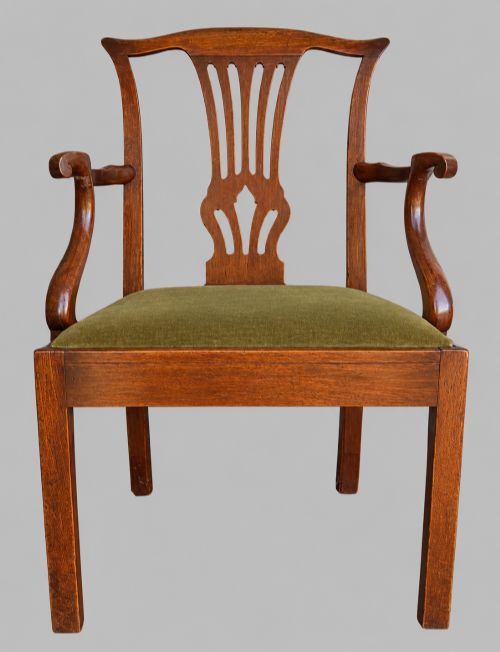
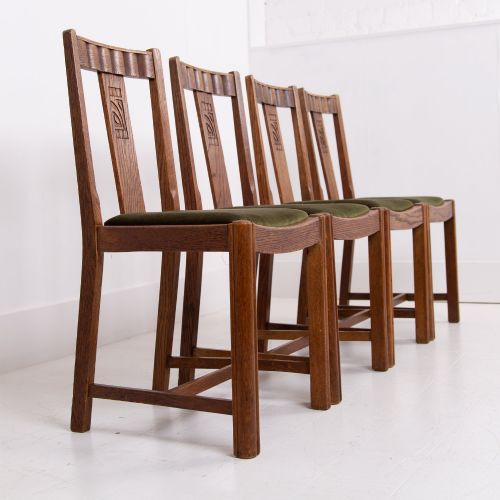
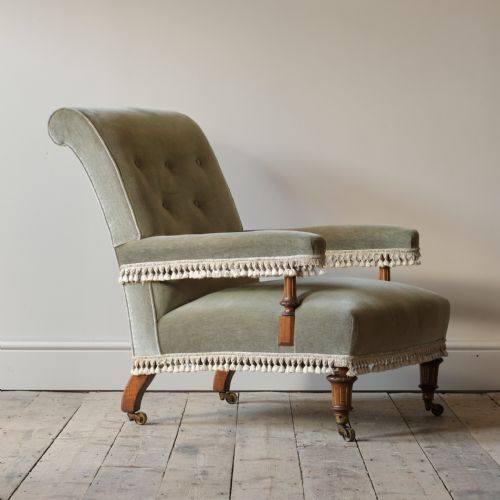
Vintage green velvet chairs encompass a broad spectrum of seating forms, ranging from late Georgian and Regency library chairs to Victorian spoonbacks, Edwardian wingbacks, and 1930s dining sets. Buyers searching for vintage green velvet chairs will encounter various iterations, with upholstered armchairs, bedroom chairs, and sets of dining chairs appearing most frequently across the periods.
The frames beneath the pile reflect the prevailing cabinet-making styles of their respective eras, utilising classical forms such as Chippendale and Hepplewhite revivals alongside bespoke maker designs. Pieces like the Prie Dieu prayer chair and the chaise longue demonstrate how velvet was applied to specialised devotional and reclining forms during the 19th century.
Origins span English workshops, French ateliers, and American makers, utilising woods like mahogany, walnut, rosewood, and oak as structural skeletons. Whether selecting an open armchair with barley twist supports or a barrel back reading chair, the combination of timber frames and textile upholstery defines this category.
Materials and Construction Techniques
Upholstery relies on traditional textile application over sprung or stuffed interiors, paired with velvet fabric that creates a soft, dense pile. Specialised elements such as button backs, bergère cane work, and intricate nailhead trim require precise hand-finishing by skilled upholsterers.
Some chairs spent centuries observing family arguments from the quiet dignity of a corner.
Evaluating Quality and Craftsmanship
The distinction between standard production and exceptional quality lies in the execution of the timber frame carving, the integrity of the joinery, and the selection of dense, richly coloured velvet. Master makers ensure that structural elements like barley twist supports, carved crest rails, and inlaid wood details remain crisp and securely fitted.
Proportion and scale dictate the visual balance of a chair, separating well-proportioned library armchairs and wingbacks from heavier, less harmonious examples. The longevity of a piece depends on the rigidity of its original frame construction and the quality of the upholstery stuffing beneath the textile.
Gillows·C. Hindley & Sons·William Birch
The Vintage Green Velvet Chairs Glossary
- Bergere
- An enclosed upholstered armchair with wooden framing, often featuring cane panels on the sides or back. This French-derived style became popular in various English periods.
- Wingback
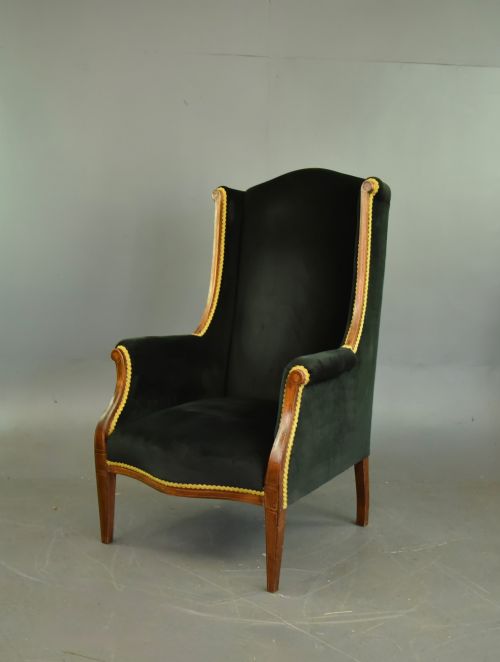
- An armchair with high sides attached to the arms, designed originally to shield the sitter from drafts. Edwardian and 18th-century examples frequently employ this form.
- Prie Dieu
- A low devotional chair, also known as a prayer chair, featuring a tall back designed for kneeling or resting arms during prayer. These often appear in 19th-century ebonised wood.
- Spoonback
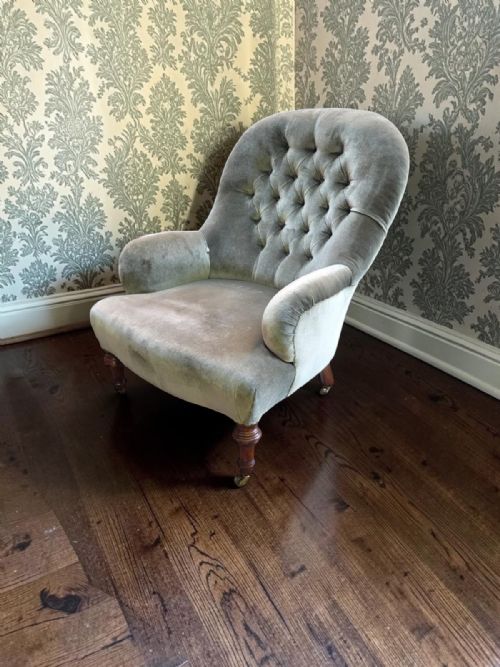
- A Victorian upholstered armchair featuring a backrest carved in the concave contour of a spoon. This shape provides ergonomic support for the spine.
- Barley Twist
- A turning technique resembling a twisted rope, utilised on the wooden legs and arm supports of 19th-century chairs. It adds visual texture to walnut and oak frames.
Vintage Green Velvet Chairs: Frequently Asked Questions
How do I identify a Victorian green velvet chair?
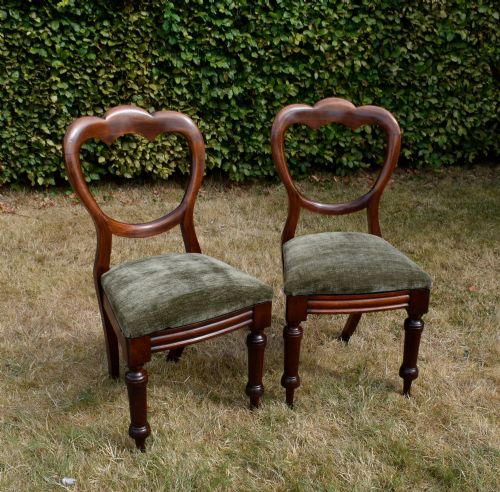
Victorian chairs often feature dark woods like rosewood or walnut, with characteristic forms such as balloon backs, spoonbacks, or button-tufted upholstery. Look for dense velvet pile combined with turned or carved frames typical of the mid to late 19th century.
Construction details like brass castors, heavy sprung seats, and rich timber patination further distinguish Victorian pieces from later Edwardian or 1930s reproductions.
What periods do these green velvet chairs cover?
The selection spans multiple centuries, beginning with 18th-century mahogany wing chairs and moving through Regency library chairs. You will also find extensive Victorian, Edwardian, and 1930s examples.
Each period brings distinct stylistic traits, such as Regency lyre arms, Edwardian inlaid mahogany, and 1930s dining chair sets.
Are velvet chairs suitable for daily use?
Historic velvet chairs serve well in living spaces and studies, provided the underlying frame remains sturdy and the textile is maintained. Many antique pieces were built using durable hardwoods like mahogany and oak to withstand regular sitting.
Placing them away from direct sunlight preserves the rich green hue and prevents the pile from fading over time.
What is the difference between a library chair and a wing chair?
Library chairs are typically designed for reading rooms, often featuring open arms, low profiles, or supportive lyre armrests for easy movement. Wing chairs incorporate high back panels and side wings originally intended to block cold drafts.
Both forms frequently utilise green velvet upholstery to provide comfortable seating in studies and drawing rooms.