




Chippendale Press Cupboard
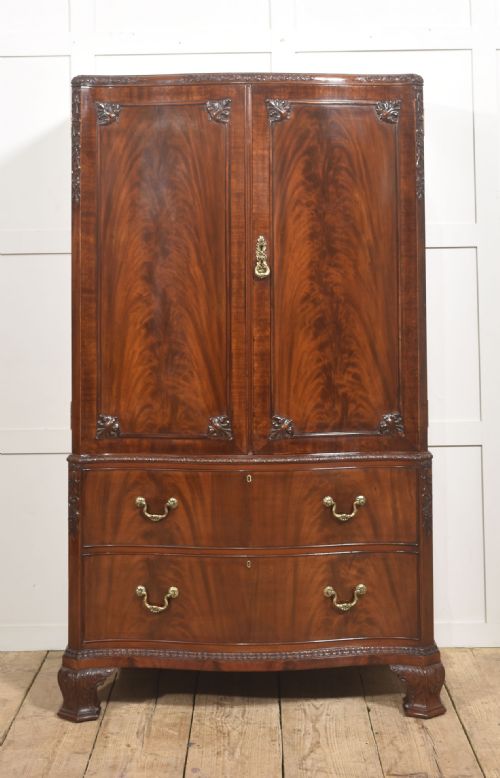
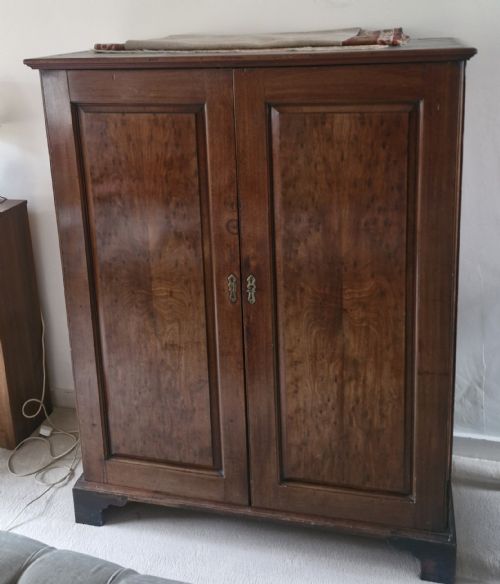
These chippendale press cupboard examples bring architectural dignity and deep storage to a room, uniting Georgian proportion with sturdy mahogany construction.
Chippendale Press Cupboard
A chippendale press cupboard combines a linen press or wardrobe function with fine cabinet-making, originating primarily in the eighteenth century and finding renewed life during later revival periods. Collectors encounter robust forms ranging from mid-eighteenth-century Georgian originals in solid mahogany to Edwardian and later revival interpretations.
The layout typically involves a set of upper panelled doors enclosing sliding trays or shelves, positioned above a lower chest of drawers. Pieces recorded in the evidence span simple linen presses, tallboy variants, compactum wardrobes, and architectural library bookcases.
While eighteenth-century examples display authentic period construction, revival pieces from the nineteenth and twentieth centuries adopt the same vocabulary of carved detail and substantial timber. Buyers select these cabinets to anchor a room with traditional British cabinet-making and generous enclosed shelving.
Judging quality and proportion
Quality rests upon the crispness of carved detail and the natural ageing of the timber surface, often described as a faded patina. Eighteenth-century originals command attention through their harmonious architectural proportions and the careful selection of figured mahogany.
Revival pieces vary according to the fidelity of their cabinet-making and the quality of the timber stock employed. Superior examples maintain the structural integrity and aesthetic weight of the Georgian period, whereas lesser pieces may lack the same depth of carving and surface warmth.
Housekeepers historically relied on these deep presses to keep linens crisp and secure from household pests.
Thomas Chippendale·Thomas Bradshaw
The Chippendale Press Cupboard Glossary
- Press cupboard
- A large piece of furniture designed for storing folded linen or garments, featuring upper doors over a chest base. It remains a staple of traditional bedroom and landing storage.
- Compactum wardrobe
- A multi-compartment wardrobe providing varied internal storage such as hanging space, drawers, and sliding trays. This form evolved to accommodate diverse clothing requirements in a single cabinet.
- Flame mahogany veneer
- A thin slice of mahogany timber cut from the point where a branch joins the main trunk, displaying a distinctive flamelike grain. Cabinet-makers applied this to prominent surfaces for decorative impact.
- Patina
- The surface sheen and colour acquired by wood over decades of handling, polishing, and exposure to light. A desirable patina shows genuine age and soft reflection.
- Tallboy
- A tall chest of drawers standing upon another chest, or a press cupboard raised high on a drawer base. This vertical format maximises storage capacity while occupying a smaller floor footprint.
Chippendale Press Cupboard: Frequently Asked Questions
What is a chippendale press cupboard used for?
These cabinets serve primarily as substantial storage units for linens, clothing, or books, combining hanging or shelving space with lower drawer storage.
Placed in bedrooms, hallways, or libraries, they conceal household goods behind panelled mahogany doors while adding architectural presence to the interior.
How do I tell an 18th century piece from a revival?
Eighteenth-century examples display period construction methods, internal timber secondary woods appropriate to the era, and natural wear consistent with prolonged use.
Revival pieces from the nineteenth and twentieth centuries often utilise machine-sawn timbers internally and exhibit cleaner, less weathered joinery despite adopting Georgian styles.
Where should I place a press cupboard?
Due to their considerable height and depth, these cupboards require a wall with adequate clearance and structural stability to support heavy timber doors.
They function best in spacious rooms where their architectural mouldings and figured mahogany grain can be appreciated without overcrowding the floor plan.
What maintenance does mahogany require?
Solid mahogany and veneer surfaces benefit from occasional application of traditional beeswax to nourish the timber and preserve its natural sheen.
Keep these heavy cabinets away from direct heat sources and strong sunlight to prevent the timber from drying out or the veneer from lifting.