

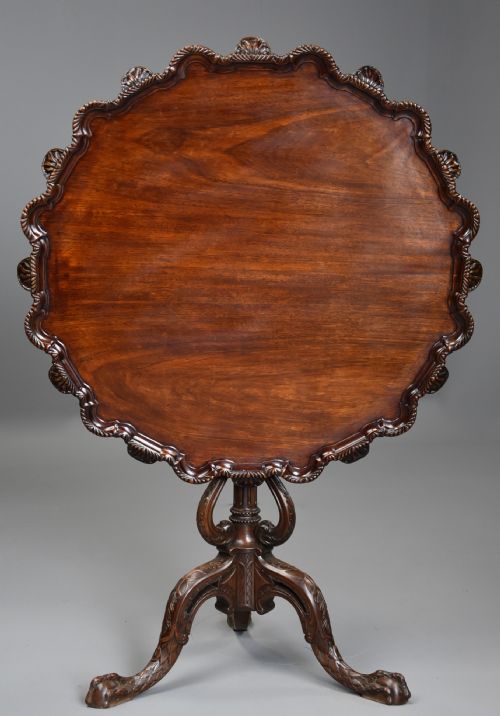


Chippendale Period Table
A genuine chippendale period table brings eighteenth-century proportion and architectural carved detail into a room through solid timber construction.
Chippendale Period Table
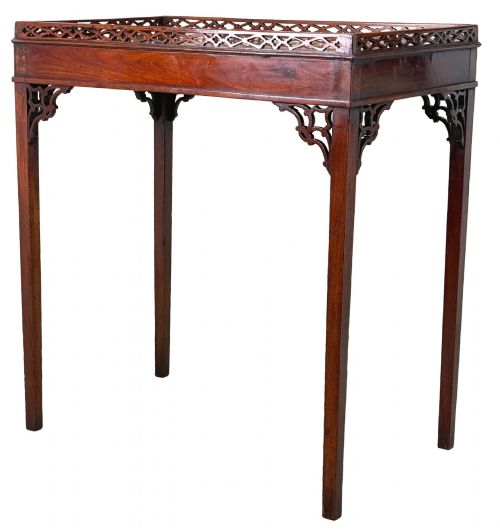
A chippendale period table encompasses diverse forms created during the eighteenth century under Georgian reigns, ranging from compact tripod wine tables to expansive partners desks.
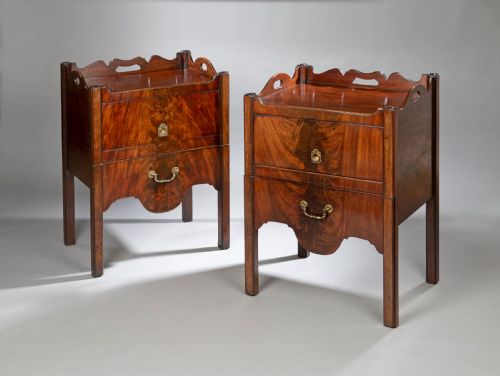
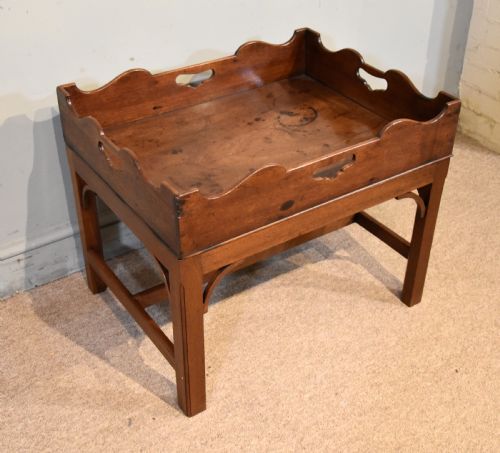
Buyers encountering this selection will frequently meet tripod tables with tilt tops, alongside serving tables, card tables, and occasional variants intended for specific domestic functions.
The material record spans eighteenth-century production alongside later revivals, anchored predominantly in Georgian aesthetics and cabinet-making traditions.
Materials and Technique
Mahogany dominates the construction of these pieces, selected for its dense grain and stability, often supplemented by secondary timbers such as oak and walnut in structural elements.
Joinery techniques rely on traditional methods, while decorative surfaces incorporate hand-carved details, pie-crust edges, gallery tops, and brass hardware.
Working surfaces occasionally integrate leather inserts, wire mesh, or iron supports depending on the functional type of the desk or table.
Listings feature eighteenth-century pieces alongside early twentieth-century revivals, constructed in mahogany, oak, walnut, brass, and leather.
Evaluating Standard
Quality separates pieces through the crispness of carved enrichment, where depth and precision in foliage or claw motifs distinguish master workshops from routine production.
Timber selection dictates overall visual weight, with well-figured grain patterns and substantial natural patina elevating simpler forms above standard stock.
Structural integrity relies on the preservation of original turning, unaltered tilting mechanisms, and the harmonious proportion of legs to top.
The Chippendale Period Table Glossary
- Tripod table
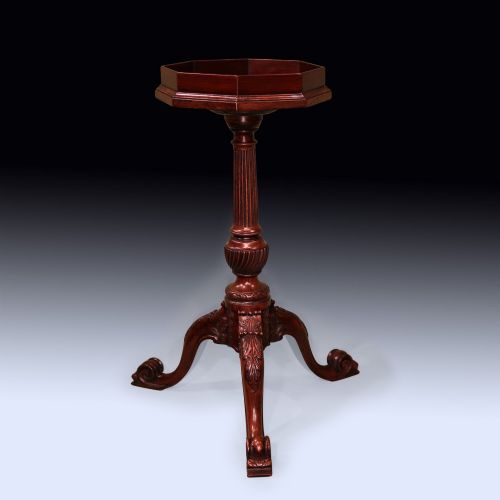
- A small freestanding table supported by a central pillar resting on three spreading feet. These versatile pieces often feature tilt mechanisms for convenient storage.
- Pie-crust edge
- A raised, scalloped rim carved directly from the solid timber perimeter of a round tabletop. This intricate shaping requires considerable skill from the timber cutter.
- Partners desk
- A large double-sided writing table designed with drawers and cupboards accessible from both faces. Such pieces served administrative roles in period libraries.
- Kettlestand
- A small low table designed specifically to hold a hot water urn or tea kettle during eighteenth-century social rituals. They frequently incorporate gallery edges.
- Silver table
- A specialised serving table featuring a raised edge or gallery designed to secure tea or silver services safely during use. These items represent finer domestic output.
Chippendale Period Table: Frequently Asked Questions
What is a chippendale period table?
A chippendale period table is an eighteenth-century item of furniture made during the height of the Georgian era, reflecting the design vocabulary associated with Thomas Chippendale's pattern books.
These pieces include dining tables, card tables, desks, and tripod wine tables constructed primarily in solid mahogany with sophisticated carved details.
How do I identify a Georgian card table?
A Georgian card table typically incorporates a folding or swing-leg top mechanism that reveals a baize-lined playing surface and interior corner candle recesses once opened.
These tables were central to eighteenth-century social evenings and are recognised by their folded profile and sturdy gateleg or concertina action.
What is the difference between original and revival pieces?
Original pieces date from the eighteenth century during the Georgian period, exhibiting period timber seasoning, hand-cut joinery, and natural surface wear.
Revival pieces date from later periods such as the early twentieth century, reproducing historic forms using contemporary machinery and finishing methods.