
Chippendale Period Chairs
Chippendale period chairs bring eighteenth-century proportion and carved timber into the room, uniting solid construction with enduring design.
Chippendale Period Chairs
When searching for chippendale period chairs, buyers encounter dining chairs, armchairs, and side chairs originating mainly from the eighteenth century and the Georgian era, alongside later revival pieces.
The material palette spans dense timbers like mahogany, walnut, oak, elm, and fruitwood, paired with seats upholstered in leather, fabric, velvet, tapestry, and textiles.
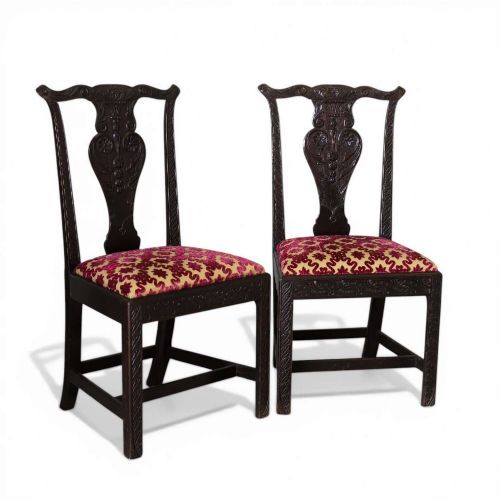
Sets vary from pairs to larger groups intended for dining rooms, libraries, and halls, showing both urban cabinet-maker execution and simpler country interpretations.
Materials and Construction
Cabinet-makers relied heavily on solid mahogany, walnut, and regional hardwoods, shaping frames with mortise and tenon joints to withstand daily seating use.
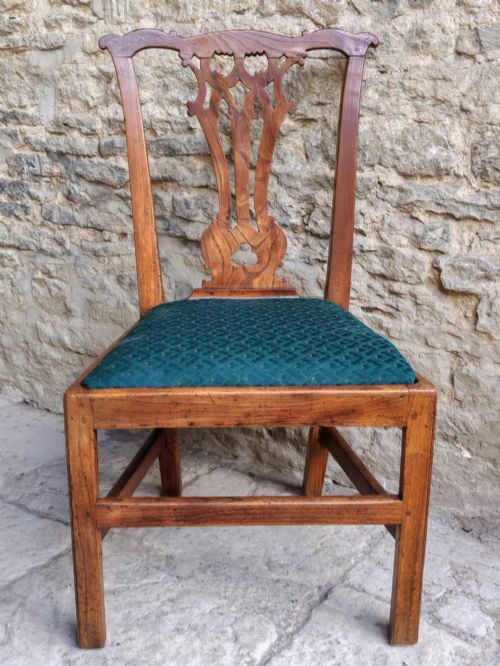
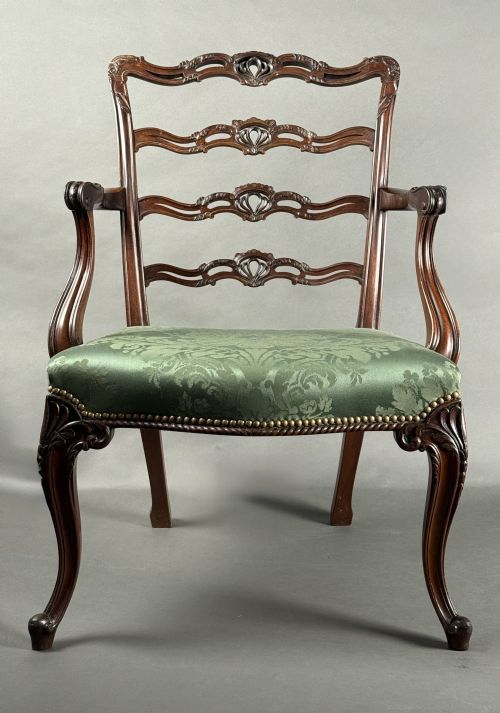
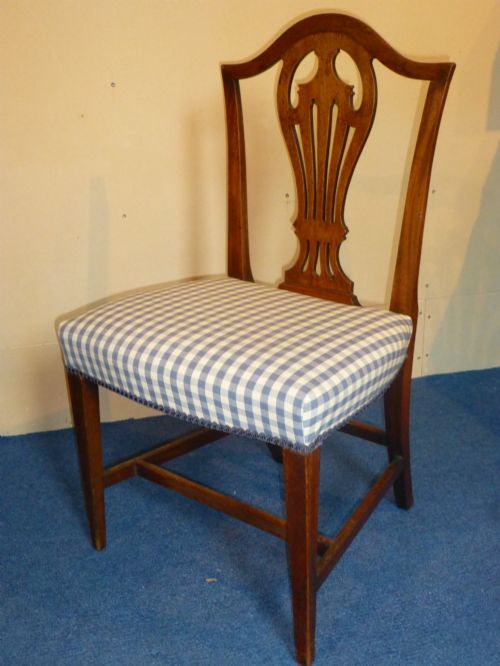
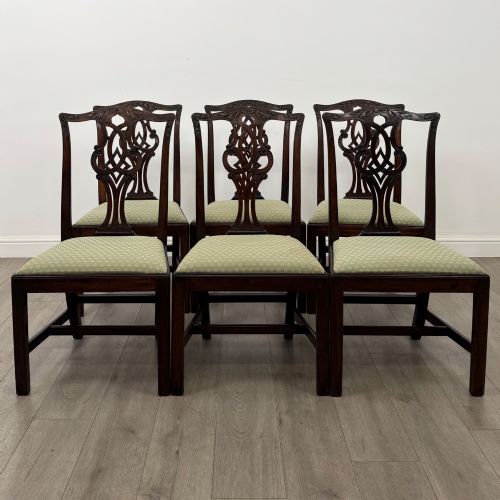
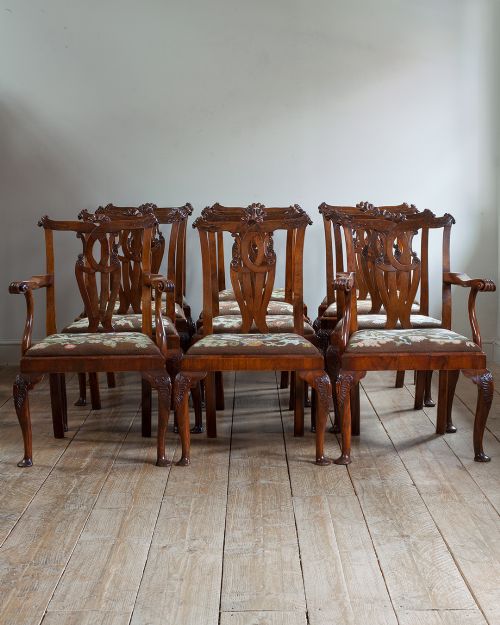
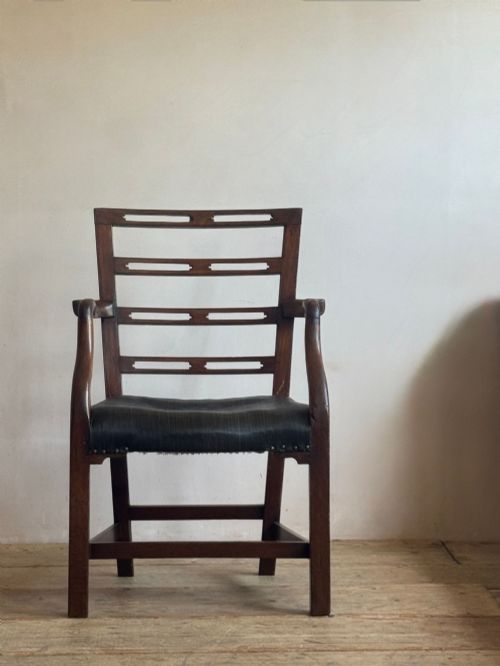
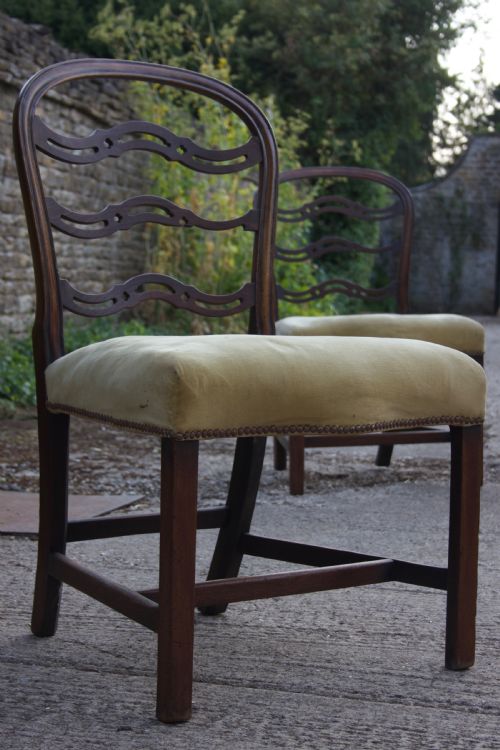
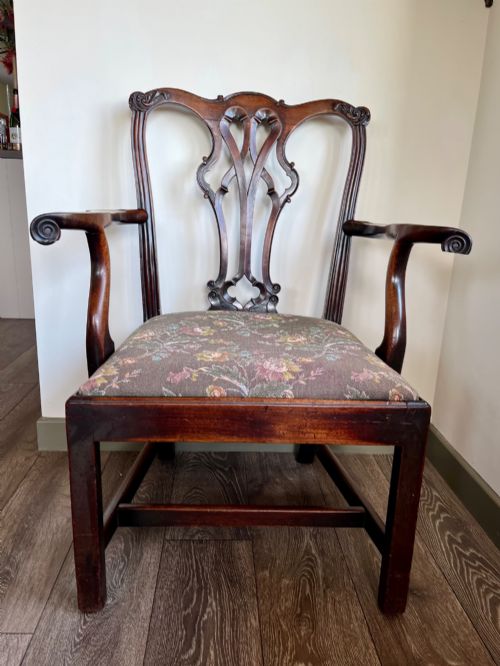
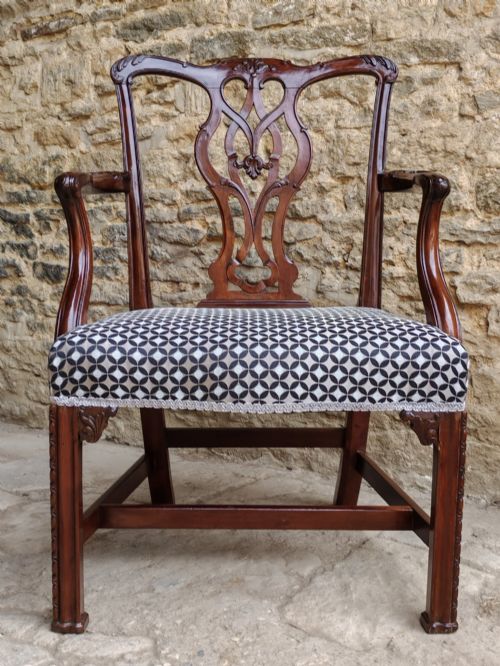
Decoration relied on hand-carving applied directly to the timber, creating pierced splats, ladder-backs, and motifs influenced by Gothic and Chinese styles.
Seats were built as drop-in frames or webbed bases padded with traditional stuffings and secured with leather, horsehair, tapestry, or modern upholstery fabrics.
Upholstery options span leather, velvet, tapestry, and contemporary Zoffany fabric.
The Distinction in Execution
Quality rests in the crispness of the hand-carved detail on the splats and knees, where depth and precision separate master workshop output from simpler regional work.
Timber selection dictates longevity, with dense Cuban mahogany and figured grain commanding attention compared to plain secondary woods.
Originality of frame construction, minimal timber replacement, and the survival of early or original drop-in seat frames preserve the integrity of the piece.
Alfred Allen of Birmingham
The Chippendale Period Chairs Glossary
- Splat
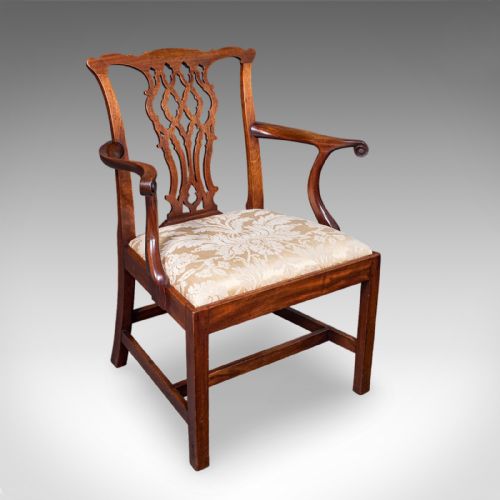
- The vertical wooden strip down the centre of a chair back. It often takes a pierced ribbon or interlaced design.
- Carver
- An armchair, usually designed to sit at the head of a dining table. It matches the profile of the smaller side chairs in the set.
- Claw and ball
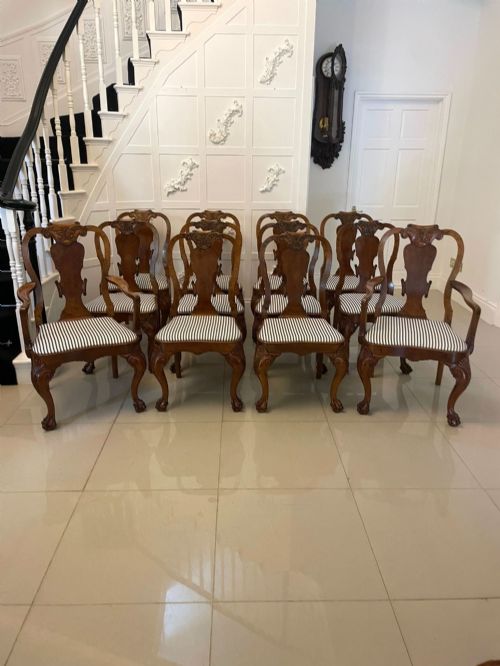
- A foot carved to resemble a bird's talon gripping a sphere. This motif appears frequently on eighteenth-century cabriole legs.
- Gainsborough chair
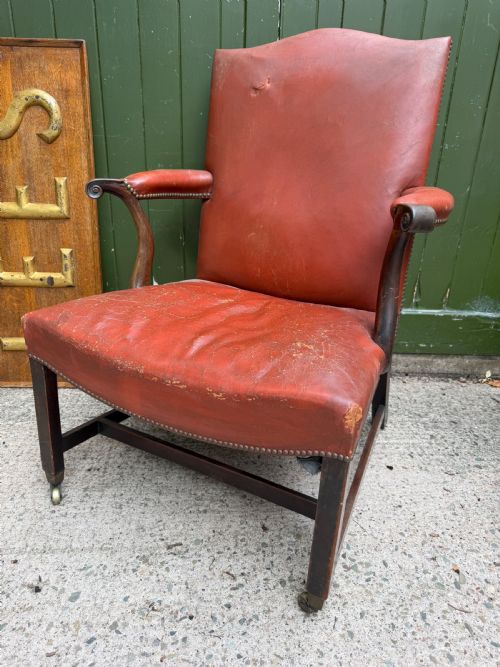
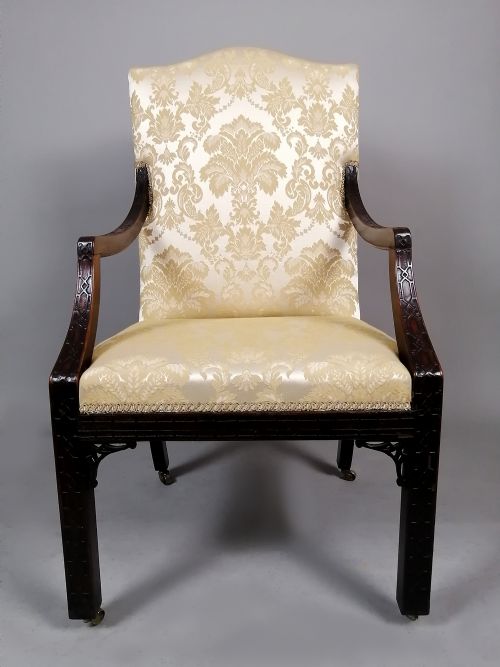
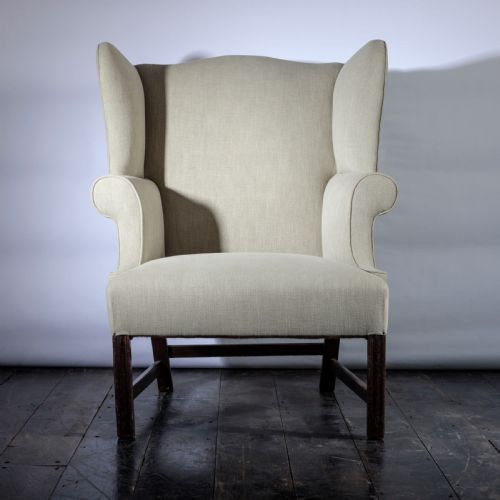
- A wide, upholstered armchair with open padded arms. These seats emerged during the Georgian period for library and drawing-room use.
- Chippendale Revival
- A later nineteenth and early twentieth-century movement recreating eighteenth-century forms. These pieces mirror earlier proportions using contemporary workshop standards.
Chippendale Period Chairs: Frequently Asked Questions
How do I identify a true period chair?
Examine the timber shrinkage, joinery methods, and hand-carved details beneath the seat frame. Eighteenth-century pieces display tool marks and construction methods consistent with period workshop practices.
Compare the proportion of the carved splat and legs against documented examples from the Georgian era. Subtle variations in timber density and wear patterns help confirm age.
Can I use these chairs for daily dining?
Solid mahogany and oak frames provide robust structural integrity for regular seating. Many survive centuries of use precisely because their initial joinery was sound.
Ensure the internal webbed or drop-in seat foundation remains stable. Periodic checks by a conservator keep the timber frames secure during everyday meals.
What is the difference between George III and revival pieces?
George III pieces date from the eighteenth century and carry period tool marks alongside natural timber patina. They reflect the original cabinet-making standards of the era.
Revival pieces date from later periods like the Edwardian era. While they copy eighteenth-century styles faithfully, their timber treatment and internal construction reveal nineteenth or twentieth-century origins.
Are carver chairs and side chairs matching?
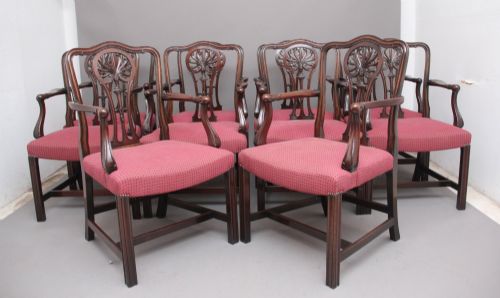
Dining sets often combine several single side chairs with one or two matching carver armchairs. The armchairs share the same back design and leg style to maintain visual uniformity.
Carvers were traditionally placed at the ends of the dining table while side chairs lined the sides. This pairing offered comfortable arm support for hosts while saving floor space.