

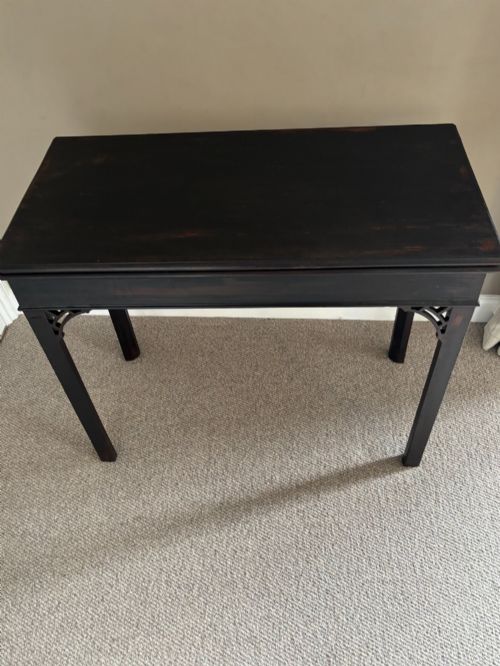
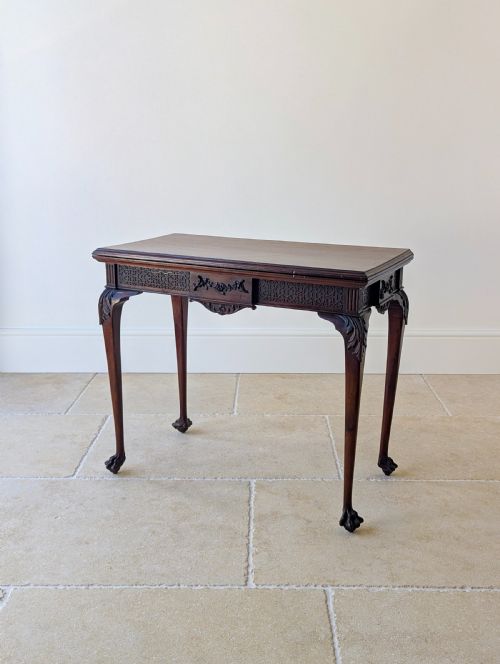
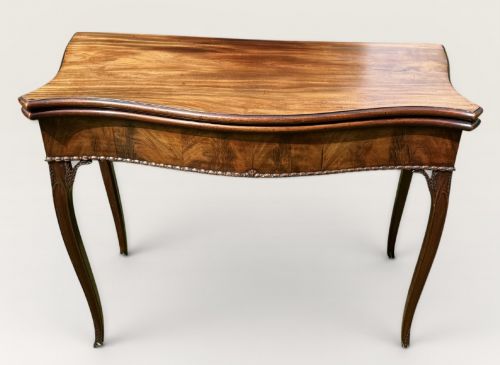

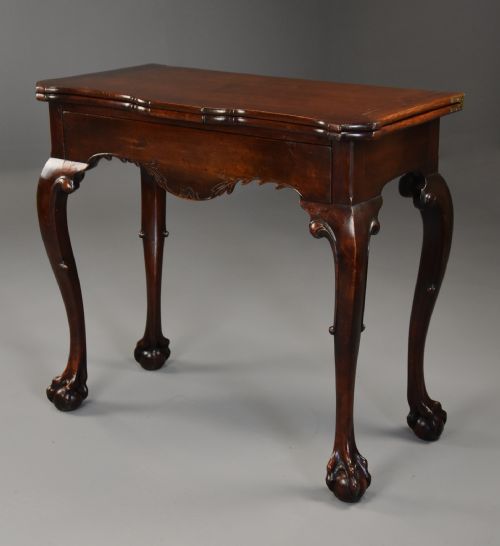
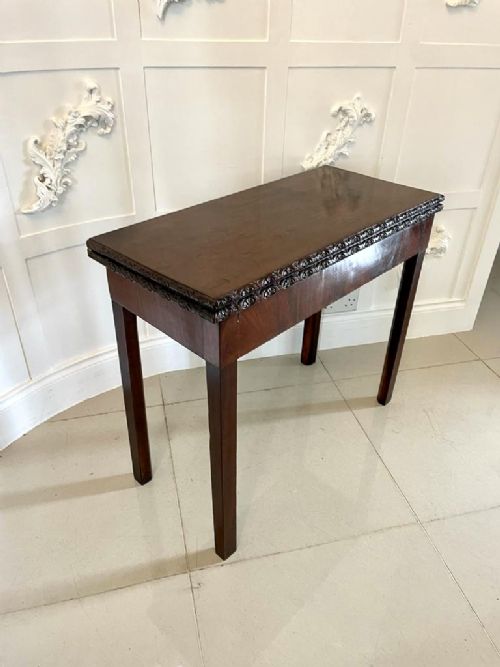


Chippendale Folding Table
A chippendale folding table is a versatile antique that combines ingenious mechanics with formal grace, making it a functional centrepiece for any reception room.
Chippendale Folding Table
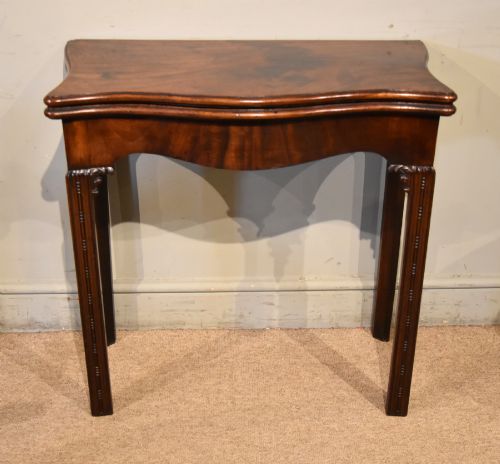
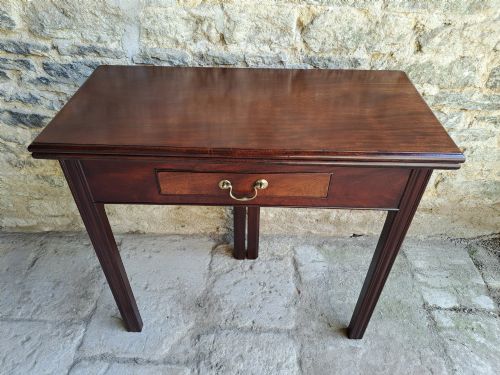
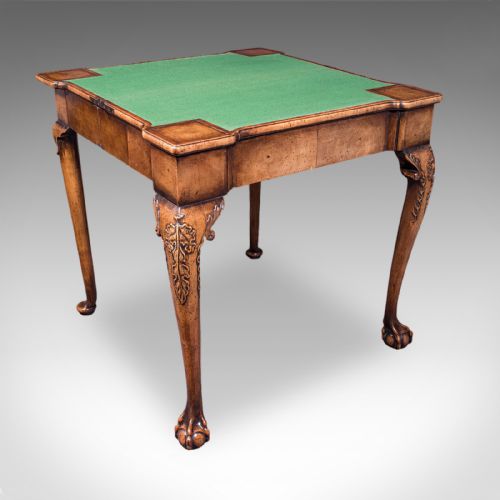
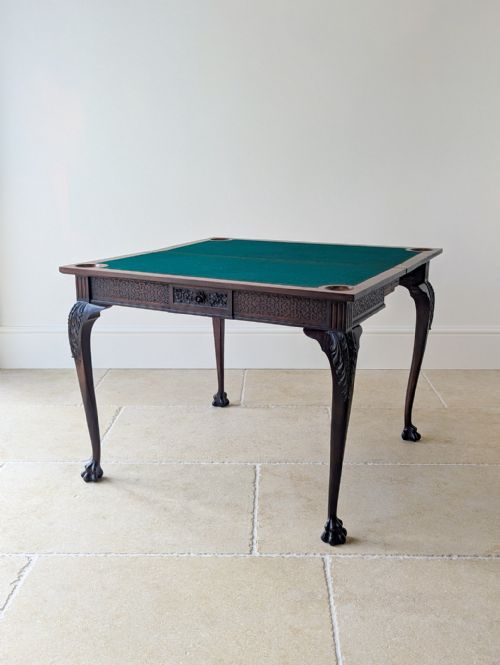
When you search for a chippendale folding table, you are examining practical domestic furniture designed for entertaining, card playing and tea service. These pieces bridge the gap between rigid architecture and flexible living, utilising hinged tops that swing open to reveal polished surfaces or green baize interiors.
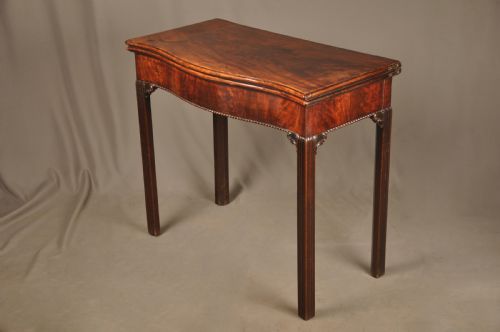
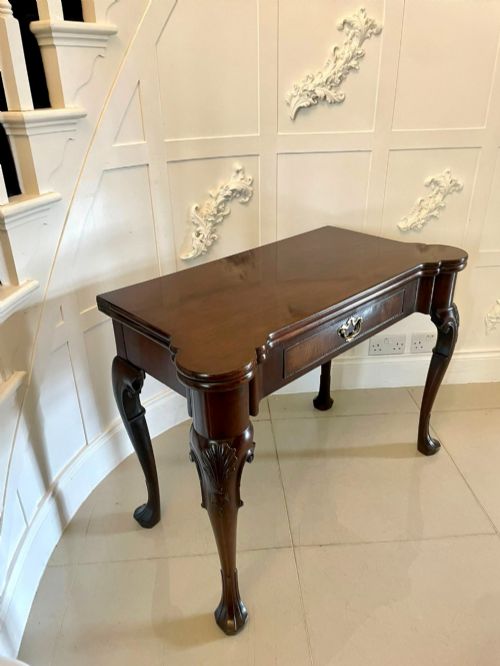
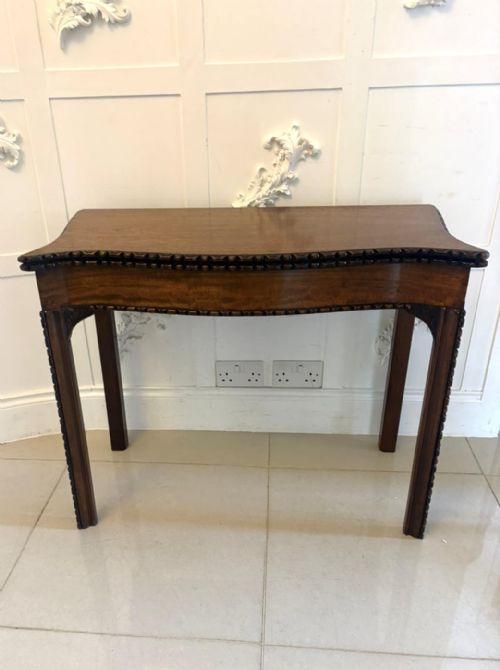
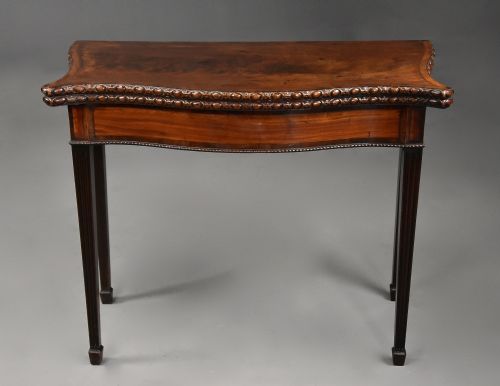
The version you are most likely to meet on this page is the card or games table, often shaped with a serpentine front and supported on cabriole or straight legs. They date from the mid-eighteenth century through to later revival periods, spanning Georgian originals and Edwardian copies alike.
Materials and Construction
Makers relied heavily upon dense timbers such as mahogany, Cuban mahogany and solid walnut, chosen for their ability to hold crisp carved details along edges and knees. Secondary woods often provided structural stability to the internal framework while the primary surfaces received meticulous smoothing and polishing.
Mechanisms varied from simple swing legs to sophisticated concertina actions that expanded the frame evenly when the double-hinged top unfolded. Working surfaces were frequently lined with wool baize to cushion counters and quiet the clatter of dice or cards during play.
Chippendale Folding Table Retail Price Guide 2026
Typical asking prices for chippendale folding table among the pieces listed under this phrase on Sellingantiques today, from the lower quarter to the upper quarter. They describe what is for sale here now, not the wider market.
Form variations range from compact corner tables and tea tables to triple-top gaming units and expansive serpentine console designs.
Judging Quality
Quality rests in the crispness of the carved ornamentation, from acanthus leaves on the knees to blind fretwork along the rails, separating work by master cabinetmakers from utilitarian workshop output. The depth of the timber's natural patination and the tightness of the joinery where the fold-over leaves meet also dictate the standing of a piece.
Internal engineering marks the division between standard hinged designs and superior concertina actions that maintain symmetry when open. Original brass hinges, uncompromised timber thicknesses and unaltered table frames retain their historical integrity far better than heavily restored equivalents.
James Shoolbred & Co
The Chippendale Folding Table Glossary
- Concertina action
- An expandable frame mechanism that allows all four legs to move outward when the folding top opens, providing balanced support for the extended surface.
- Serpentine front
- A convex centre flanked by concave curves, creating a fluid, undulating line across the front edge of the table top and apron.
- Baize
- A coarse woollen fabric, typically green, used to line the playing surfaces of card and games tables to protect both the wood and the counters.
- Drop-leaf
- A table design featuring a fixed central section and hinged flaps that lower or rise on pivoting brackets.
- Patination
- The surface sheen and colour developed by aged wood through handling, waxing and exposure to light over centuries.
Chippendale Folding Table: Frequently Asked Questions
What were chippendale folding tables used for?
These tables served primarily for social gatherings, acting as tea tables during afternoon visits or transforming into card tables for evening games of whist and hazard.
Their folding leaves allowed households to reclaim floor space when entertainment ended, keeping the room orderly during daylight hours.
How do I spot a Georgian original?
Original pieces from the Georgian era display hand-cut dovetails, older secondary woods like oak or pine inside the frame, and authentic hand-forged iron or brass hardware.
Examining the underside reveals tool marks and timber shrinkage consistent with centuries of age rather than modern mechanical production.
How do I care for the baize surface?
Wool baize requires gentle brushing with a soft bristled brush to remove dust and debris without pulling the delicate woolen fibres.
Keep these tables away from direct sunlight and moisture to prevent the textile from fading and the underlying timber from warping.
How do I distinguish eighteenth-century pieces from later revivals?
Revival pieces made during the Victorian and Edwardian eras often use machine-cut screws, standardised hinge types, and denser interior timbers that lack the organic warmth of eighteenth-century stock.
Checking the sharpness of the hand-carved details against the uniformity of later factory output clarifies the production era.