

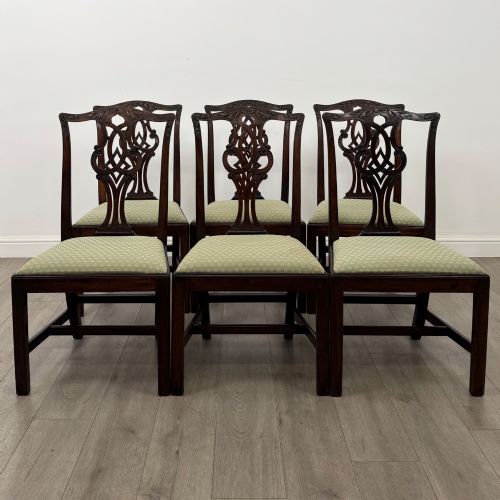
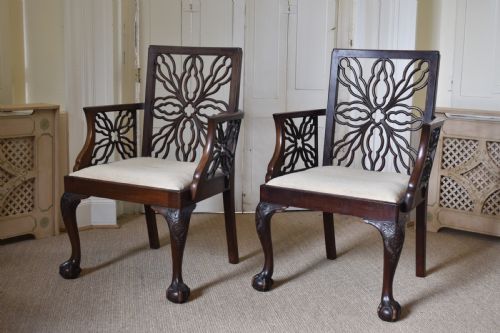
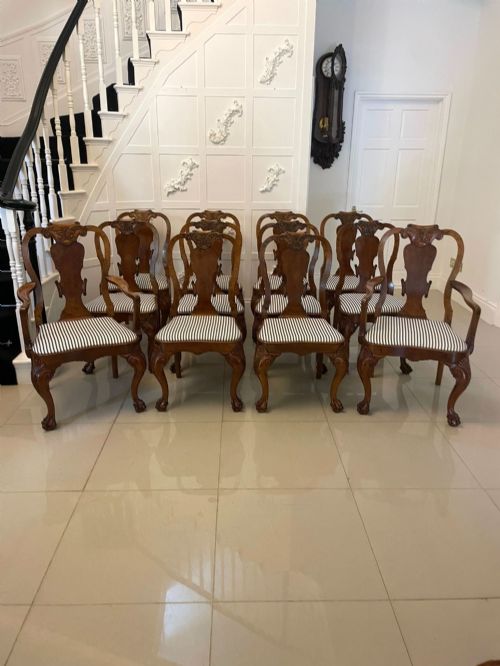
Chippendale Carved Chairs
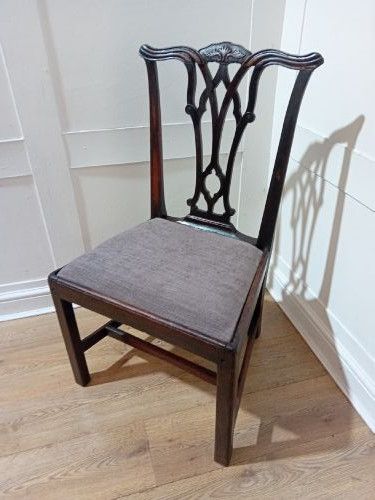
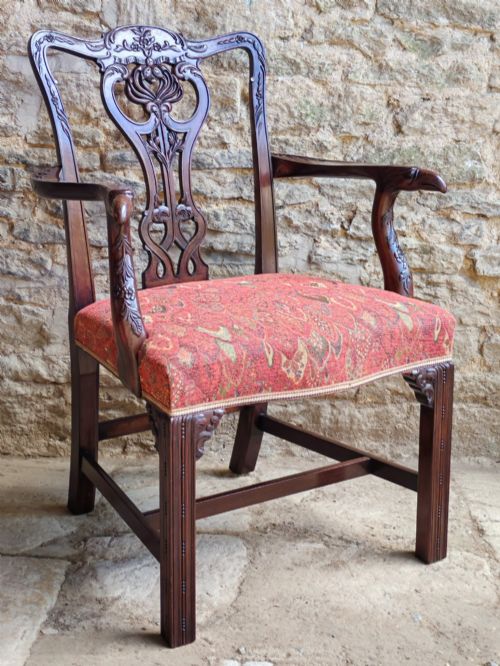
Chippendale carved chairs bring together enduring cabinet-making forms and intricate timber detailing that suit both formal dining rooms and studies.
Chippendale Carved Chairs
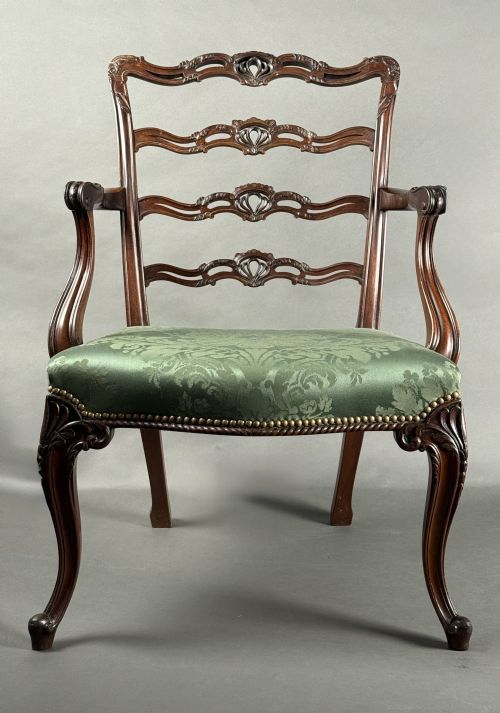
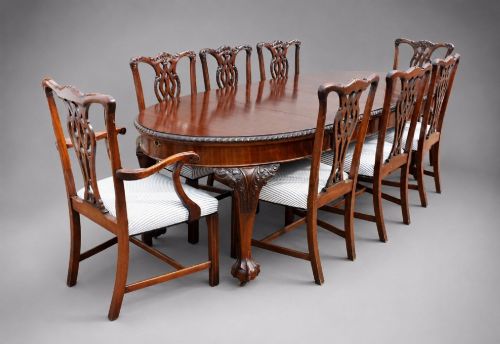
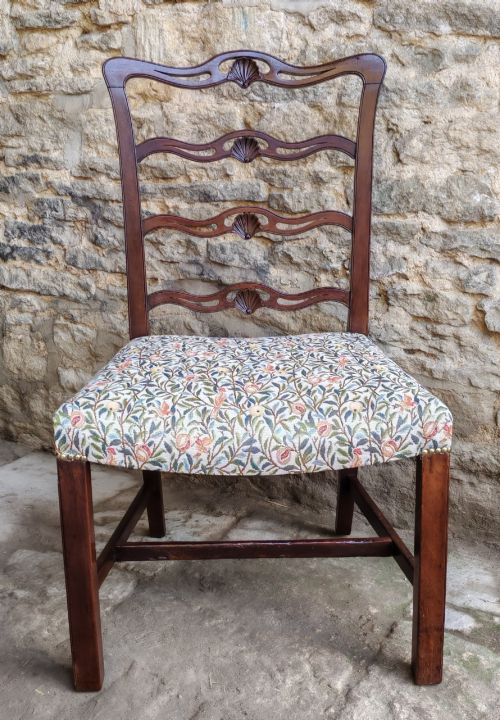
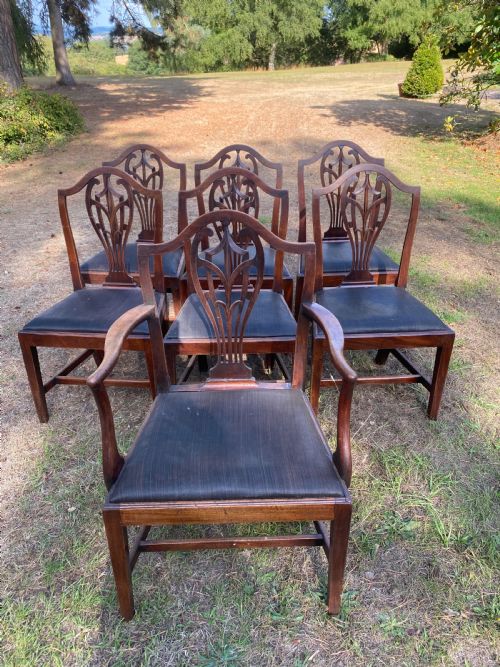
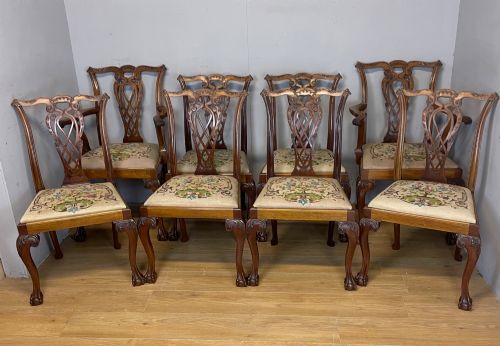
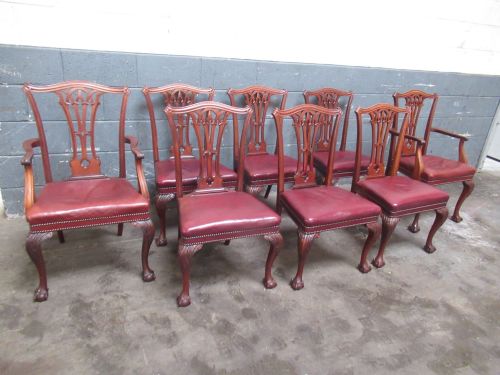
When searching for chippendale carved chairs, a buyer encounters a range of seating forms spanning the eighteenth century through to later revival periods. The listings present dining chairs, side chairs, armchairs, and library seating.
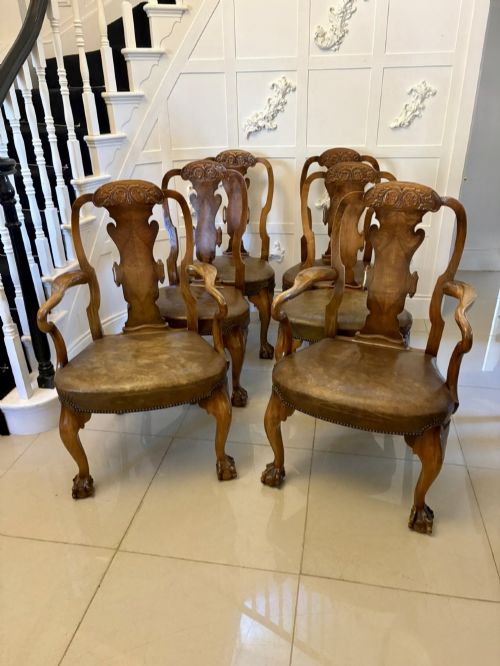
Most pieces met on this page belong to the Chippendale revival of the late nineteenth and early twentieth centuries, alongside authentic Georgian examples. These seating options appear in single pieces, pairs, or larger matched sets.
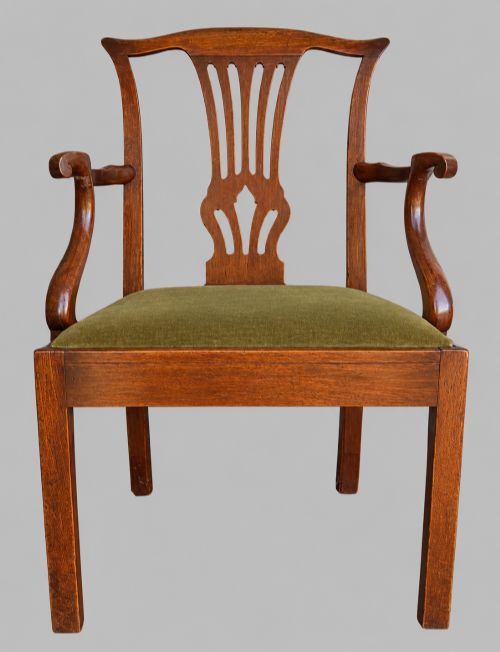
The regional origins and production dates vary from eighteenth-century English and Scottish workshops to Edwardian interpretations. Forms include open armchairs, ladderback chairs, and Gainsborough seating.
Materials and Methods
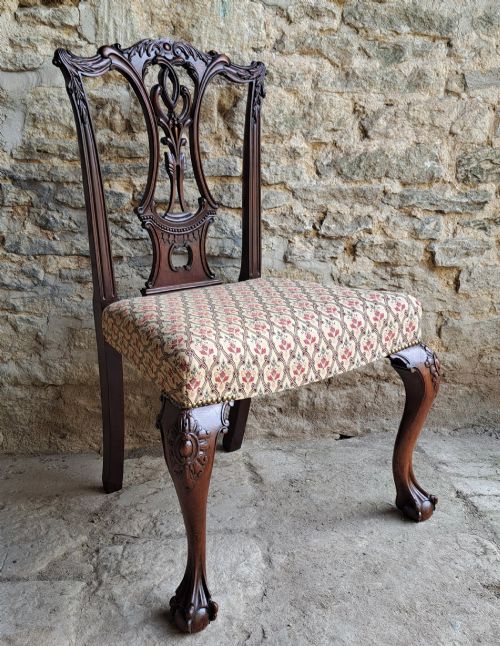
The primary timber across the pieces is mahogany, accompanied by occasional examples in walnut, oak, and giltwood. Workshops shaped these dense woods to achieve crisp carved motifs along the top rails and splats.
Upholstery materials include leather, fabric, velvet, tapestry, and brass detailing such as decorative tacks. Craftspeople integrated these coverings into drop-in seats or fixed frames.
Listings feature mahogany as the dominant timber, alongside walnut, oak, and various upholstery fabrics.
Assessing Quality
Quality rests in the depth and sharpness of the timber carving along the back splat and crest rail. Superior examples show crisp execution where the maker shaped the wood by hand rather than relying on shallow mechanical shaping.
The structural integrity of the joints and the choice of primary timber determine the longevity of the frame. Heavier, dense mahogany sections hold tighter joinery over centuries of daily use.
Thomas Chippendale·Warings·Alfred Allen of Birmingham·Howard and Sons
The Chippendale Carved Chairs Glossary
- Splat
- The vertical central strip of wood in the back of a chair. It is often pierced, carved, or interlaced in Chippendale designs.
- Carver
- An armchair, frequently used as a host chair at the head of a dining table. The term distinguishes the larger seat from matching side chairs.
- Gainsborough chair
- A wide, upholstered armchair with open arms and a low seat, designed for the library or desk during the eighteenth century.
- Blind carving
- Low-relief ornamentation carved directly onto a flat surface to imitate Chinese fretwork patterns.
- Revival
- A later period of design where makers consciously replicate the styles and forms of an earlier century.
Chippendale Carved Chairs: Frequently Asked Questions
How do I spot an 18th-century original?
Authentic pieces from the 18th century show natural timber oxidation, hand-cut joinery, and wear patterns consistent with extended use over generations.
Examination of the underside and frame construction reveals tool marks and construction methods distinct from later factory-made revival furniture.
Are these chairs suitable for daily dining?
Many solid mahogany dining chairs and sets are structurally sound for everyday seating when joints remain tight and stable.
Checking the frame stability ensures the antique timber bears regular weight without compromising the historical joinery.
What is a Chinese Chippendale chair?
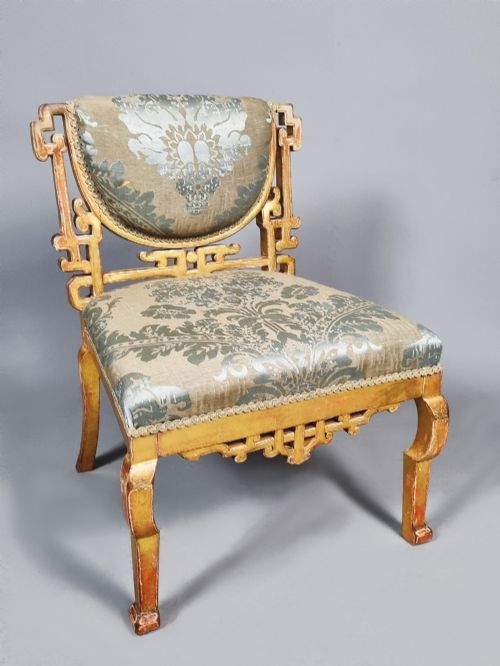
This style incorporates Asian-inspired architectural motifs, including geometric fretwork, blind fret carving, and sometimes Marlborough legs.
Originating in the mid-18th century, these designs reflect the period's widespread interest in imported decorative arts.
How should I care for the leather or fabric upholstery?
Leather seats require regular conditioning with suitable balms to prevent the natural hide from drying out and cracking over time.
Fabric and velvet coverings benefit from gentle professional cleaning to preserve the textile fibres without wearing the surrounding timber finish.