






Chippendale Bird Mirror
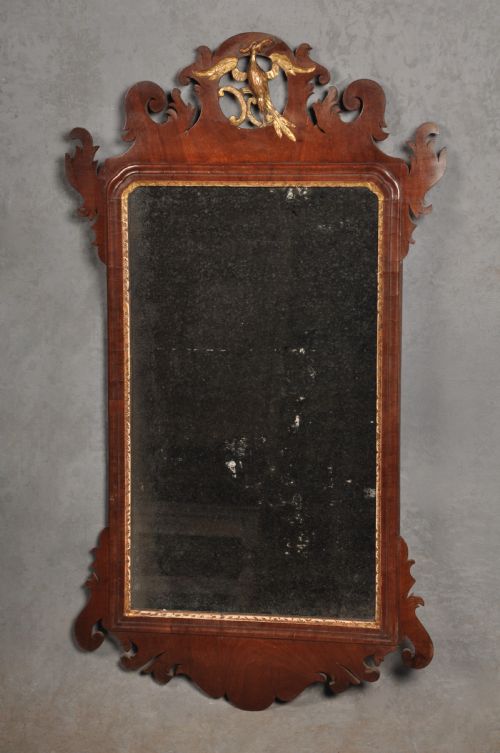
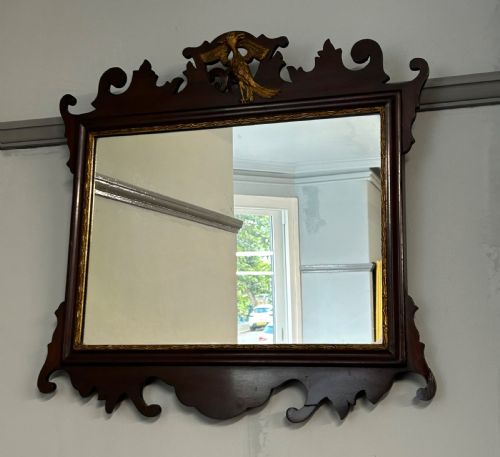
These chippendale bird mirror pieces bring carved crests and fretwork frames into a room, offering the classic bird motif collectors want.
Chippendale Bird Mirror
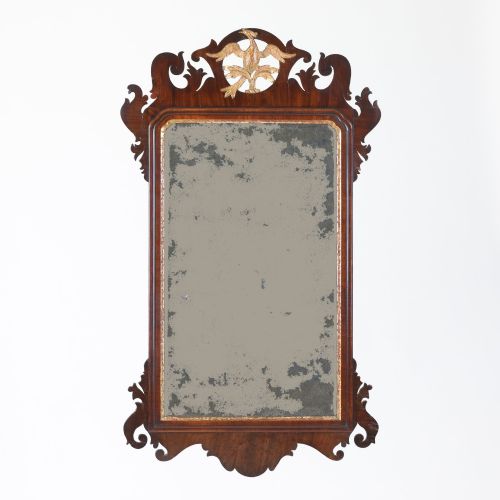
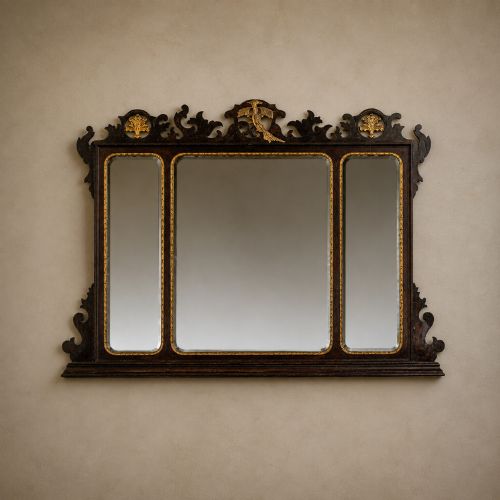
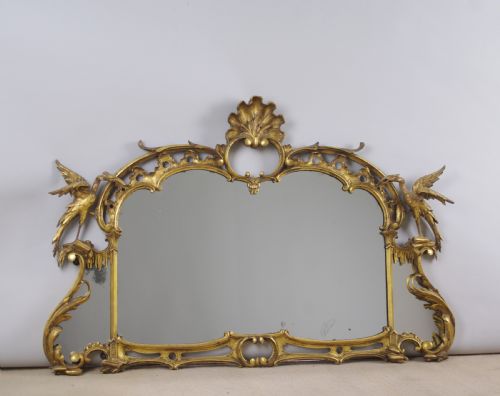
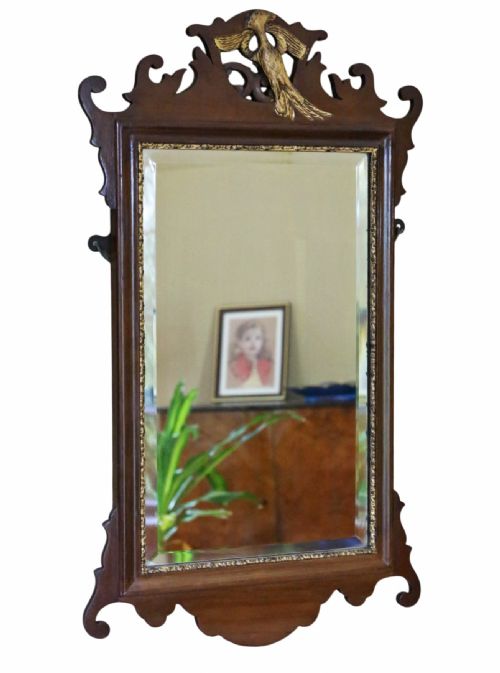
When you search for a chippendale bird mirror, you are looking at wall mirrors and overmantel mirrors defined by fret-cut wooden frames and carved bird crestings. The selection spans genuine 18th Century pieces from the Georgian period alongside later Victorian revivals from the 19th Century and around 1900.
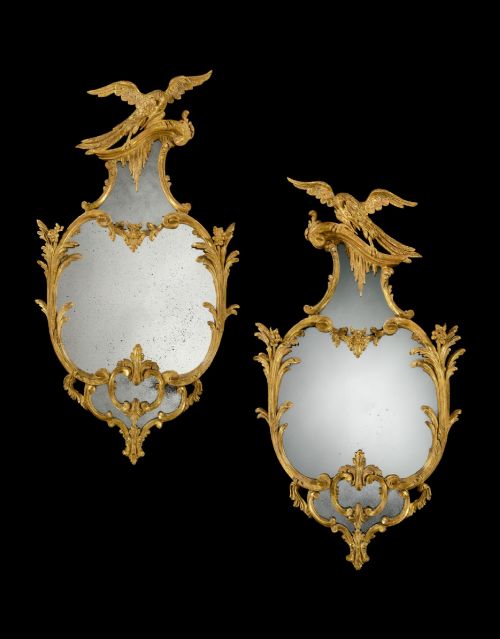
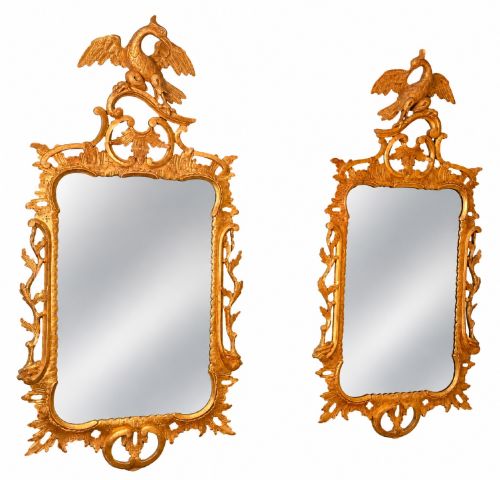
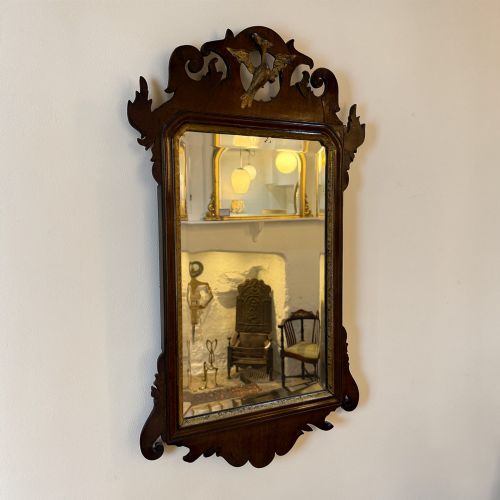
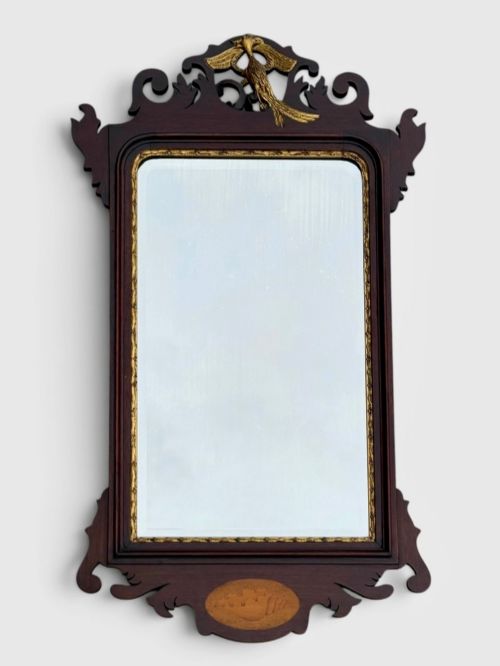
You are most likely to meet mahogany or giltwood examples on this page, often featuring the iconic Ho-Ho bird or phoenix at the top of the frame. Forms range from simple fretwork wall mirrors to large triptych overmantel mirrors with intricate carvings.
How they were made
The makers of these mirrors worked primarily in mahogany, giltwood, and gesso, shaping the timber with detailed fret-cutting techniques. Frames were constructed using wood inlay and applied gold leaf to achieve the polished or gilded finish characteristic of the style.
Yew wood also appears among the materials, while glass panels are fitted within the hand-carved wooden silhouettes and scrollwork borders.
Chippendale Bird Mirror Retail Price Guide 2026
Typical asking prices for chippendale bird mirror among the pieces listed under this phrase on Sellingantiques today, from the lower quarter to the upper quarter. They describe what is for sale here now, not the wider market.
What varies in quality
The distinction between an average piece and a finer one lies in the depth and sharpness of the hand-carved cresting, particularly around the bird and scrollwork. Crisp fretwork and well-proportioned frames separate the more ambitious workshop productions from simpler interpretations.
The integration of the glass into the frame and the preservation of the original giltwood or polished mahogany surface also determine the standing of an individual mirror.
The Chippendale Bird Mirror Glossary
- Giltwood
- Wood that has been coated with gold leaf or gold paint. This finish creates a bright reflective surface that catches the light in formal reception rooms.
- Fret-cut
- Wood that has been pierced with intricate patterns using a fine saw. This technique produces the light, openwork frames typical of the style.
- Ho-Ho Bird
- A mythical Chinese phoenix adapted into English furniture design. It sits proudly at the crest of the mirror frame with outstretched wings.
- Overmantel Mirror
- A large mirror designed to hang specifically above a fireplace mantelpiece. These pieces often feature triptych glass panels to fill wide wall spaces.
- Gesso
- A plaster-like mixture applied to wood as a base for gilding. It allows craftsmen to model sharp relief details before laying down gold leaf.
Chippendale Bird Mirror: Frequently Asked Questions
What is a chippendale bird mirror?
A chippendale bird mirror is a decorative wall or overmantel glass framed in fret-cut wood, featuring a carved bird crest at the top. These pieces draw on 18th-century designs inspired by Thomas Chippendale's patterns.
They combine intricate scrollwork with the iconic Ho-Ho bird motif, bridging Georgian craftsmanship and later revival periods.
How old are these mirrors?
The pieces available span from original 18th-century Georgian examples down to Victorian interpretations from the 19th century and around 1900. Earlier pieces date back to the Georgian era.
Revival pieces from the late 19th century replicate the same traditional forms using period joinery methods.
Where should I hang an overmantel mirror?
An overmantel mirror is traditionally scaled to sit directly above a fireplace mantelpiece to reflect light around the room. Large triptych versions suit expansive wall spaces.
Ensure the wall fixings can support the weight of heavy mahogany and giltwood frames before hanging.
What woods were used for these frames?
Craftsmen built these frames using mahogany, yew wood, and softwoods prepared for gilding. Mahogany provides a dark, dense grain that takes clean fret-cutting.
Giltwood and gesso finishes provide an alternative golden surface favored in formal interiors.