





Chinoiserie Storage Cupboard
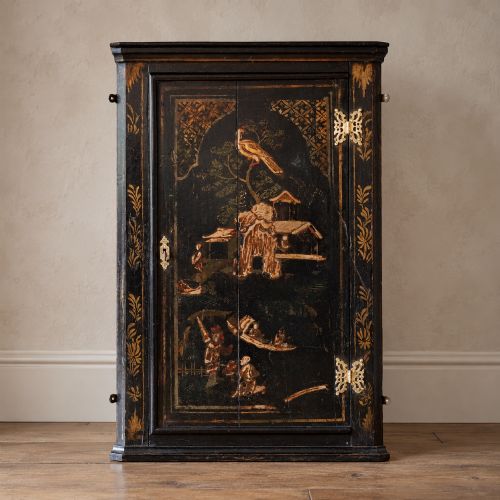
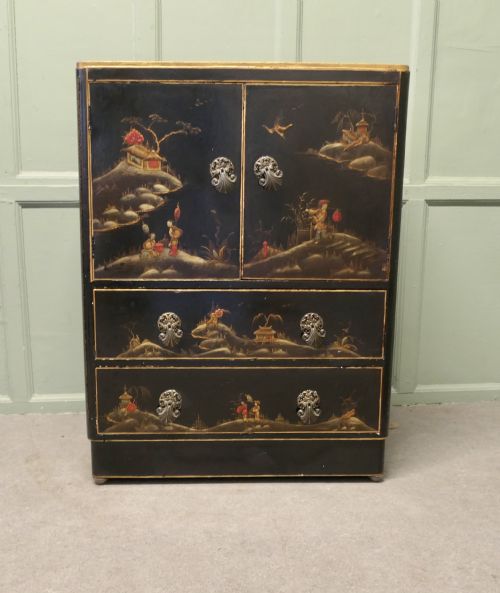
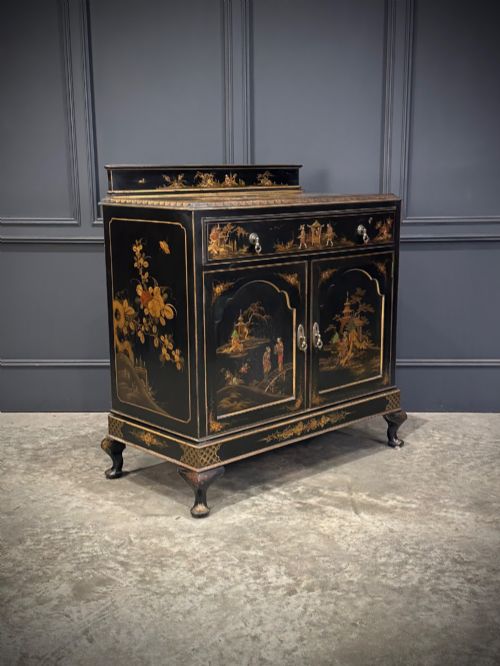
A chinoiserie storage cupboard brings painted lacquer and gilt scenes of figures and landscapes into a room.
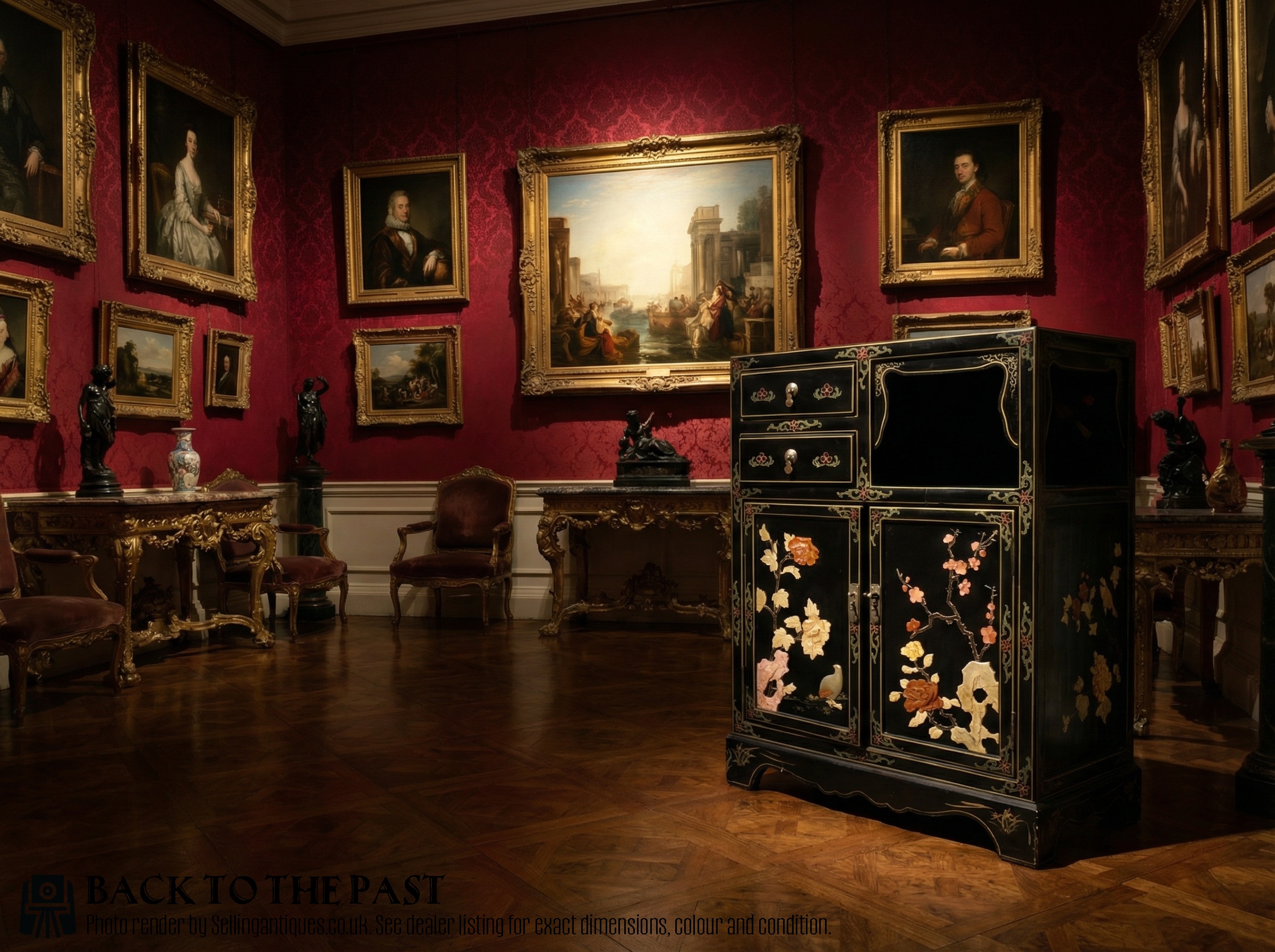
Chinoiserie Storage Cupboard
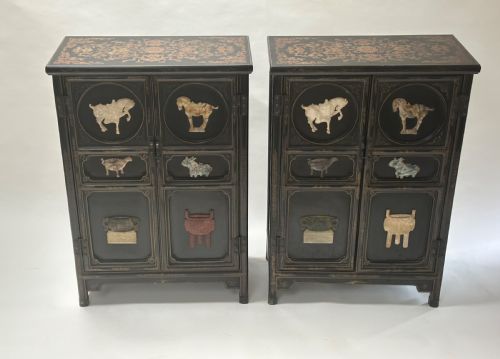
A chinoiserie storage cupboard represents a distinct intersection of European decorative taste and Asian motifs, spanning periods from the Georgian era through the Regency, Victorian nineteenth century, Edwardian years and into the early twentieth century. Buyers seeking this phrase find various forms including side cabinets, corner cupboards, wedding cabinets, and cocktail cabinets.
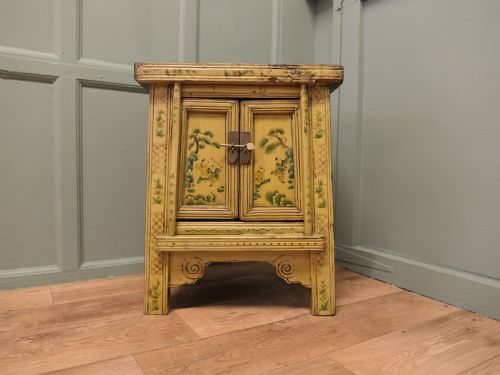
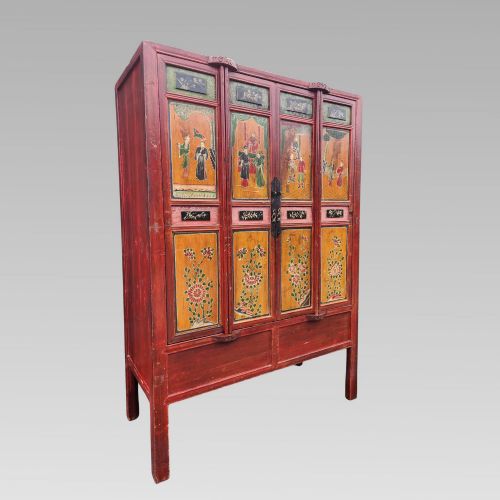
The aesthetic draws heavily on traditional Chinese and Qing dynasty design principles, alongside revivals and interpretations produced by European workshops. Pieces range from upright standing cupboards to low bedside units and large wardrobes, finished with characteristic decorative schemes.
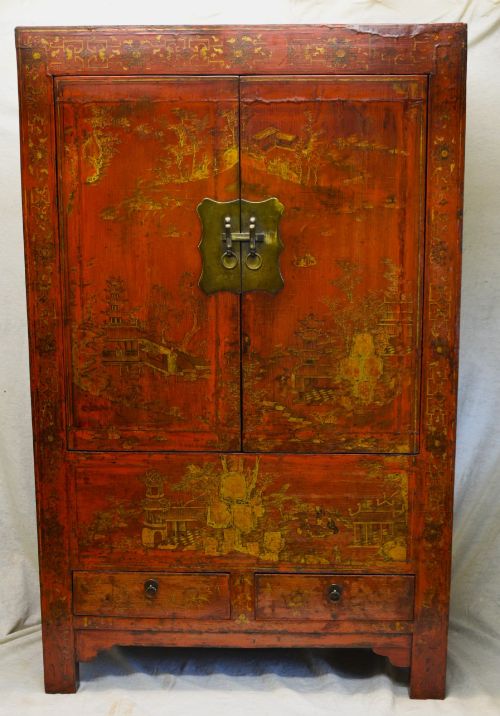
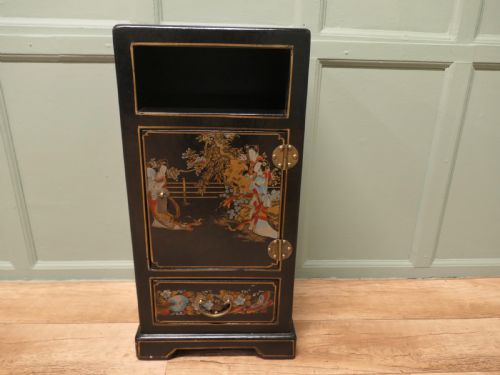
Black and red lacquered wood dominate the selection, often enriched with gold leaf details depicting birds, flowers, and narrative scenes. Many examples originate from specific historical windows such as the 1920s and 1930s art deco period, alongside older nineteenth-century works.
Materials and Construction Methods
The foundational construction relies on timber and hardwood, shaped into cabinets, armoires, and side units using traditional joinery appropriate to the period of origin. Artisans applied layers of lacquer to the wooden carcase, building up smooth surfaces capable of receiving intricate painted designs.
Surface decoration frequently incorporates gilt, gold leaf, and brass hardware such as hinges and mounting plates. Japanning techniques appear across multiple pieces, replicating Asian lacquerwork through European methods involving layered varnishes and metallic dust.
Chinoiserie Storage Cupboard Retail Price Guide 2026
Typical asking prices for chinoiserie storage cupboard among the pieces listed under this phrase on Sellingantiques today, from the lower quarter to the upper quarter. They describe what is for sale here now, not the wider market.
Listings feature wood, lacquer, brass, and gold leaf applied to cabinets spanning the Georgian, Regency, and early twentieth-century periods.
Assessing Quality and Execution
Quality in these cupboards rests primarily on the depth and execution of the lacquer work and the refinement of the painted details. Superior examples display crisp gilt work and carefully composed pictorial scenes of flora, fauna, and figures rather than flat or uniform stencilling.
The integrity of the underlying woodwork and the survival of the original decorative surface dictate the standing of an individual piece. Finer cabinets retain their original brass mountings and stable lacquer finishes across the doors, panels, and stands.
Maples and Co
The Chinoiserie Storage Cupboard Glossary
- Chinoiserie
- European decorative style reflecting Chinese artistic influences, popular across Georgian, Regency and later revival periods.
- Japanning
- European imitation of East Asian lacquerwork, created using layered varnishes and heat-cured finishes.
- Lacquer
- Protective and decorative resin finish applied to wood, forming a smooth surface for painted and gilt ornamentation.
- Qing Dynasty
- The final imperial dynasty of China, whose aesthetic heavily informed antique wedding and storage cabinets.
- Chiffonier
- A low sideboard or cabinet featuring shelves or cupboards, seen in Regency examples within this category.
Chinoiserie Storage Cupboard: Frequently Asked Questions
What periods do these cupboards date from?
The selection spans a wide chronological range, including Georgian and Regency pieces, nineteenth-century examples, and early twentieth-century items from the 1910s, 1920s, and 1930s.
Revival styles from the Edwardian era and art deco period also appear alongside older Qing dynasty items from China.
How were these cabinets originally used?
These pieces served varied domestic functions, ranging from storage for garments and household goods to specialised marriage and wedding cabinets.
Later twentieth-century iterations often functioned as cocktail cabinets, side cabinets, or bedside units designed for modern entertaining and storage.
What materials make up the surface finish?
Surfaces typically feature black or red lacquer applied over wood or hardwood carcases, often utilising japanning techniques.
Gold leaf and gilt work highlight the painted motifs of birds, flowers, and landscapes, complemented by brass hardware.
How do I distinguish regional styles?
European interpretations often incorporate traditional forms like bow-front corner cupboards and chiffoniers while applying oriental motifs.
Pieces originating directly from sources such as Fujian exhibit distinct Qing dynasty structural characteristics and traditional wedding cabinet proportions.