




Chinoiserie Pattern Serving Dish
These chinoiserie pattern serving dish examples bring imaginative oriental motifs to the table, offering a decorative surface that suits collectors of historical ceramic tableware.
Chinoiserie Pattern Serving Dish
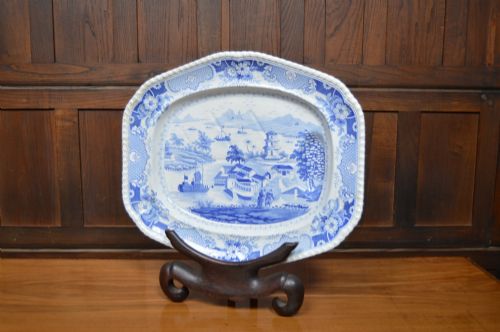
When searching for a chinoiserie pattern serving dish, buyers encounter serving platters, tureens, and meat dishes originating from the eighteenth and nineteenth centuries. These pieces display distinct orientalist designs rendered in blue and white transfer print or polychrome enamel.
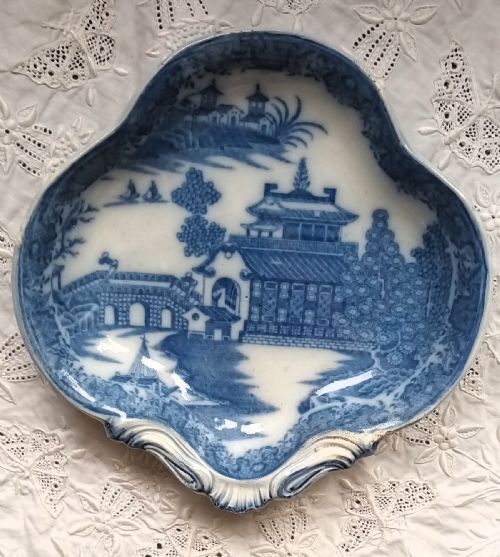
The domestic forms appearing in this selection span Georgian, Regency, and Victorian periods, often taking the shape of rectangular platters, trefoil dishes, and covered tureens. Such vessels served functional roles at the dining table before becoming decorative display objects.
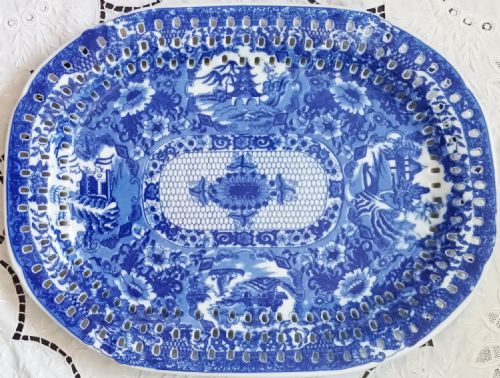
Makers working in earthenware, pearlware, ironstone, and porcelain produced these forms using specific patterns such as the Net, Chinese Tree, and various figurative oriental scenes. The selection on this page demonstrates the wide variety of British manufacturing traditions interpreting eastern aesthetics.
Materials and construction
Potters shaped these vessels from earthenware, pearlware, ironstone, and porcelain, applying cobalt pigment and enamel decoration beneath or over the glaze. Ironstone provided a heavier, durable body suited to large meat platters, while porcelain and pearlware accommodated finer decorative details.
Transfer printing technology allowed workshops to apply intricate patterns like the Net or Chinese Garden onto ceramic surfaces with consistency. Hand-finishing with enamel colours and gold leaf occasionally enhanced the printed outlines on higher grade wares.
Listings feature pieces spanning the eighteenth and nineteenth centuries, utilising earthenware, pearlware, ironstone, and porcelain bodies.
Assessing quality in early ceramics
Quality in these ceramics depends upon the crispness of the transfer print and the precision of the hand-applied enamel or cobalt pigment. Finer pieces maintain clean lines without blurring in the glaze, displaying well-defined architectural and figurative motifs.
The composition of the ceramic body itself contributes to the overall standard of the dish, with dense ironstone and translucent porcelain representing higher technical achievement than coarse earthenware. The elegance of moulded forms, such as pierced rims or fitted tureen covers, further distinguishes the work.
Derby·Minton·John Rogers and Son·Bow
The Chinoiserie Pattern Serving Dish Glossary
- Transferware
- Ceramic pieces decorated by applying a printed design from a copper plate onto paper and then onto the earthenware body. This technique enabled the mass production of detailed blue and white patterns.
- Pearlware
- A refined earthenware developed in the late eighteenth century featuring a subtle bluish glaze that pooled in recesses to mimic Chinese porcelain. It served as a popular base for printed chinoiserie designs.
- Ironstone
- A heavy, durable ceramic body patented in the nineteenth century to rival true porcelain. It resists chipping and provides a stable surface for vibrant enamel patterns.
- Tureen
- A deep covered vessel designed for serving soups, stews, or other substantial dishes at the dining table. They frequently include matching stands or platters.
- Kakiemon
- A style of Japanese enamelled porcelain decoration featuring asymmetrical arrangements of flowers, birds, and figures. British factories frequently adopted these palettes on early porcelain bodies.
Chinoiserie Pattern Serving Dish: Frequently Asked Questions
How were serving dishes used?
These dishes held meats, vegetables, or courses at formal dining tables during the Georgian and Victorian eras. Their generous proportions accommodated large joints of meat or communal portions.
Over time, many of these utilitarian vessels transitioned into display pieces showcased on sideboards or hung on walls for their decorative patterns.
What is ironstone?
Ironstone is a dense, durable ceramic body developed in the early nineteenth century to provide a strong alternative to porcelain. It offered manufacturers a robust material for heavy platters and tureens.
This body type absorbed glazes and enamels effectively, allowing factories to produce brightly coloured patterns that survived daily dining use.
How do I date a piece?
Dating relies on identifying the ceramic body, the manufacturing style, and specific makers recorded on the base or within the transfer print. Pearlware and soft-paste porcelain typically point towards the eighteenth or early nineteenth century, while heavy ironstone often indicates the Victorian period.
Comparing pattern names and registered design numbers against historical manufacturing records helps narrow the period of production.
Can I use them for dining?
While these items were originally made for food service, antique ceramics often develop hairline cracks, crazing, or glaze wear from age. Modern dishwashers and microwaves can cause further damage to fragile historic glazes and enamels.
Many collectors prefer to use them strictly for display or gentle serving to preserve their condition for future generations.