



Chinoiserie Desk Lamp Pair
These chinoiserie desk lamp pair options bring painted porcelain, lacquered wood, and bronze into domestic rooms.
Chinoiserie Desk Lamp Pair
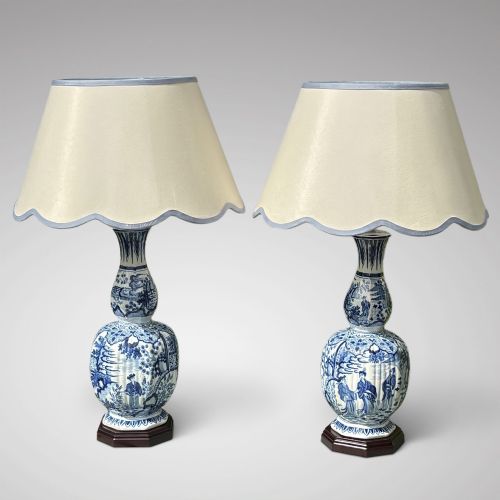
A chinoiserie desk lamp pair consists of matched twin lighting fixtures created from converted oriental vases, jars, and vessels spanning the nineteenth and twentieth centuries. Buyers seeking these items encounter table lamps fashioned from Dutch Delftware, Chinese porcelain, and Japanese Imari wares.
Most examples adapt historic ceramic or lacquered bodies with modern electrical fittings for functional illumination. These paired fixtures bring balanced symmetry and decorative motifs derived from East Asian aesthetics directly to desk and tabletop surfaces.
How they were made
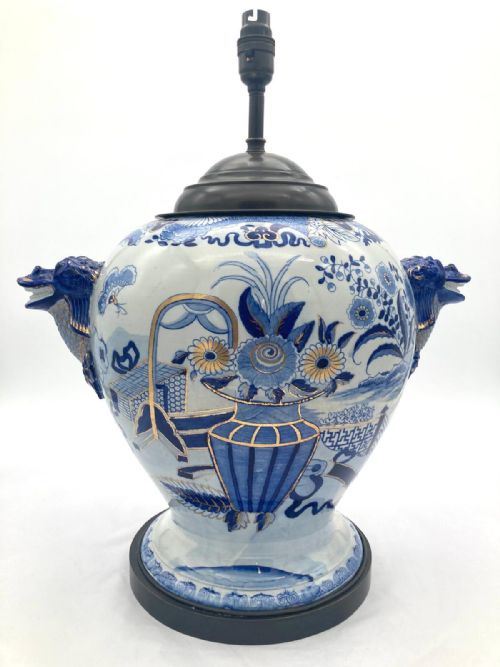
Makers constructed these fixtures by converting existing ceramic vessels, bronze forms, and lacquered wood bodies into functional lighting. Artisans drilled bases or fitted collars to secure electrical wiring through traditional ginger jars, vases, and ironstone vessels.
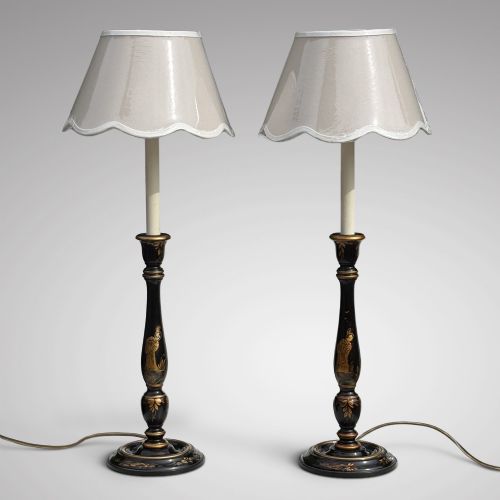
Surfaces display hand-painted porcelain glazes including famille rose, famille verte, and blue and white beneath clear protective finishes. Other examples utilise lacquered wood, cloisonné enamel, gilt accents, and brass mounts to complete the converted lamp bodies.
Chinoiserie Desk Lamp Pair Retail Price Guide 2026
Typical asking prices for chinoiserie desk lamp pair among the pieces listed under this phrase on Sellingantiques today, from the lower quarter to the upper quarter. They describe what is for sale here now, not the wider market.
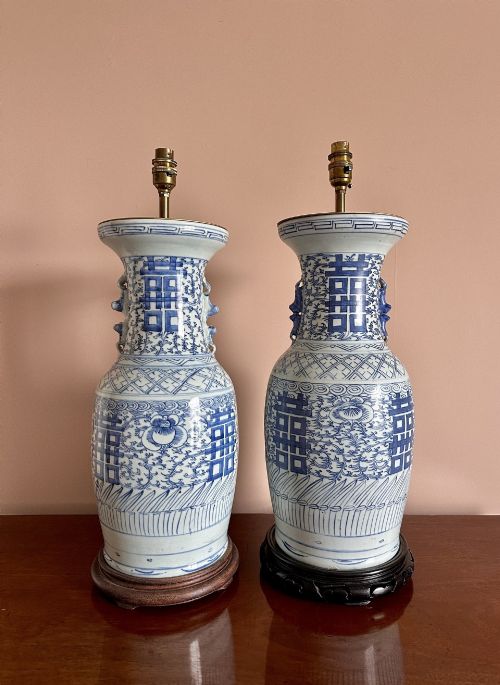
Double happiness symbols on vintage porcelain lamps quietly wish double the joy to whoever plugs them in.
What varies in quality
Quality separates through the integrity of the underlying ceramic body and the precision of the conversion process. Finer pieces retain undamaged nineteenth-century porcelain, crisp hand-painted enamel details, and stable lacquered wood surfaces.
The integration of metal components, such as gilt bases and brass fittings, distinguishes superior examples from simpler adaptations. Paired symmetry also dictates worth, as closely matched vessel heights and glaze saturations determine visual balance.
The Chinoiserie Desk Lamp Pair Glossary
- Chinoiserie
- European decorative style reflecting Chinese artistic influences. This aesthetic appears across lacquered wood, painted porcelain, and gilt furnishings.
- Delftware
- Tin-glazed earthenware originating from the Netherlands. Pieces typically showcase blue and white painted decorative motifs.
- Famille Rose
- Chinese ceramic palette distinguished by opaque pink enamel colours. This style appears frequently on nineteenth-century porcelain vessels.
- Cloisonné
- Metalwork technique utilising soldered wires to create compartmentalised enamel designs. Artisans fill these cells with coloured glass pastes before firing.
- Imari
- Japanese export porcelain decorated in underglaze blue, iron red, and gold. These wares date from historic production periods.
- Ironstone
- Heavy, durable earthenware developed in nineteenth-century England. Makers utilised this dense ceramic body for robust vases and vessels.
Chinoiserie Desk Lamp Pair: Frequently Asked Questions
What periods do these lamps come from?
The selection spans from the Regency era and nineteenth century through to 1920, 1930, and 1960. Materials and mounting styles typically align with these dates.
Earlier examples often feature hand-painted Delft or Arita Imari ceramics, while mid-twentieth-century editions introduce simpler lacquered finishes.
How were these converted vessels used?
These pieces function primarily as matched table lamps providing ambient or task lighting on desks and sideboards. Their dual format offers symmetrical illumination.
Historic vessels such as ginger jars and ironstone vases were adapted with electrical wiring and handmade shades to serve modern domestic interiors.
What materials make up these lamp pairs?
Construction materials include porcelain, earthenware, lacquered wood, bronze, brass, fabric, and gilt accents. Many incorporate traditional ceramic bodies paired with metal mounts.
Surfaces often display intricate enamel work, turquoise glazes, or blue and white painted ornamentation characteristic of Asian export art.
How do I care for antique lamp pairs?
Maintenance involves gentle dusting of fabric shades and careful cleaning of ceramic or lacquered surfaces with a dry cloth. Avoid harsh chemical cleaners on gilt and enamel.
Ensure electrical components are checked periodically by a qualified professional to maintain safety standards for vintage table lamps.