


Chinoiserie Covered Dish
These chinoiserie covered dish examples bring hand-painted narrative scenes and vibrant enamels straight from early kilns to the dining table.
Chinoiserie Covered Dish
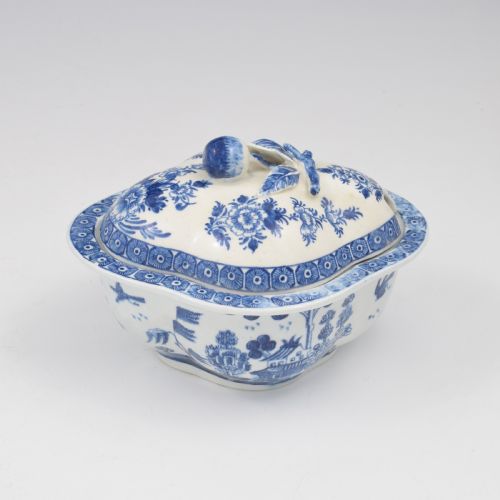
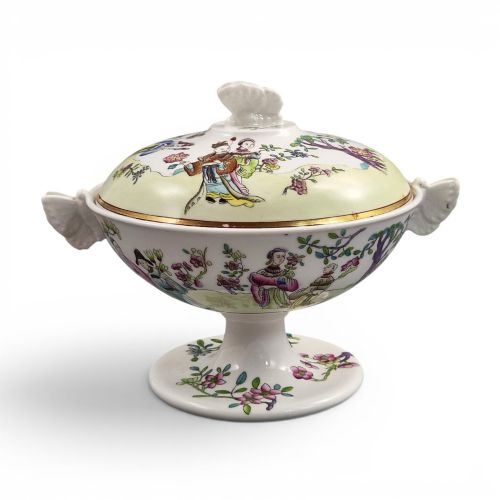
A chinoiserie covered dish takes the form of tureens, soup tureens, pedestal bowls and centerpiece bowls created across the eighteenth and nineteenth centuries. These vessels combine European ceramic bodies with fantastical Eastern motifs, rendered in styles spanning Georgian, Regency, Victorian, Chinese Export and English Chinoiserie.
The pieces appearing on this page include soft-paste porcelain, standard porcelain, ironstone ceramic and felspar porcelain forms. Makers utilised rich glazes, enamel colours and gold leaf accents to delineate pavilions, figures and exotic flora upon the surfaces.
Buyers seeking a chinoiserie covered dish will encounter items ranging from eighteenth-century Derby quatrefoil sauce tureens to large nineteenth-century Mason's ironstone pieces. The inventory covers production dates from seventeen hundred sixty through to eighteen hundred eighty.
Materials and construction
Potters shaped these vessels using soft-paste porcelain, standard porcelain or dense ironstone ceramic bodies suited to daily service or decorative display. Early eighteenth-century examples rely on delicate soft-paste formulations, whereas nineteenth-century pieces frequently employ robust ironstone ceramic to support heavier forms.
Decorators applied blue and white underglaze pigments or multi-coloured enamels by hand, occasionally augmenting the designs with applied gold leaf. Certain vessels incorporate moulded elements such as butterfly handles or bamboo-patterned reliefs alongside the painted oriental scenes.
Butterfly handles flutter across nineteenth-century pedestal bowls, proving that even a humble soup tureen needs a pair of insect wings.
Judging quality and execution
Quality rests upon the crispness of the moulded body and the precision of the hand-painted enamel work across the surface. Superior examples display carefully controlled cobalt blue or polychrome brushwork that defines architectural pavilions and figures without blurring into the surrounding glaze.
The sophistication of the ceramic body itself separates the output of major factories like Derby and Spode from standard commercial wares. Refined translucency in the porcelain and deeply impressed or printed factory marks indicate greater care during the manufacturing process.
Derby Porcelain·Spode·Mason·Copeland and Garrett·English Staffordshire
The Chinoiserie Covered Dish Glossary
- Chinoiserie
- European decorative style reflecting imaginative interpretations of Chinese and East Asian artistic traditions. Artists employed motifs of pavilions, exotic figures and landscapes.
- Ironstone Ceramic
- A durable type of heavy earthenware patented in the nineteenth century. This dense body resisted chipping and served as a robust alternative to porcelain.
- Soft-Paste Porcelain
- An artificial porcelain composition fired at lower temperatures during the eighteenth century. It exhibits a warm tone and subtle translucency under light.
- Tureen
- A deep covered vessel designed for serving soups, sauces or stews at the dining table. These pieces often rest upon matched pedestals or fixed bases.
Chinoiserie Covered Dish: Frequently Asked Questions
What is a chinoiserie covered dish used for?
These vessels originally held soups, sauces or main dishes for formal dining table service. Today they function primarily as decorative centrepieces or serving bowls.
The lidded design kept food warm during meals while displaying elaborate painted scenes to assembled guests.
How do I date an antique tureen?
Dating relies upon examining the ceramic body composition, glaze characteristics and any visible factory marks underneath the base. Soft-paste porcelain and specific potting techniques point towards eighteenth-century production.
Later nineteenth-century pieces often utilise heavier ironstone ceramics stamped with maker names or specific pattern titles.
Are these pieces safe for food?
Most antique ceramics feature historic glazes that may contain lead or show stability issues from centuries of age. Hand washing preserves the delicate enamel paints and gold leaf highlights.
Using these vessels for display rather than active dining service protects the fragile ceramic bodies from modern wear.
What is Mandarin pattern?
Mandarin pattern refers to specific chinoiserie designs featuring detailed figures in traditional Chinese court attire. These brightly coloured motifs gained immense popularity during the nineteenth century.
Green and polychrome enamel versions appear frequently on ironstone bodies produced by English potteries.