


Chinoiserie China Plates
Chinoiserie china plates bring together European craftsmanship and eastern motifs, offering vibrant colour and intricate scenes that suit display and service.
Chinoiserie China Plates
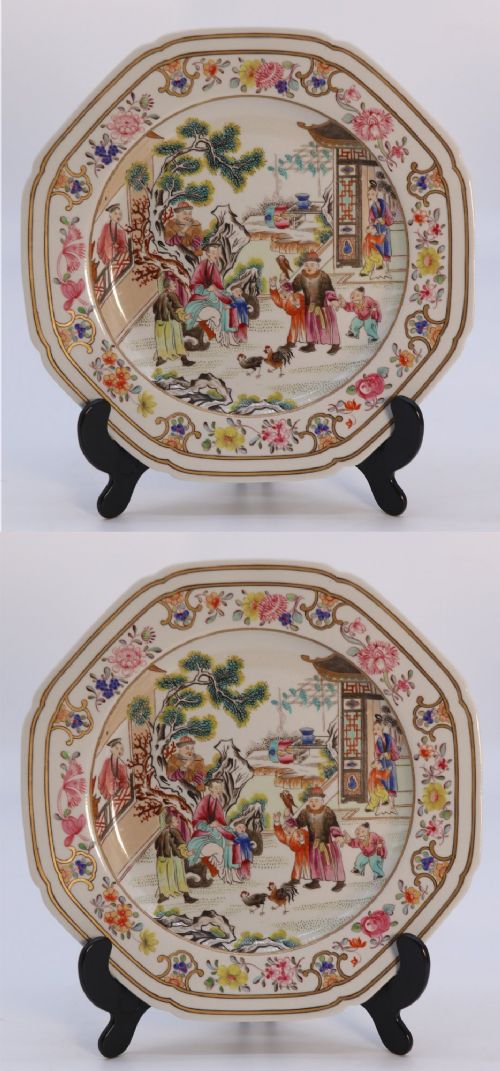
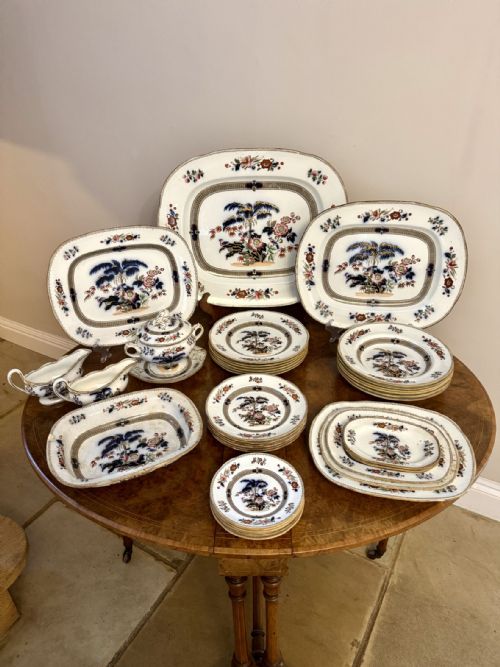
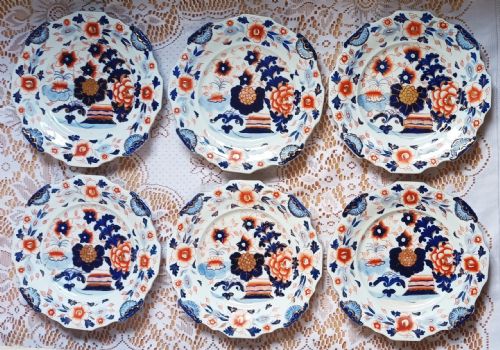
Chinoiserie china plates capture European interpretations of East Asian design across several centuries, appearing in forms such as cabinet plates, tea plates, dinnerware, chargers, and platters.
The pieces on this page span the eighteenth and nineteenth centuries, taking in the Georgian, Regency, and Victorian periods alongside eighteenth-century Delftware and Chinese export porcelain.
Makers and factories represented include Bow, Spode, Worcester, Wedgwood, Mason's, Minton, and Davenport, showing both English interpretations and original Chinese output.
Materials and construction
Potters utilised ceramic bodies including earthenware, pearlware, ironstone, stone china, and porcelain, applying glaze and enamel to create durable tableware.
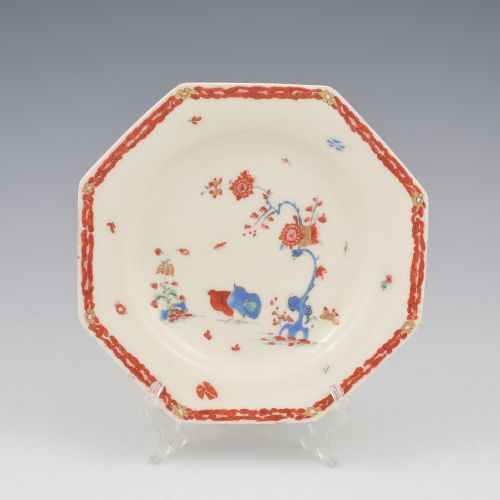
Decoration relied on hand painting and transfer printing, occasionally accented with gold leaf to highlight intricate patterns such as pagodas, dragons, and the two quail motif.
Several plates feature the two quail pattern, bringing centuries-old Japanese bird motifs directly to English dining tables.
Quality and execution
Quality rests in the crispness of the transfer print or the brushwork of the enamel painting, where finer examples display precise detailing in complex patterns like the dragon in compartments or grasshopper designs.
The body material also distinguishes the range, as dense ironstone and stone china offer robust utility while delicate porcelain bodies achieve translucency and finer potting.
Bow Porcelain·Spode·Worcester·Wedgwood·Mason·Minton·Davenport
The Chinoiserie China Plates Glossary
- Ironstone
- A dense, durable type of earthenware patented in the nineteenth century. It resists chipping and provided a strong base for vibrant printed and painted decoration.
- Delft
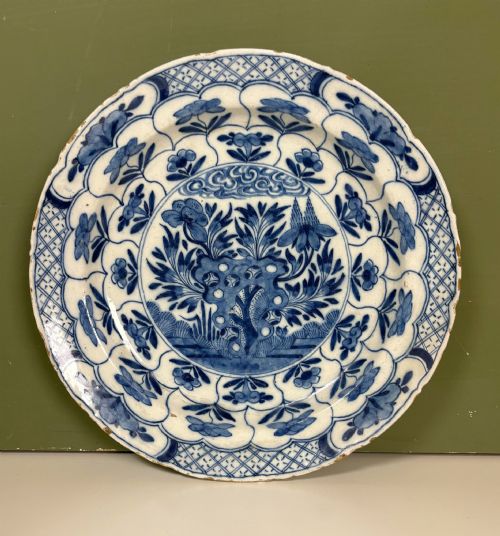
- Tin-glazed earthenware produced in imitation of Chinese blue and white porcelain. It often shows a slightly porous body beneath a white glaze.
- Kakiemon
- A style of Japanese enamelled porcelain decoration featuring asymmetrical designs and specific colour palettes. It frequently incorporates motifs of birds and quail.
- Pearlware
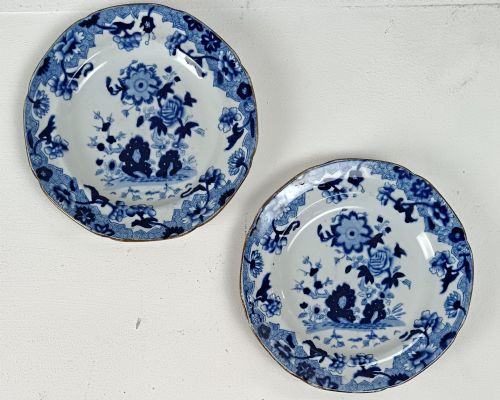
- A fine earthenware developed in the late eighteenth century with a bluish glaze that pooled in recesses. It served as a popular canvas for blue and white Chinese landscape patterns.
- Stone china
- A heavy, semi-vitrified ceramic body developed in the nineteenth century. It bridged the gap between earthenware and true porcelain for heavy-duty service ware.
Chinoiserie China Plates: Frequently Asked Questions
How do I date an antique chinoiserie plate?
Dating relies on factory marks, ceramic bodies such as ironstone or pearlware, and stylistic shifts between Georgian neoclassical restraint and Victorian complexity.
Examining the foot ring, glaze pooling, and pattern style helps narrow the period of manufacture.
Are these plates suitable for daily use?
Many nineteenth-century ironstone and stone china plates were built for heavy service and remain robust. Eighteenth-century porcelain and Delft pieces demand more careful handling.
Hand washing preserves the enamel and gold leaf on older decorative pieces.
What is the difference between ironstone and porcelain?
Ironstone is a heavy, opaque earthenware designed for durability in busy households. Porcelain is vitrified, harder, and often translucent.
Both materials carried chinoiserie patterns successfully across different price points.
How do I identify a transfer printed plate?
Transfer printing uses a copperplate to transfer an inked design onto paper and then onto the ceramic body. This technique created uniform patterns across sets.
Under magnification, printed lines reveal a stippled or broken pattern rather than continuous brush strokes.