
Blue and Orange China
These pieces of blue and orange china bring together rich cobalt pigments and warm metallic hues across centuries of tableware.
Blue and Orange China
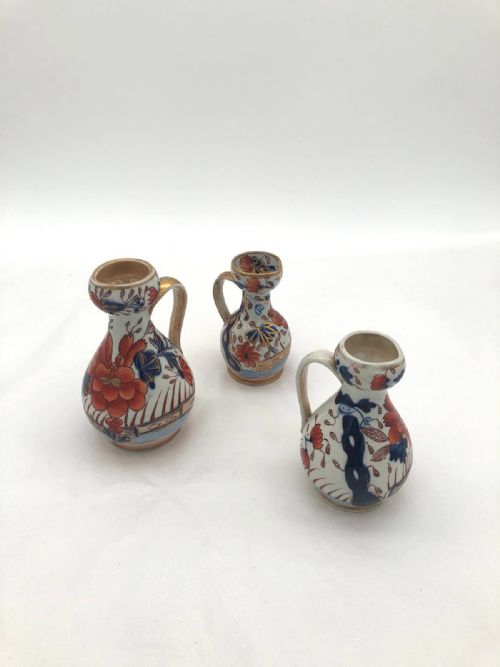
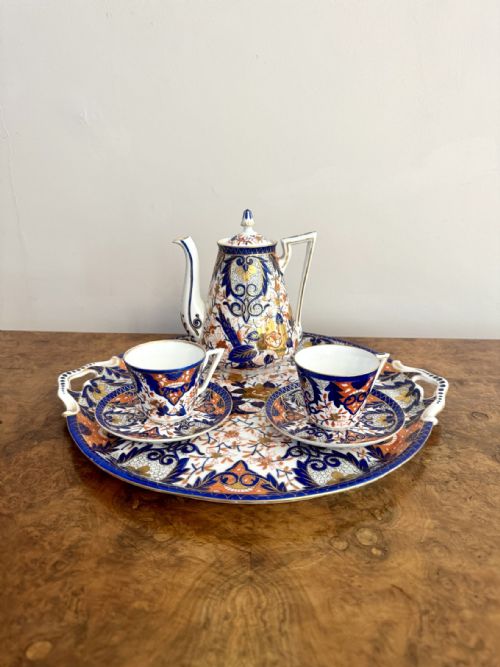
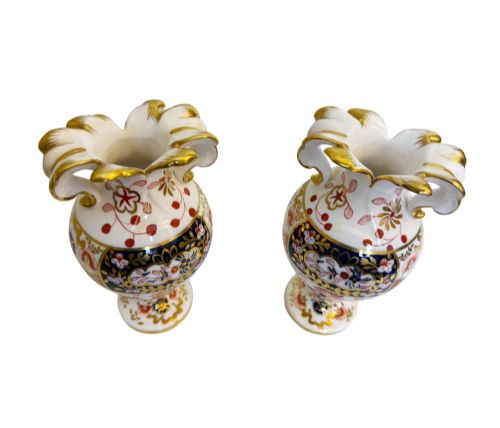
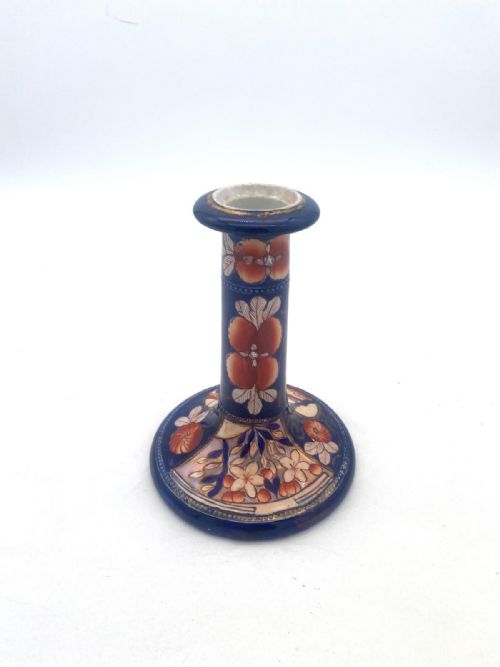
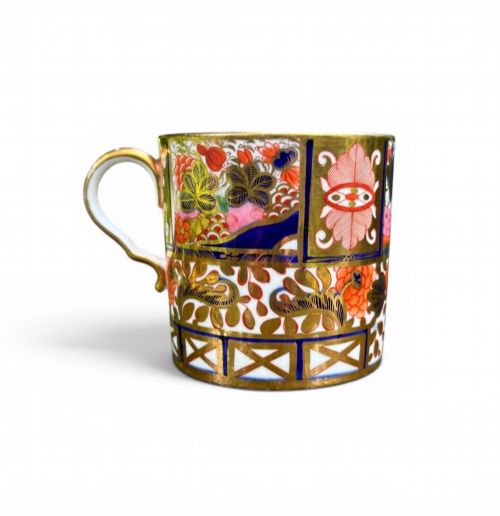
When you search for blue and orange china, you encounter objects spanning the Georgian, Victorian, and Edwardian eras, alongside Japanese imports. The selection encompasses everyday service items such as plates, comports, and coffee sets alongside display pieces like vases and tureens.
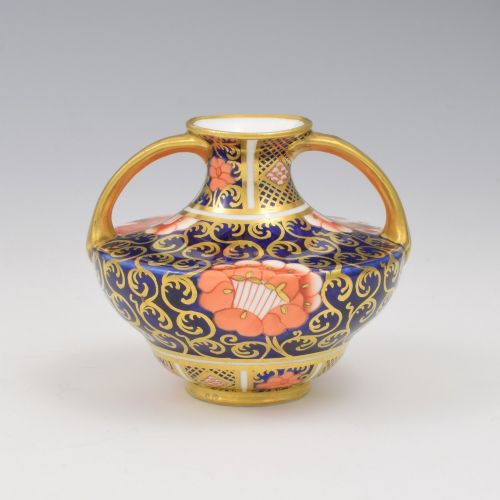
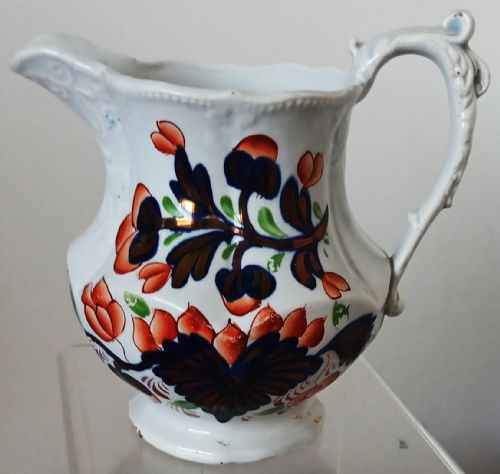
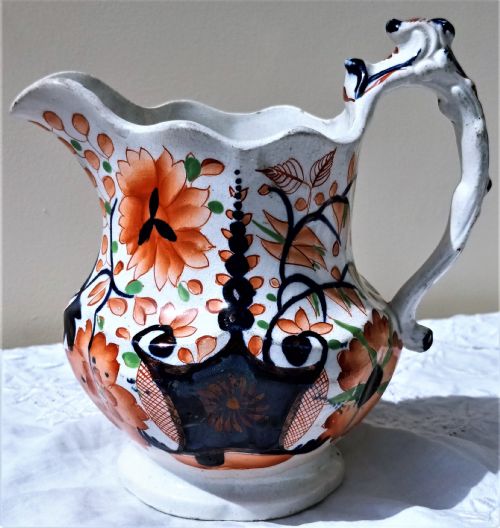
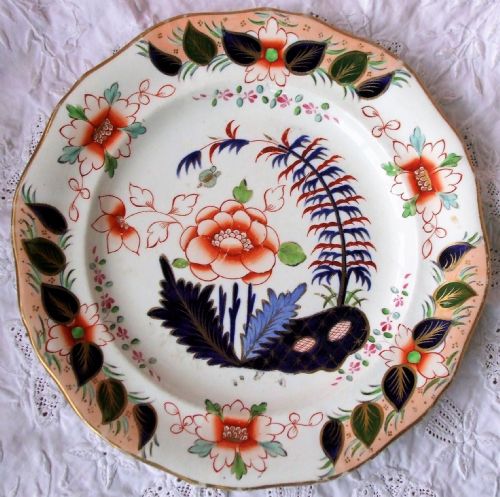
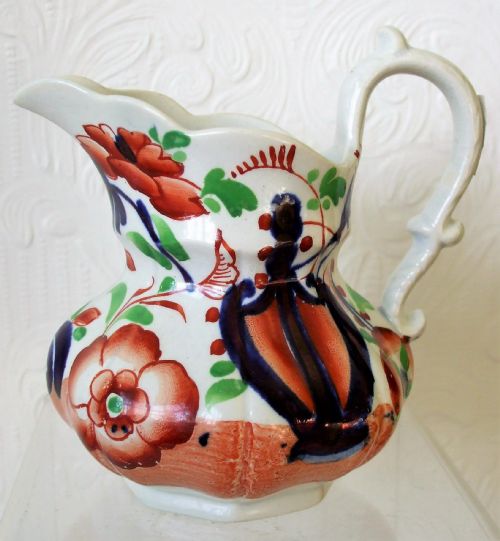
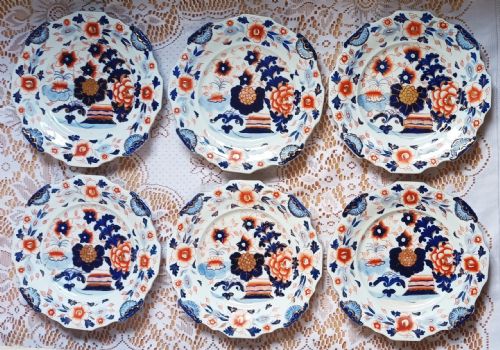
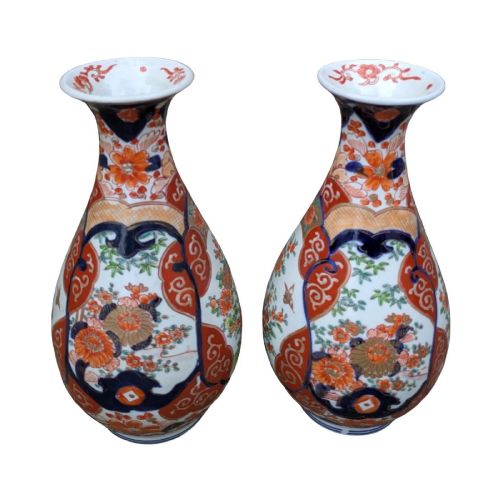
Makers such as Mason's, Spode, and Royal Crown Derby dominate the English offerings, often employing traditional Japanese Imari palettes and patterns like Schoolhouse or Japan. Alongside these sit Gaudy Welsh pottery jugs and Japanese Imari bowls and ribbon plates.
How They Were Made
Potters utilised robust ironstone, porcelain, bone china, and earthenware as foundations for these vessels. These ceramic bodies were shaped into jugs, footed comports, and plates before receiving detailed hand-finishing.
Underglaze blue painting combined with vibrant enamel colours and gold leaf application to create the characteristic contrasting palette. Glazes sealed the surfaces, while kiln firing set the metallic and ceramic pigments permanently.
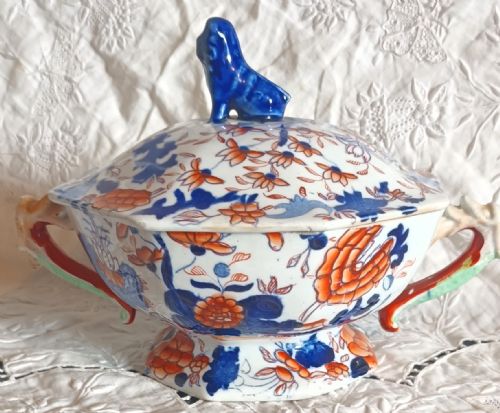
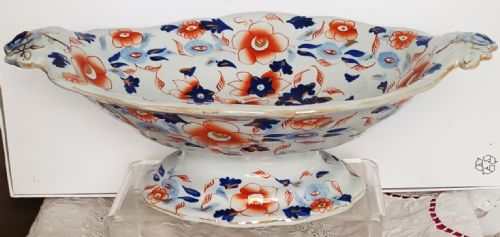
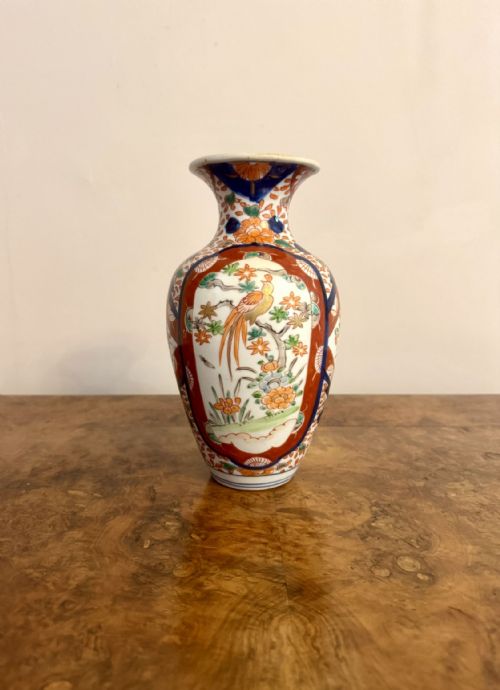
Common forms include vases, plates, comports, tureens, and jugs decorated in traditional Imari, Japan, and Schoolhouse patterns.
What Varies in Quality
The precision of the hand-painted enamel work and the crispness of the cobalt blue underglaze define the upper tier of production. Finer pieces display meticulous detail in gilding and pattern registration across complex forms like hydra jugs and octagonal vessels.
Subtleties in the ceramic body itself, from dense ironstone to translucent porcelain, dictate the refinement of the finished object. Greater artistic ambition shows in pieces utilising multi-layered patterns such as Pagoda or Old School House.
Mason's Ironstone·Spode·Royal Crown Derby·John Davenport·Minton·Wedgwood·Ridgways China
The Blue and Orange China Glossary
- Ironstone
- A durable type of heavy earthenware patented in the nineteenth century to rival true porcelain. It provided a sturdy canvas for dense enamel patterns.
- Comport
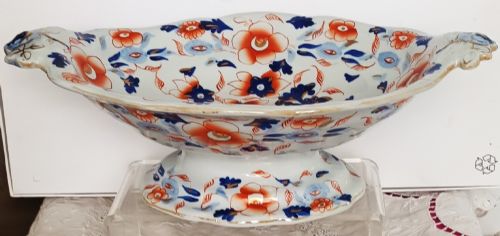
- A decorative footed dish or bowl raised above table level for serving fruit or sweets. These pieces often anchor a formal dining arrangement.
- Hydra jug
- A ceramic pitcher featuring a distinctive serpentine handle and moulded spout. The form draws inspiration from classical antiquity.
- Ashet
- A large serving platter used for presenting meat or large courses at the table. These items form part of larger nineteenth century dining services.
Blue and Orange China: Frequently Asked Questions
Are these items safe for food use?
Many nineteenth century services were designed for dining and tea consumption, utilising ironstone and porcelain bodies. However, older enamels and lead glazes can react with acidic foods.
Displaying your plates, comports, and tureens or limiting their use to dry items protects the historic surfaces from wear. Careful handling ensures the longevity of both the ceramic and the decorative pigments.
What defines the Imari style?
The Imari style relies on a striking contrast of deep cobalt blue and fiery orange-red enamels, frequently highlighted with gold leaf. Originating in Japan, British potteries quickly adopted this vibrant aesthetic during the Georgian and Victorian periods.
These designs often feature segmented panels filled with floral motifs or architectural elements like pagodas. The resulting visual depth makes the pattern instantly recognisable across various object types.
How do I distinguish ironstone from porcelain?
Ironstone offers a heavy, opaque, and highly robust body designed to withstand rigorous daily use. It rings with a duller thud when tapped compared to true ceramic alternatives.
Porcelain and bone china present a thinner, more refined profile that often allows light to pass through the body. Both materials provided different advantages for nineteenth century tableware production.