



Chinoiserie Bedside Table
These chinoiserie bedside table selections bring decorative lacquer and Asian motifs into a bedroom, offering small-scale storage with distinct historical character.
Chinoiserie Bedside Table
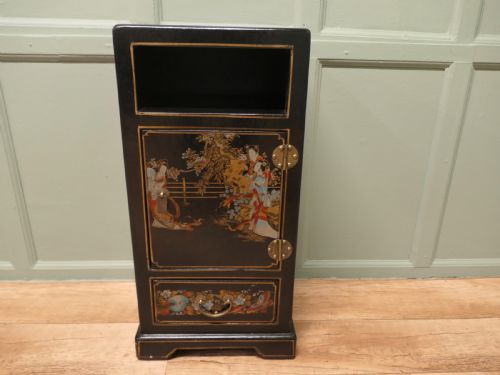
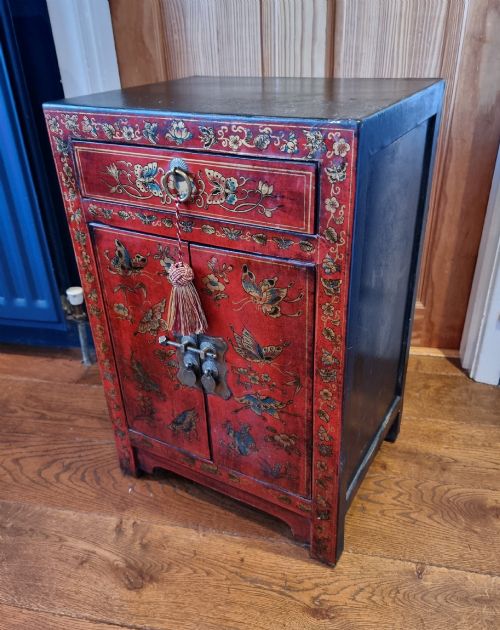
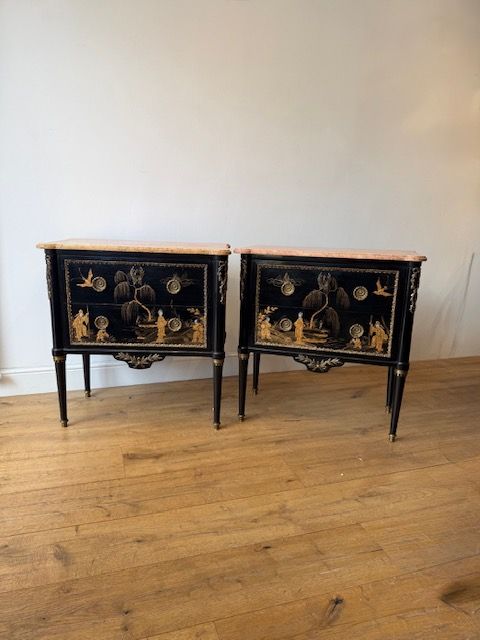
When searching for a chinoiserie bedside table, buyers encounter low cupboards, small cabinets, and side tables dating from the Victorian and Edwardian eras through to the 1930s. These pieces often feature painted lacquer surfaces depicting traditional Asian scenes, figures, and landscapes.
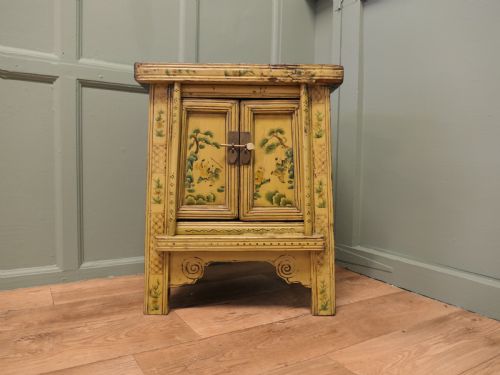
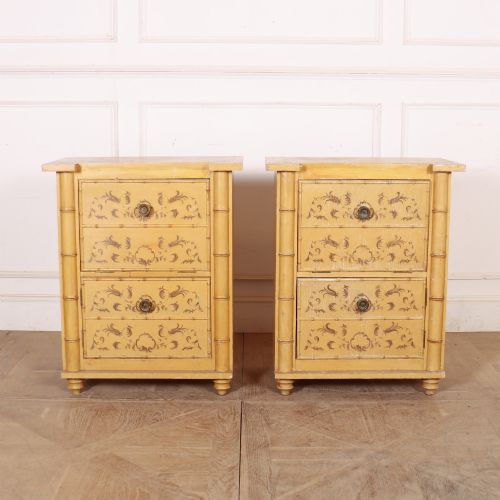
The selection frequently spans forms adapted from nineteenth-century Chinese export items alongside English and French interpretations of the style. Buyers meet compact bedside cabinets, low chests, and small stands finished in cream, ochre, red, or black lacquer.
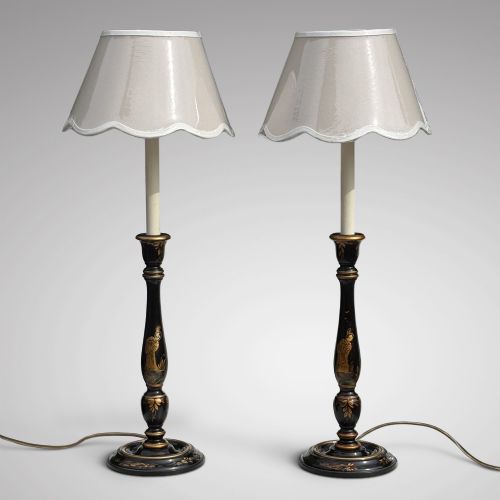
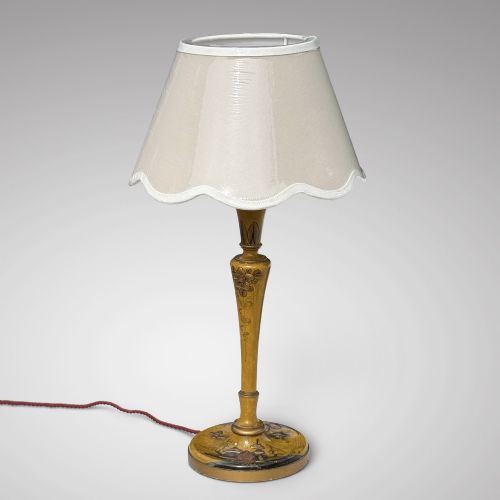
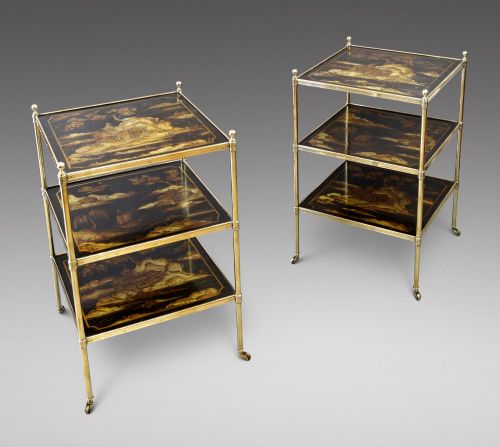
Alongside dedicated bedside tables, related low cupboards and small side cabinets appear to serve the same functional purpose beside a bed. The physical evidence shows these designs were executed with painted decoration on wood or adapted as lamp tables.
Materials and construction
Construction relies primarily on wood finished with layers of lacquer, applying traditional Asian decorative techniques adapted by European workshops. Artisans built small carcases of wood to receive painted or gilded ornamentation depicting figures, foliage, and architectural motifs.
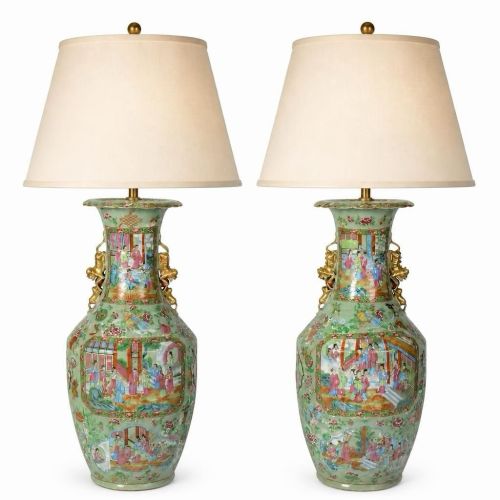
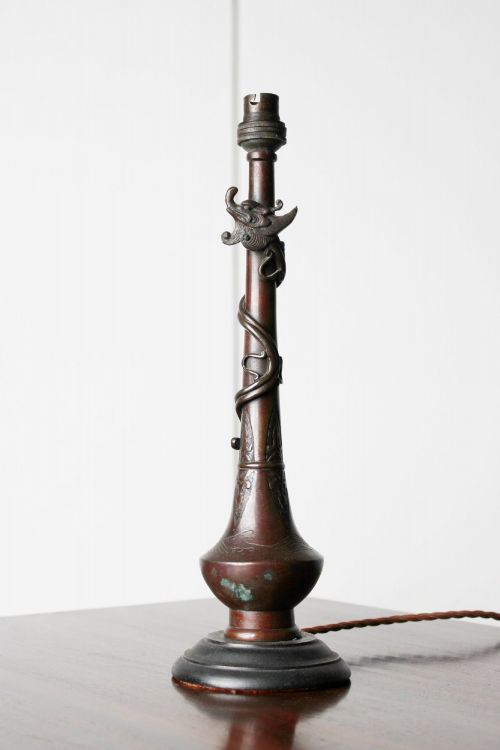
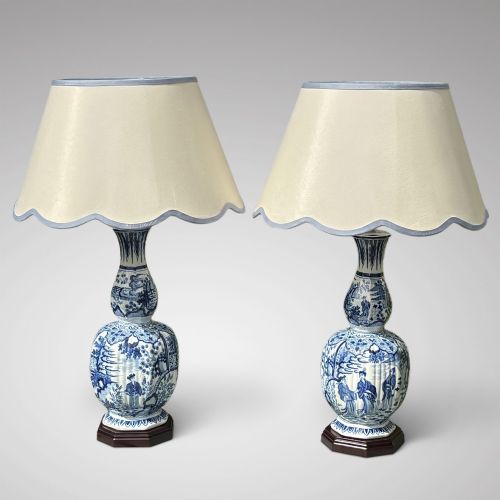
Surface decoration frequently incorporates hand-painted pigments laid over cream, ochre, red, or black grounds. Many examples combine wood structures with brass or metal hardware, fabric elements, and porcelain components derived from converted vases.
Shih Tzu dogs and Foo lions quietly guard several nineteenth-century lamp conversions, keeping watch over the bedside tables.
Quality distinctions
Quality rests heavily on the depth and execution of the lacquerwork and hand-painted details. Finer examples display crisp pictorial scenes with subtle layering and durable finishes, whereas simpler pieces show broader, less detailed brushwork.
The integrity of the underlying timber carcase and the preservation of the original painted surface separate superior items from heavily restored or later painted equivalents. Hardware choices, such as cast brass handles and hinges, also contribute to the distinction between standard production and finer workshops.
The Chinoiserie Bedside Table Glossary
- Chinoiserie
- European decorative style reflecting Chinese artistic influences, popular in furniture and ceramics across multiple centuries. It employs motifs such as pagodas, figures, and exotic landscapes.
- Lacquer
- Protective and decorative resin finish applied in multiple layers to wood surfaces. It creates a smooth, glossy coating often adorned with hand-painted or gilt decoration.
- Ormolu
- Gilded bronze mountings applied to furniture and decorative objects, common in French-influenced pieces. It provides metallic contrast to wood and lacquer surfaces.
- Famille Verte
- Chinese porcelain palette dominated by green enamels, frequently seen on nineteenth-century vases. This ceramic style often appears converted into lighting alongside furniture items.
- Cloisonné
- Enamelling technique where metal wires form compartments on a base to hold coloured paste. These decorated surfaces appear on vases and related items associated with the style.
Chinoiserie Bedside Table: Frequently Asked Questions
What is a chinoiserie bedside table?
A chinoiserie bedside table is a small cabinet, low cupboard, or stand featuring European or Asian painted lacquer decoration in an East Asian taste. These pieces provide compact bedside storage while displaying characteristic motifs like figures, landscapes, and floral patterns.
Items seen in this tradition span the nineteenth and early twentieth centuries, encompassing both imported pieces and European interpretations of Chinese design.
How do I date these tables?
Dating relies upon examining the construction methods, timber types, and the composition of the lacquer or paint layers. Pieces originating in the Victorian or Edwardian periods exhibit distinct hardware, joinery, and ageing patterns compared to later twentieth-century examples.
Matching the decorative palette and style to recorded periods such as the Aesthetic Movement or 1930s production helps narrow the date of manufacture.
Are these tables practical for daily use?
These pieces function well as small bedside storage units, offering enclosed cabinet space or surface area for lamps and books. Their compact proportions suit modern bedrooms while providing a distinct historical focal point.
Care should be taken to protect delicate lacquer surfaces from moisture and excessive heat by using coasters or protective mats.
How do I care for lacquer surfaces?
Maintaining lacquer furniture involves dusting gently with a soft, dry cloth and avoiding harsh chemical cleaners or abrasive materials. Keeping pieces away from direct sunlight and dramatic humidity changes protects the finish from cracking or fading.
Proper placement ensures the painted decoration and underlying wood remain stable over time.