





Chinese Scholars Studio
These pieces from a chinese scholars studio are scholarly implements and desk ornaments created for traditional literati desks, bringing quiet refinement and tactile history to any collection.
Chinese Scholars Studio
A chinese scholars studio collection gathers functional desk equipment and contemplative objects originally used by educated elites. Buyers encounter items intended for writing, painting, and quiet meditation rather than everyday domestic administration.
The most common forms on this page include bronze censers, carved hardwood brush pots, porcelain brush washers, and soapstone or boxwood figures. These objects reflect the traditional pursuits of poetry, calligraphy, and ink painting.
Originating from periods such as the Ming and Qing dynasties as well as later nineteenth-century workshops, these pieces range from utilitarian desk implements to elaborate works of art. Each item served a specific function within the traditional scholar's workspace.
Materials and Techniques
Bronze casting forms the backbone of many metalwork pieces, utilising lost-wax methods to achieve intricate relief panels and figural details. Artisans often applied fire-gilding or achieved subtle patination through careful metal preparation.
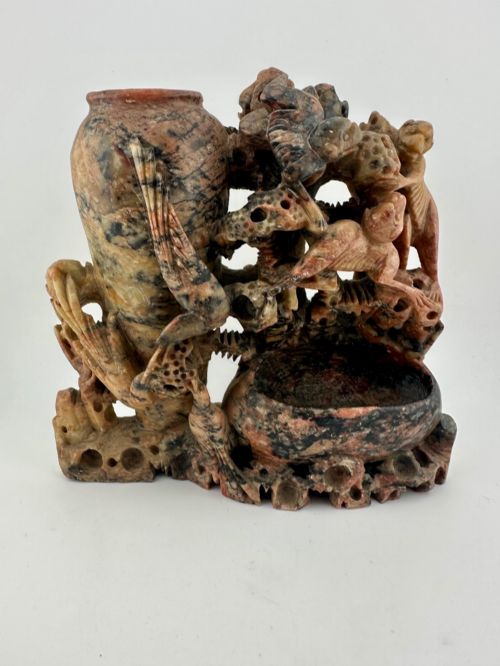
Carving defines the wooden and stone objects, utilising dense hardwoods, boxwood, bamboo, soapstone, and jade. Craftsmen worked the natural grains and inclusions to create relief scenes of birds, animals, or figurative motifs.
Ceramic production employed high-fired porcelain bodies finished with monochrome glazes such as flambé or delicate famille rose enamel painting. Potters shaped these vessels specifically for washing brushes or holding scholar's implements.
Chinese Scholars Studio Retail Price Guide 2026
Typical asking prices for chinese scholars studio among the pieces listed under this phrase on Sellingantiques today, from the lower quarter to the upper quarter. They describe what is for sale here now, not the wider market.
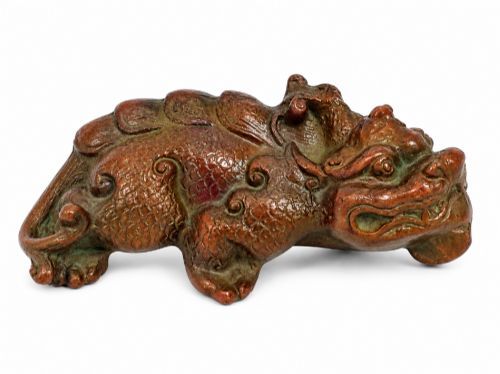
A reclining boy bronze paperweight waits quietly to keep your papers from wandering off.
Judging Quality and Execution
Quality rests upon the crispness of the carving and the fidelity of the cast. Superior examples display confident, deep relief work where every detail of a figure or natural scene remains sharp and well-defined.
Material selection dictates the upper tier of the market, favouring heavy bronze with stable patination, richly figured hardwoods, and unblemished jade or porcelain. The handling of surface textures reveals the artisan's mastery over the medium.
Proportion and balance distinguish finer scholar's objects from standard productions. A successful piece maintains harmony between its practical utility as a brush washer or censer and its sculptural presence on the desk.
The Chinese Scholars Studio Glossary
- Bitong
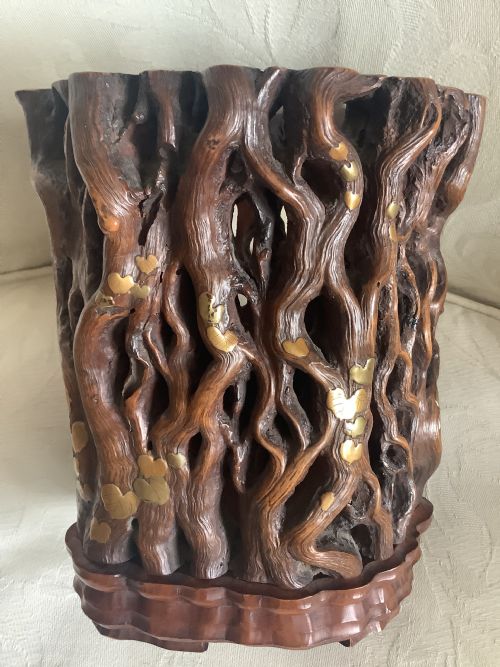
- A cylindrical brush pot used to hold calligraphy brushes on a scholar's desk. These vessels appear in ceramic, wood, and bamboo.
- Wenfang
- A term denoting items associated with the scholar's studio. It encompasses everything from water droppers to desk screens.
- Ruyi Sceptre
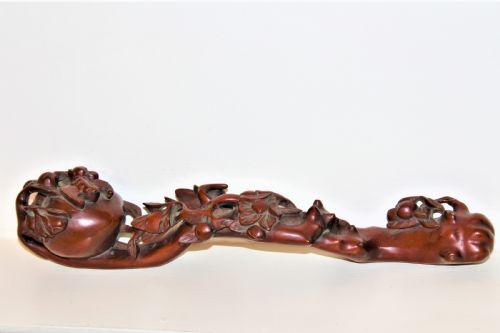
- A curved decorative object symbolising power and good fortune. They are frequently carved from boxwood or jade with naturalistic motifs.
- Censer
- A vessel designed for burning incense during meditation or study. Examples on this page range from miniature bronze tripods to pieces featuring relief panels.
Chinese Scholars Studio: Frequently Asked Questions
How were brush pots used?
Brush pots sat upright on the scholar's desk to organise calligraphy brushes and painting implements when not in use. They kept the workspace tidy while displaying the owner's taste.
Carved from bamboo, wood, or formed in porcelain, these cylinders protected delicate animal-hair brush tips from damage.
How do I identify Ming and Qing dynasty pieces?
Dating relies on stylistic markers, casting techniques, and the handling of materials such as bronze patination or porcelain glazes. Ming pieces often show robust bronze work, while Qing items span varied revivals and imperial styles.
Examining the depth of carving and the natural wear on the base helps determine the period of manufacture.
How can I display these items at home?
Scholar's objects suit clean, uncluttered surfaces where their form and material can be appreciated individually. Placing a bronze censer or a hardwood brush pot on a side table highlights its sculptural qualities.
Keep them away from direct sunlight and extreme temperature changes to protect organic materials like boxwood and soapstone.