
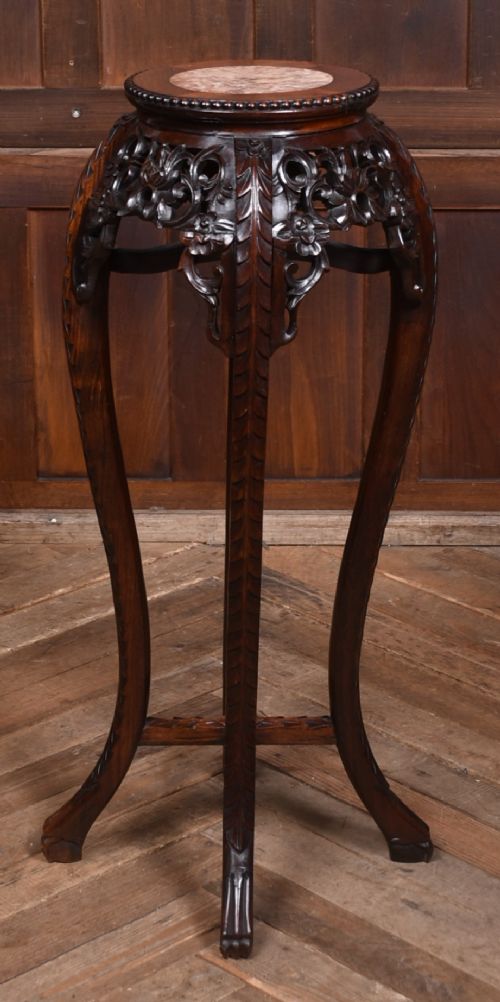


Chinese Rosewood Jardiniere
A chinese rosewood jardiniere brings sculptural timber and cool stone together to elevate plants and display vessels with formal balance.
Chinese Rosewood Jardiniere
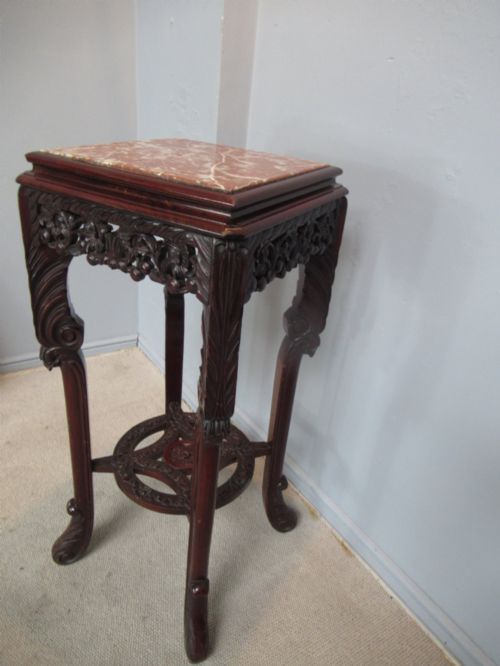
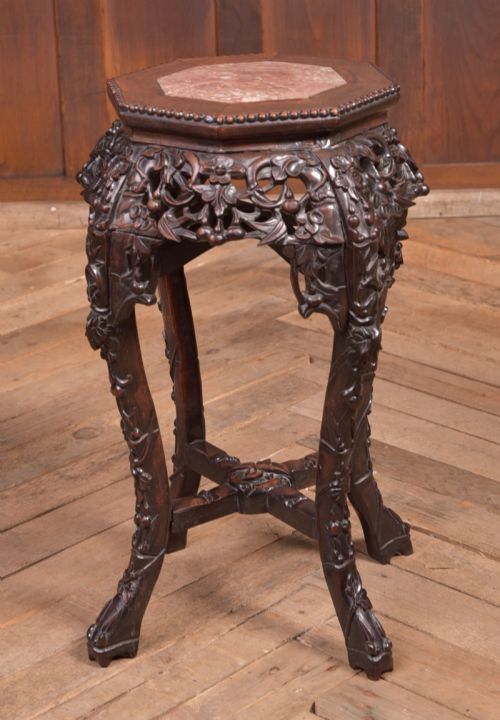
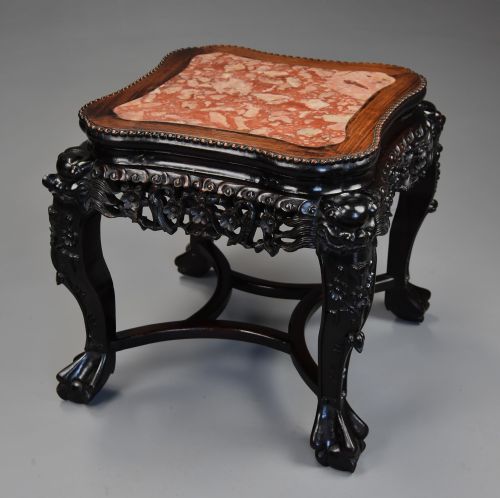
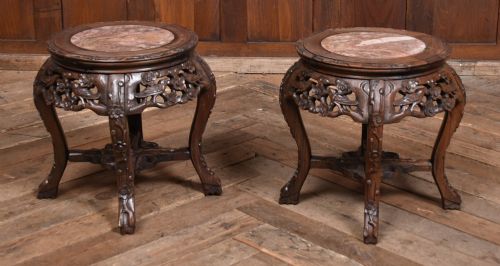
A chinese rosewood jardiniere takes the form of a low table, plant stand, or pedestal designed to support heavy planters and urns. You will frequently encounter nineteenth-century examples and pieces from the Qing dynasty alongside later Edwardian interpretations.
The primary shapes span circular, square, and multi-sided tops, often featuring inset marble panels. These functional furnishings serve equally well today as lamp tables, wine tables, or standalone display surfaces.
Materials and Construction
Cabinetmakers utilised dense timbers such as rosewood, padouk, and hongmu, often carving the frames with intricate botanical motifs. The structural integrity relies on traditional joinery that accommodates the heavy weight of inset marble or rouge marble tops.
Selected pieces incorporate mother-of-pearl inlay to create luminous geometric or floral patterns across the dark wooden surfaces. The timber is finished to a smooth sheen that highlights the natural grain and deep colour of the hardwood.
Some stands double so successfully as lamp tables that they have spent more decades holding lightbulbs than they ever spent holding ferns.
Craftsmanship and Proportion
The distinction between tiers rests upon the crispness of the wood carving and the depth of the relief work. Superior examples display balanced proportions, tight joinery, and well-figured marble inserts that sit flush within the wooden frame.
Subtle details such as shaped aprons, pierced scrollwork, and the quality of any mother-of-pearl inlay separate standard production pieces from finer workshop commissions.
The Chinese Rosewood Jardiniere Glossary
- Jardiniere stand
- A tall or low piece of furniture specifically designed to hold a plant container or decorative urn. These stands elevate botanical displays to eye level.
- Hongmu
- A dense, dark tropical hardwood translated literally as red wood. It provides a heavy and durable structure for traditional Chinese furniture.
- Padouk
- A heavy, durable timber with a reddish hue used extensively in traditional cabinetmaking. It offers exceptional stability for carved stands.
- Rouge marble
- A reddish ornamental limestone used for table and stand inserts. Its distinctive veining provides a cool, decorative contrast to dark wood.
Chinese Rosewood Jardiniere: Frequently Asked Questions
What is a chinese rosewood jardiniere used for?
These pieces were originally built to elevate heavy ceramic plant pots, planters, and decorative urns off the floor. This placement protected wooden interiors from moisture and displayed botanical specimens to advantage.
Today, they adapt readily to domestic spaces as occasional tables for lamps, side tables for drinks, or sculptural display surfaces for ceramics.
How do I identify a Qing dynasty stand?
Identification relies on observing traditional construction methods, dense timbers like hongmu or padouk, and characteristic carving styles. Details such as shaped aprons and inset marble tops align with historical manufacturing traditions.
Many pieces span the late nineteenth century and the Victorian era, reflecting stylistic influences from Chinese export production.
Are marble tops original to these stands?
Inset marble or rouge marble panels are typical components of these stands, providing a cool, heat-resistant surface for damp pots. The stone is selected to contrast with the dark rosewood or hardwood frame.
Examining the underside reveals how the marble sits within a supportive wooden rebate built directly into the framework.
How do I care for rosewood furniture?
Maintenance involves dusting with a soft, dry cloth and avoiding placement near direct heat sources or rapid temperature shifts. Preserving the finish requires minimal intervention rather than heavy polishing.
Protecting the wooden surface from excess moisture ensures the timber and any inset marble remain stable over time.