






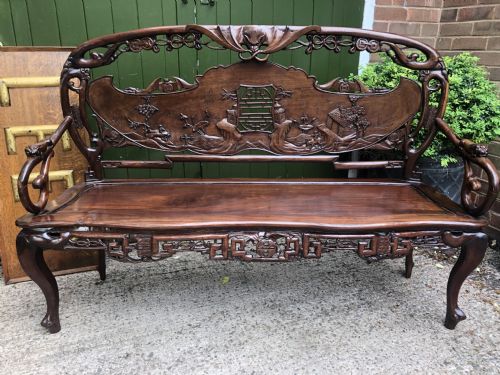


Chinese Rosewood Bench
A Chinese rosewood bench brings dense, figured timber and intricate carving into a room, offering both traditional seating and sculptural presence.
Chinese Rosewood Bench
When you search for a Chinese rosewood bench, you are looking at substantial seating pieces produced across the nineteenth and early twentieth centuries. These works include hall benches, settles, day beds and window seats shaped by traditional joinery methods.
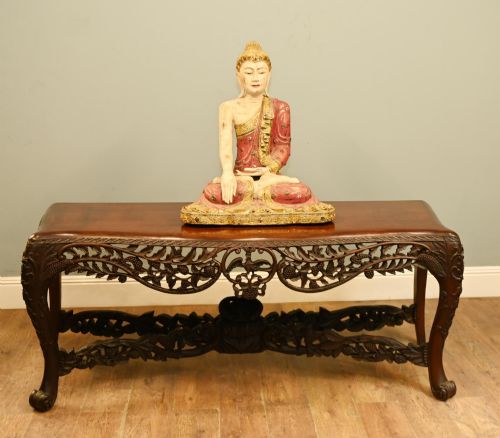
The versions most commonly met on this page date from the late nineteenth century through to the nineteen-thirties, often reflecting Qing Dynasty styles or Chinese export commissions. They range from simple scroll-end designs to heavily carved furniture featuring dragon details.
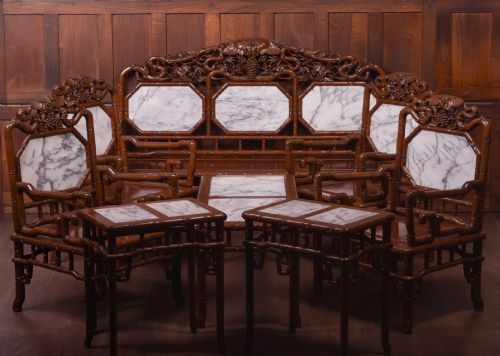
Many of these pieces function as part of larger seating sets or parlour suites, accompanied by matching chairs and tables. Their forms draw directly upon classical Chinese furniture types adapted for both domestic use and the Western export market.
How they were made
Construction relies upon dense timbers such as rosewood, huali wood and polished hardwood, selected for their weight and deep natural grain. Cabinetmakers utilised sophisticated interlocking joinery that avoided metal nails, allowing the timber to expand and contract naturally.
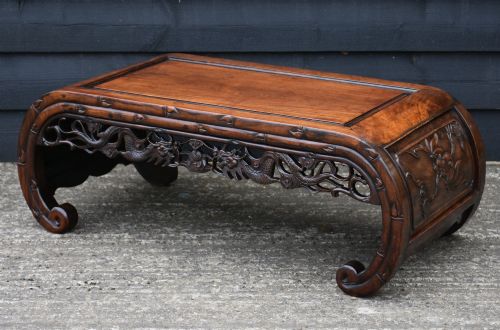
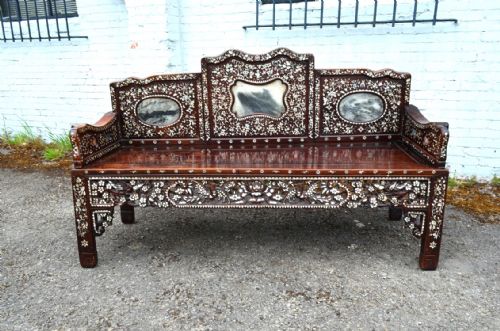
Surface ornament is achieved through deep hand-carving of motifs like dragons and scrolls, alongside contrasting inlay work using bone and mother of pearl. These decorative elements are set into the solid wood structure to create tactile relief across panels, arms and backrests.
Horseshoe-shaped frames bring equine elegance directly into the parlour, because sitting on a horse should not stop indoors.
What varies in quality
The distinction between tiers of quality rests upon the selection of timber and the depth of the carving. Dense rosewood and huali wood with consistent grain command attention, while secondary hardwoods show less striking natural figure.
Carving execution defines the finer examples, where dragon details and scroll ends display crisp relief and careful proportion rather than shallow, hurried cutting. The precision of bone and mother of pearl inlay further separates standard production from exceptional pieces.
The Chinese Rosewood Bench Glossary
- Huali wood
- A prized tropical hardwood noted for its rich grain and durability, frequently utilised in classical Chinese furniture. It forms the primary structure of finer Qing Dynasty seating.
- Mother of pearl
- The iridescent inner layer of certain mollusc shells, harvested for decorative inlay. Craftsmen cut this material into thin sections to ornament hardwood surfaces with floral or geometric patterns.
- Settle
- A wooden bench featuring a high back and solid arms designed to block draughts in domestic interiors. In Chinese export pieces, this form often incorporates elaborate dragon carvings.
- Kang table
- A low platform table traditionally used on a heated brick bed for dining or writing. Scaled-up versions appear alongside benches in modular parlour suites.
- Qing Dynasty style
- An aesthetic derived from the final imperial dynasty of China, characterised by robust proportions and symbolic ornament. This style persists in pieces made well into the twentieth century.
Chinese Rosewood Bench: Frequently Asked Questions
How were these benches used?
These pieces served practical seating roles in halls, parlours and living spaces, often arranged in matched suites with chairs and tables.
They also functioned as day beds or window seats, providing versatile domestic furniture for resting and social gatherings.
What is huali wood?
Huali wood is a dense, highly figured tropical hardwood favoured by traditional Chinese cabinetmakers for its strength and rich tone.
It forms the structural basis of many fine seating pieces and takes a high natural polish without heavy stain.
How do I date a piece?
Dating relies upon examining construction methods, timber choice and stylistic indicators such as Qing Dynasty ornament versus twentieth-century export adaptations.
Comparative forms in the evidence suggest origins ranging from the mid-nineteenth century up to the nineteen-thirties.
How do I clean the surface?
Maintenance requires dry dusting with a soft cloth to protect the polished hardwood and delicate mother of pearl inlay from moisture damage.
Application of appropriate neutral wax helps preserve the natural sheen of the timber over time.