



Chinese Pith Art
Chinese pith art brings delicate botanical and figural studies straight from the workshops of Canton into your home.
Chinese Pith Art
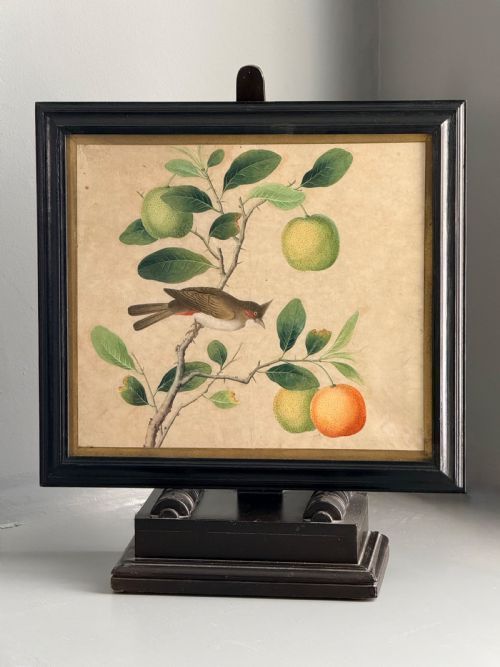
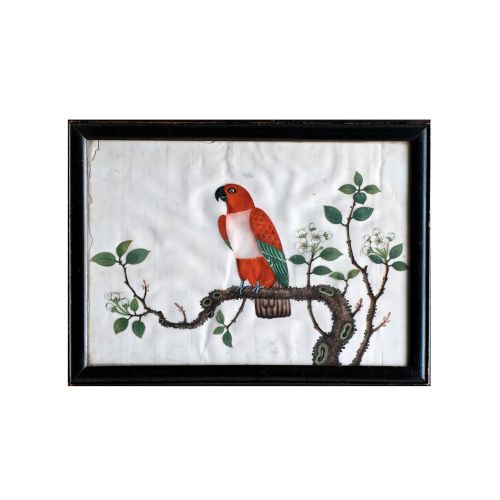
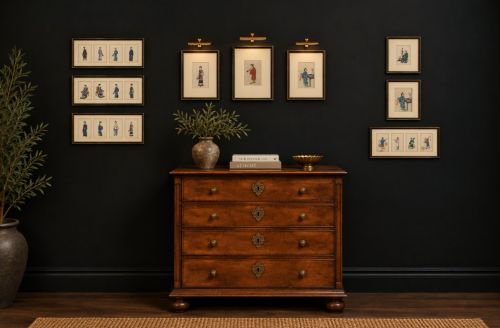
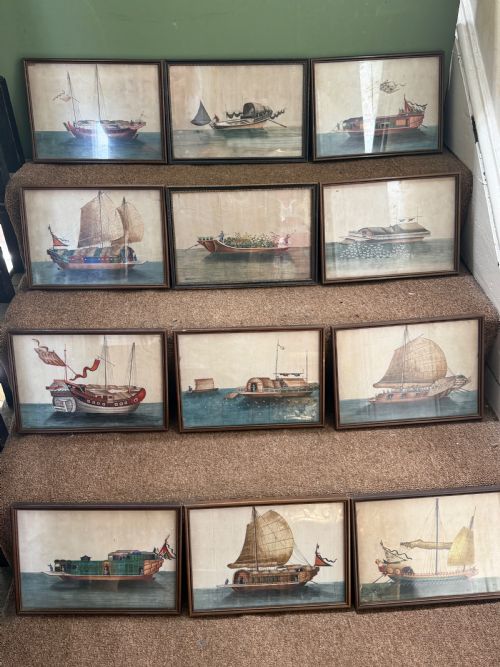
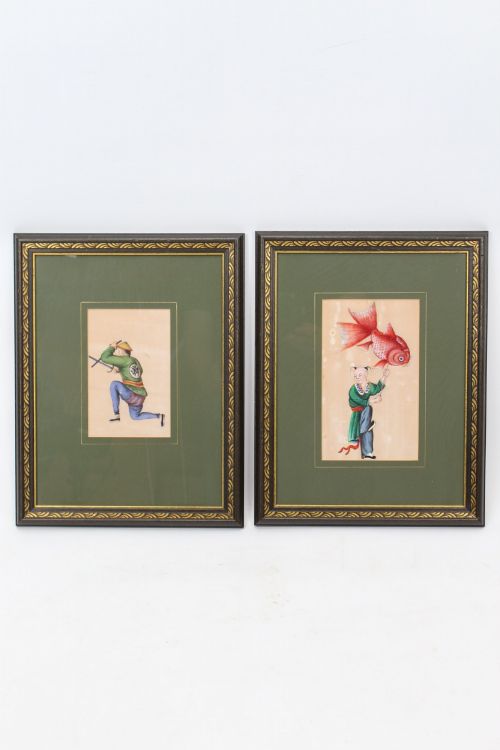
Chinese pith art comprises delicate watercolour and gouache paintings executed on a delicate plant-derived membrane often misnamed as rice paper. You will most frequently encounter these works framed as individual sheets or gathered in sets depicting figures, junks, butterflies and insects. The examples available range across the eighteenth and nineteenth centuries, often categorised under Chinese export art.
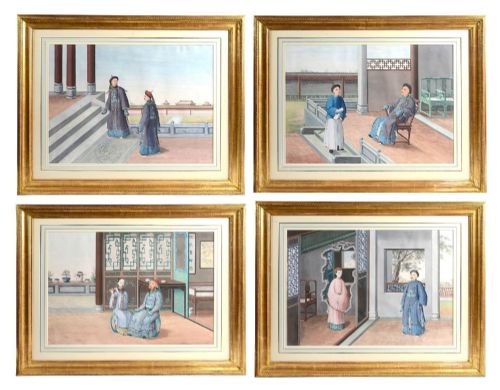
Makers produced these works primarily for Western traders and travellers during the Qing dynasty. Sets often survive in groups of four, six, or twelve, showing trades, punishments, court scenes or maritime vessels. The delicate nature of the support means many survive behind glass in period frames.
How they were made
Artisans sliced the spongy cellular interior of the pith plant into thin sheets to create the painting surface. This organic material possesses a velvety texture that absorbs water-based pigments in a distinct manner, lending a luminous quality to the finished work.
Painters applied opaque gouache and translucent watercolour directly onto the pith paper, sometimes finishing details with ink. Because the material is exceptionally fragile, artists frequently mounted the paintings onto stronger backing paper or card before framing them behind glass to protect the delicate surface from handling.
Chinese Pith Art Retail Price Guide 2026
Typical asking prices for chinese pith art among the pieces listed under this phrase on Sellingantiques today, from the lower quarter to the upper quarter. They describe what is for sale here now, not the wider market.
Materials recorded across current listings include pith paper, glass, wood, gouache, watercolour, paper, and ink.
What varies in quality
The sophistication of the draughtsmanship and the vibrancy of the pigments separate ordinary export watercolours from finer examples. Superior sheets display meticulous attention to facial expressions, intricate detailing on garments and riggings, and careful botanical precision in insect studies.
The completeness and preservation of a set also determine its standing. Intact groupings showing uniform colour saturation and minimal surface cracking command greater attention than fragmented sets or heavily retouched individual pieces.
The Chinese Pith Art Glossary
- Pith paper
- A delicate natural material sliced from the stem of the Tetrapanax papyrifer plant, traditionally used as a painting surface in southern China. It is frequently mistaken for rice paper due to its appearance.
- Gouache
- An opaque water-based paint composed of pigment, water, and a binding agent such as gum arabic. It provides the dense, velvety colour fields seen in export paintings.
- Chinese Export
- A term describing art and decorative objects manufactured in China specifically for foreign markets in Europe and America. These works often blend Eastern techniques with Western aesthetic preferences.
- Junk
- A traditional Chinese sailing vessel featuring battened sails, frequently depicted in maritime export paintings of the nineteenth century.
Chinese Pith Art: Frequently Asked Questions
What is pith paper made from?
Pith paper is cut from the spongy interior of the pith tree stem rather than processed rice fibres. This unique material gives the surface a spongy texture.
Artists utilised this absorbent substrate to achieve rich colour effects in miniature watercolours intended for foreign markets.
Why are they often found in sets?
Canton studios produced these paintings in series for travellers and merchants who collected them as bound albums or framed groupings. Common subjects include local trades, court figures and native flora.
Complete sets offer a comprehensive narrative of nineteenth-century life seen through the eyes of export artists.
Are pith paintings fragile?
The organic plant membrane is inherently brittle and prone to splitting if flexed or exposed to excessive humidity. Consequently, surviving examples demand careful handling and stable environmental conditions.
Most well-preserved pieces remain secured to historical backing paper that provides essential structural support.