


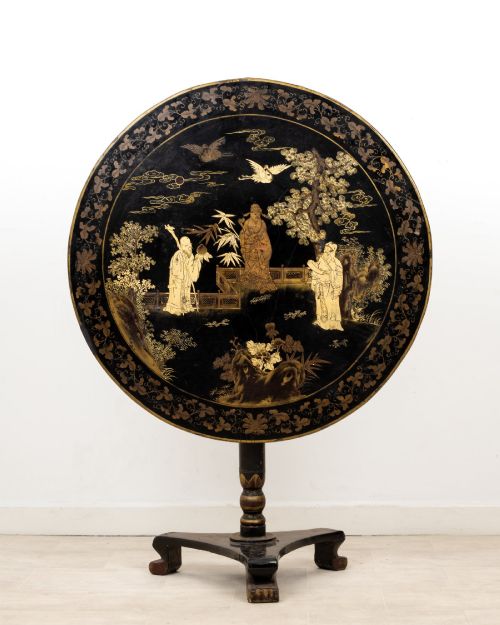
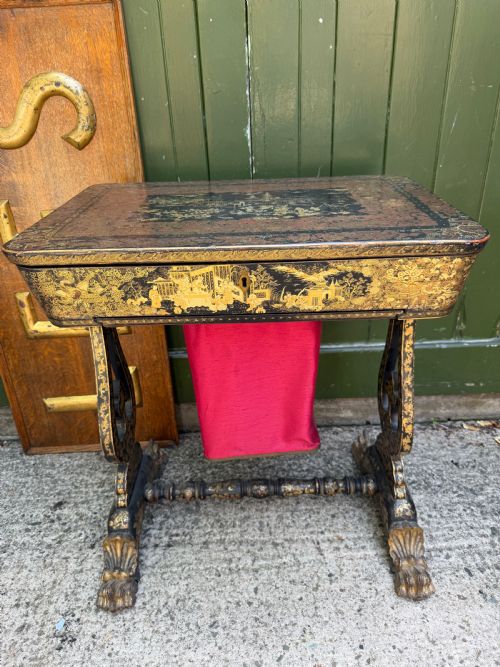
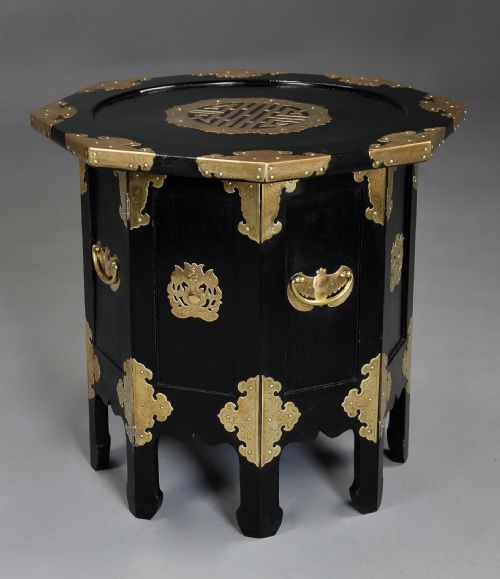
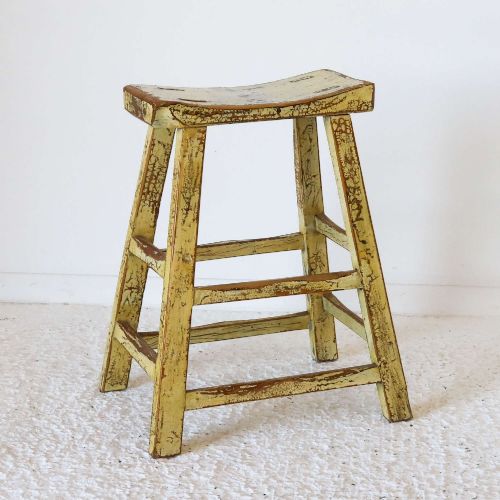
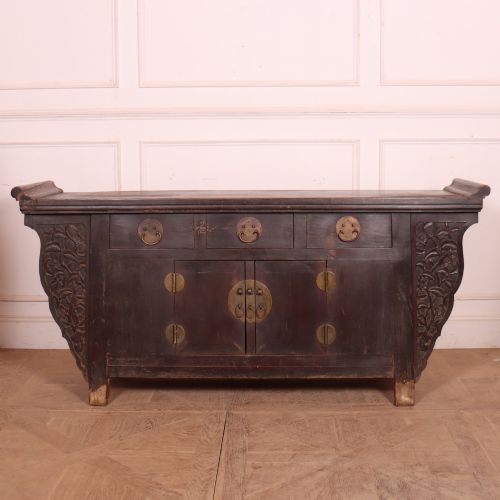

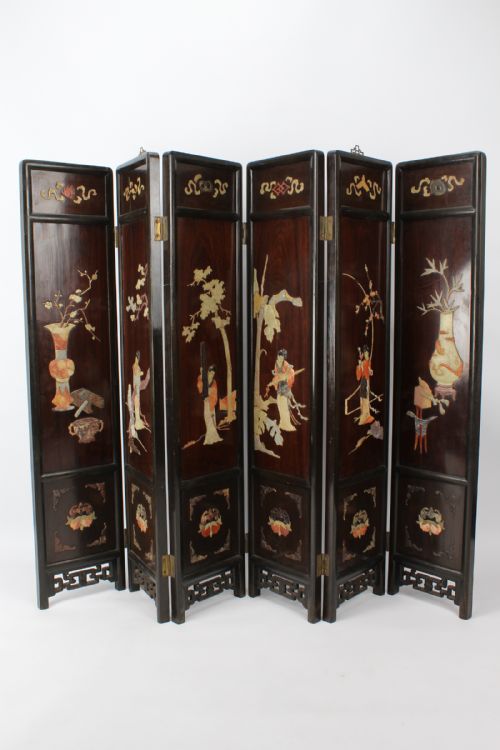
Chinese Lacquered Table
A chinese lacquered table brings deep historical craft and rich decorative colour into a room, offering both surface utility and visual theatre.
Chinese Lacquered Table
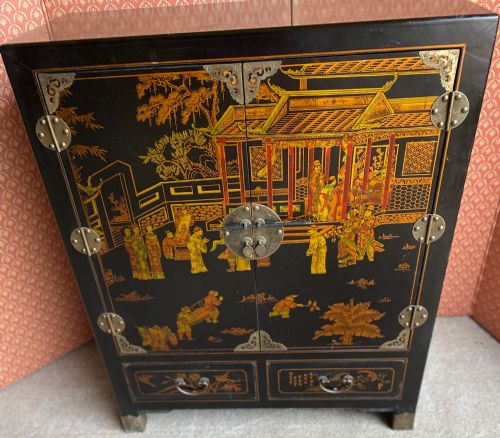
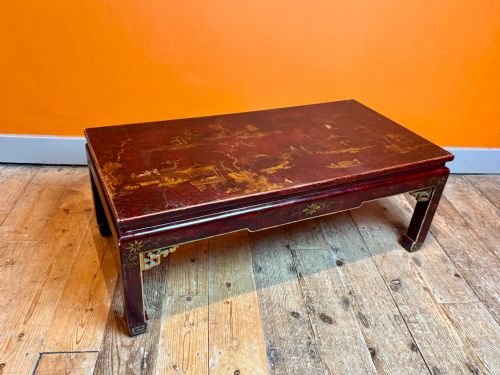
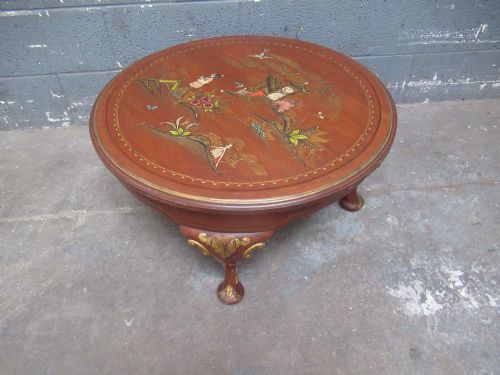
When searching for a chinese lacquered table, a buyer encounters pieces ranging from compact occasional stands and nests to larger console and low coffee tables. These objects span from the eighteenth century through to the early twentieth century, encompassing both traditional Chinese workshops and British Edwardian interpretations.
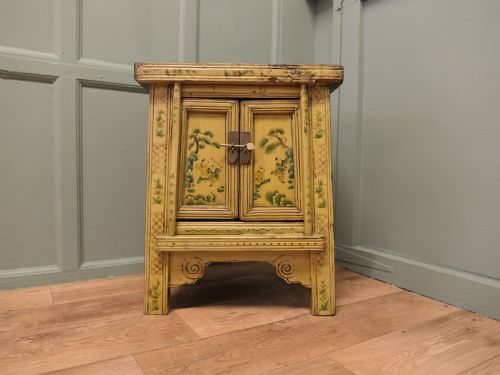
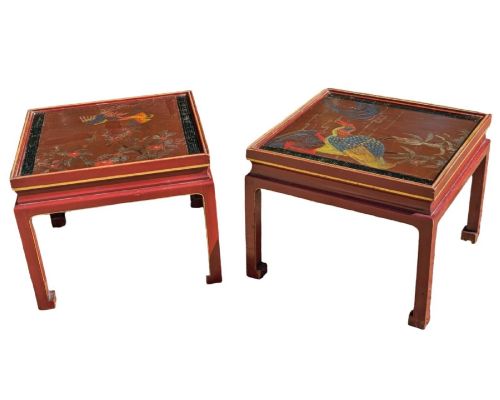
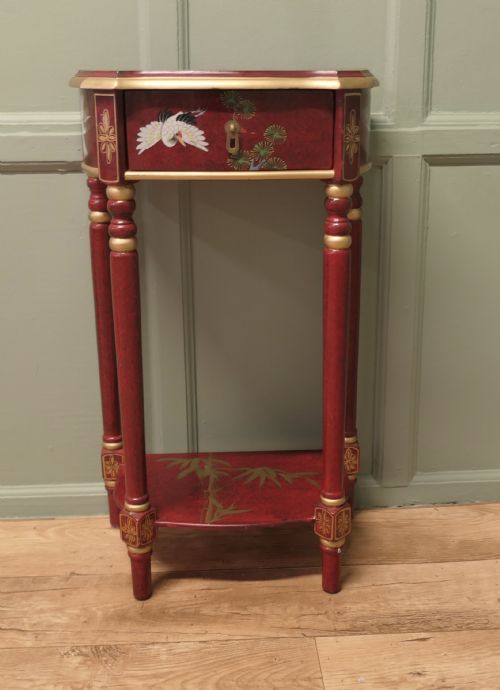
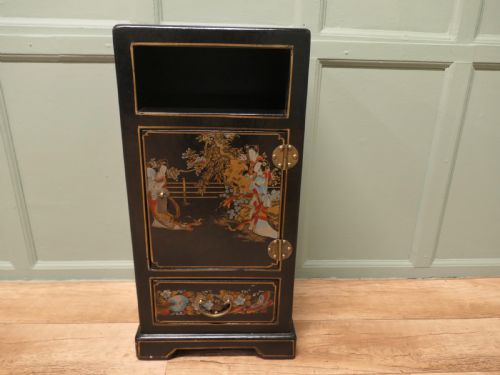
The most common forms on this page include side tables, nests of four tables, and low coffee tables finished in red, black, ochre, or cream lacquer. Alongside these surface-lacquered pieces, regional variations in elm, hardwood, and rootwood appear with varying degrees of painted or carved relief decoration.
Origins stretch between direct Chinese export pieces made for Western markets and domestic styles influenced by Qing Dynasty aesthetics. Chinoiserie interpretations from the Edwardian period also feature prominently among the available inventory.
Materials and Construction
Makers built these tables using sturdy structural timbers such as elm and native hardwoods, providing a stable foundation for multiple layers of applied resin or lacquer. Brass mounts and hinges occasionally reinforce joints and edges on cabinets and multi-part items.
Surface decoration relied on meticulous hand-painting, gilding, and gold leaf application over the dried lacquer base. Raised relief detailing and inlaid elements further added texture and depth to panels, tabletops, and side aprons.
Chinese Lacquered Table Retail Price Guide 2026
Typical asking prices for chinese lacquered table among the pieces listed under this phrase on Sellingantiques today, from the lower quarter to the upper quarter. They describe what is for sale here now, not the wider market.
Listings feature items spanning from the eighteenth century to the mid-twentieth century, utilising lacquer, elm, brass, and gold leaf.
Assessing Quality and Execution
Quality rests heavily on the depth and condition of the lacquered surface, where superior examples exhibit smooth, stable finishes without excessive craquelure or modern repainting. The finesse of the hand-painted or gilded decoration separates standard decorative pieces from finer export and traditional works.
Structural integrity in the underlying wood - whether elm, hardwood, or general timber - dictates longevity, particularly in items subject to daily use like coffee tables and nests. Original hardware, intact brass accents, and untouched patination elevate the standing of any piece.
The Chinese Lacquered Table Glossary
- Chinoiserie
- European artistic imitation and adaptation of Chinese and East Asian artistic traditions, popular in furniture and decorative arts during the eighteenth and early twentieth centuries.
- Lacquer
- A durable resin finish applied in multiple coats to wood surfaces, traditionally polished to a smooth sheen and often decorated with painted or carved motifs.
- Chinese Export
- Goods manufactured in China specifically for export to Western markets, frequently blending Eastern forms and techniques with European functional requirements.
- Nest of Tables
- A set of graduated smaller tables designed to fit neatly beneath one another when not in individual use.
- Qing Dynasty
- The final imperial dynasty of China, lasting from sixteen forty-four to nineteen twelve, whose aesthetic heavily influences many antique forms seen today.
Chinese Lacquered Table: Frequently Asked Questions
How do I care for a lacquered table?
Keep wooden and lacquered surfaces away from direct sunlight and extreme temperature fluctuations to prevent the finish from drying or cracking. Dust gently with a soft, dry cloth and avoid chemical polishes that might damage the historic layers.
Place protective pads under hot mugs or heavy decorative objects to preserve the delicate hand-painted and gilded details on the tabletop.
Where should I place a low lacquer table?
Low tables and nests work effectively in sitting rooms as central coffee tables or flexible side surfaces next to armchairs. Their reflective finishes help to bounce light around darker corners of a room.
Ensure they sit in moderate humidity environments away from direct heat sources like radiators to maintain the stability of the underlying timber.
How can I tell export pieces from domestic ones?
Export items often catered specifically to Western functional needs, such as sewing tables, dressing mirrors, and writing desks produced during the nineteenth century. They frequently combine traditional Chinese lacquer techniques with European furniture forms.
Domestic pieces tend to follow traditional regional furniture types, including elm stools, temple drums, and low scholar tables made for local use.
What periods do these tables come from?
The selection spans from the eighteenth century up through Victorian, Edwardian, and mid-century periods. Earlier pieces often originate directly from Chinese workshops, while later examples frequently include British Chinoiserie revivals.
Each era brings distinct decorative motifs, ranging from quiet elm grains to vibrant red and gold hand-painted scenes.