



Chinese Lacquered Chest
A Chinese lacquered chest brings centuries of rich material culture and deep, lustrous surface decoration into a room.
Chinese Lacquered Chest
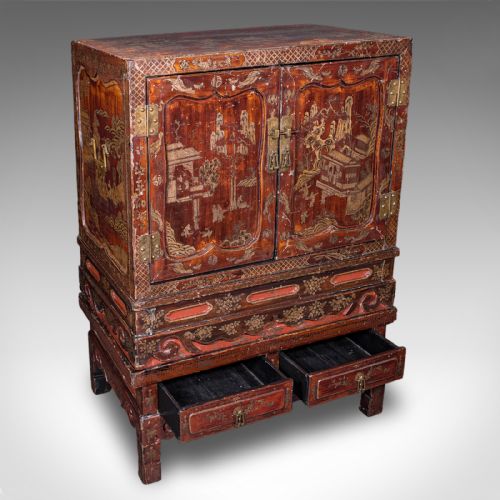
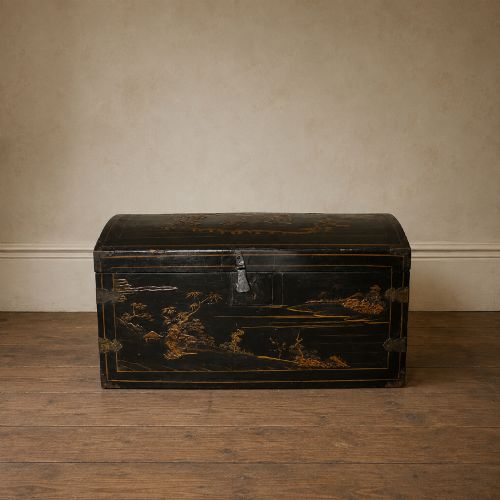
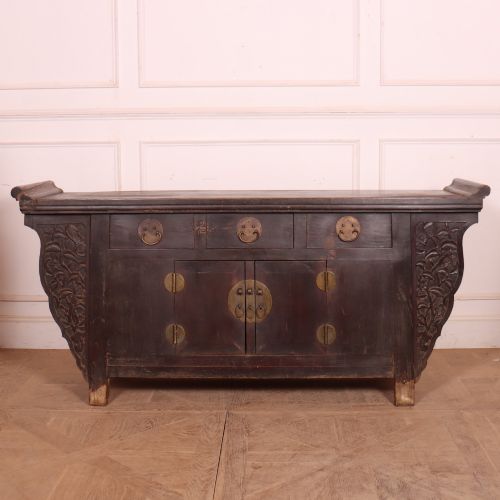
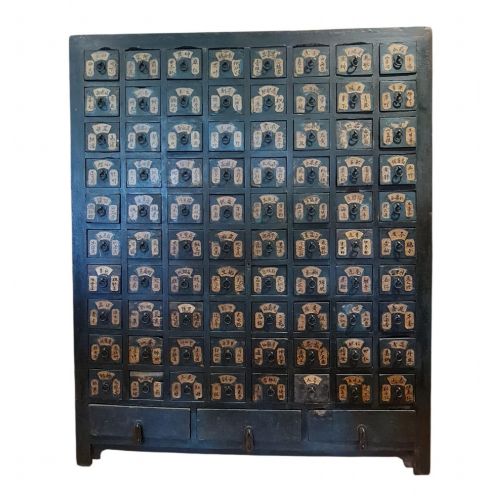
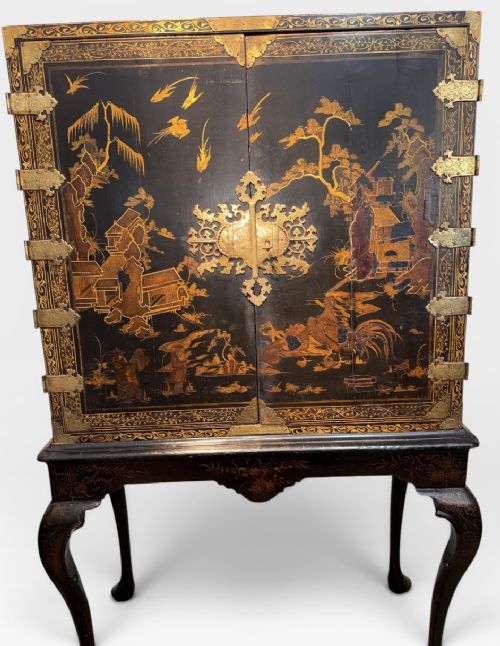
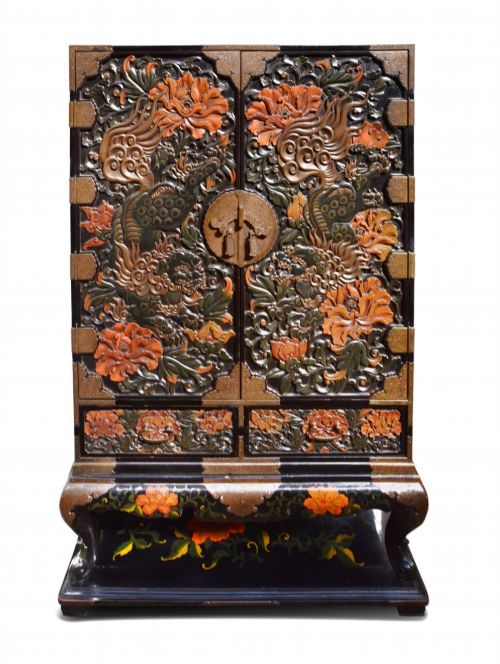
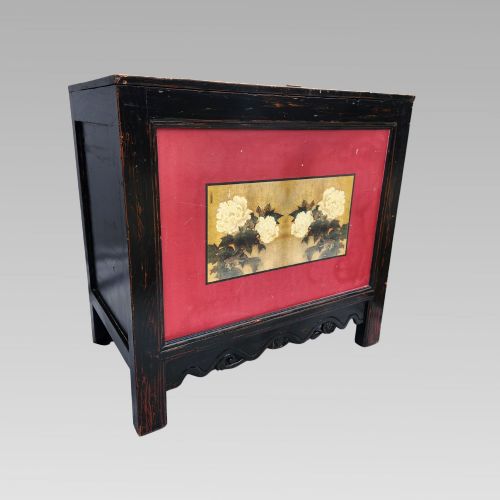
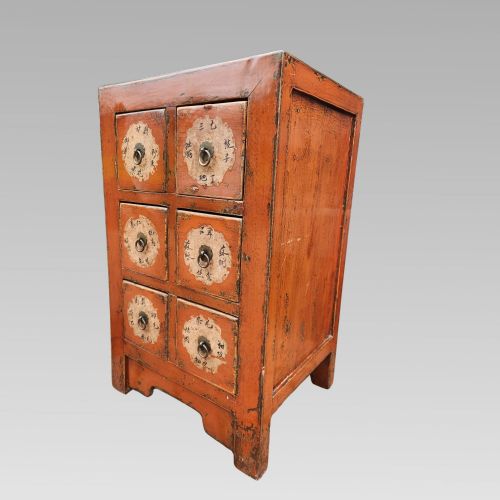
When searching for a chinese lacquered chest, a buyer encounters a diverse array of forms ranging from compact table cabinets and tea caddies to large storage trunks, sideboards, and apothecary chests with numerous small drawers. The selections span multiple periods, most notably the eighteenth, nineteenth, and early twentieth centuries, encompassing Victorian interpretations alongside pieces originating from Chinese provinces and export workshops.
The most common versions met on this page are nineteenth-century trunks, export chests, and cabinets on stands decorated in traditional Chinese, Qing dynasty, or Chinoiserie styles. These containers served varied domestic functions, from storing clothing and documents to holding medicinal herbs, yet all share the distinctive presence of a lacquered wooden core.
How they were made
The construction relies upon timber foundations such as elm or camphor wood, which provide sturdy structural integrity for boxes, trunks, and cabinets. Artisans then applied successive layers of lacquer to seal and protect the wood, creating a smooth substrate capable of receiving intricate ornamentation.
Surface enrichment typically involves gold leaf, metal fittings in brass or iron, and carved details that define Chinoiserie and Chinese provincial aesthetics. These combined materials yield the characteristic glossy, textured finishes seen across domestic storage furniture and decorative boxes.
Shanxi Province contributed apothecary cabinets boasting up to eighty tiny drawers, ensuring every single herb had a very cosy home indeed.
What varies in quality
Quality rests upon the depth and preservation of the lacquer surface, the precision of the gilt or painted decoration, and the integrity of the underlying woodwork. Pieces finished with meticulous hand-carved details and well-preserved gold leaf demonstrate superior craftsmanship compared to simpler decorative treatments.
The sophistication of hardware, including brass hinges, locks, and metal mounts, further distinguishes the tier of execution. Structural harmony between the chest and its accompanying stand, where applicable, contributes significantly to the overall merit of the piece.
The Chinese Lacquered Chest Glossary
- Lacquer
- A durable resin finish applied in multiple layers to wood surfaces. It cures to a hard, smooth coating that resists moisture and provides an ideal base for painting and gilding.
- Apothecary Cabinet
- A multi-drawer storage unit historically used by practitioners of traditional medicine. These pieces contain numerous small compartments for sorting herbs and medicinal ingredients.
- Chinese Export
- Goods manufactured in China specifically for Western markets. These items frequently combine traditional regional forms and techniques with design elements tailored to foreign tastes.
- Gilt
- A thin application of gold leaf or gold powder used to highlight surface decoration. It adds luminosity and contrast against black or red lacquered grounds.
Chinese Lacquered Chest: Frequently Asked Questions
How do I care for a lacquered chest?
Keep the piece away from direct sunlight and dramatic temperature fluctuations, which can cause the wood and lacquer to crack. Dust gently with a dry, soft cloth and avoid chemical polishes.
Maintaining stable indoor humidity preserves the finish and prevents the wooden substrate from warping over time.
Were these chests used for travel?
Many trunks and campaign style boxes were built for transport, featuring robust metal hardware and reinforced corners to withstand long journeys. Other forms, such as large cabinets and wedding baskets, remained stationary within domestic interiors.
Examining the handles, locks, and overall weight helps reveal whether a particular box was designed for mobility or permanent display.
What is the difference between export and provincial pieces?
Export items were generally produced in coastal workshops to satisfy Western demand, often displaying elaborate Chinoiserie motifs. Provincial pieces originated from specific regions like Shanxi, reflecting local domestic traditions and utility.
Both categories utilise lacquer and wood, but their decorative vocabulary and structural proportions reveal distinct manufacturing contexts.
How can I date an antique lacquer chest?
Dating relies upon examining the timber species, construction methods, hardware styles, and the wear patterns within the lacquer layers. Eighteenth and nineteenth-century examples often exhibit hand- forged metalwork and dense native woods like elm.
Comparing the decorative motifs to known historical periods, such as the Qing dynasty or Victorian era, provides further chronological context.