


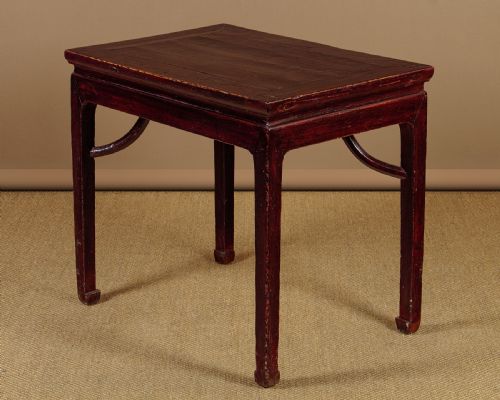


Chinese Lacquer Console
These Chinese lacquer console pieces bring depth and rich colour into a room, offering both practical surface space and striking historic character.
Chinese Lacquer Console
A chinese lacquer console brings together historic cabinet-making forms and deeply finished decorative surfaces spanning the eighteenth century through to the early twentieth century. Buyers seeking this phrase encounter various practical furniture types, including altar tables, demi-lune tables, side tables, and writing desks.
The most common examples on this page date from the nineteenth century, reflecting regional Chinese traditions and Qing Dynasty aesthetics. These tables often combine structural timbers like elm with layered lacquer finishes in bold red or black hues, sometimes highlighted with gilding or marble tops.
How they were made
Maker construction relies on traditional joinery utilising regional timbers such as elm and various hardwoods or softwoods for the main frames. These foundational wooden structures provide stability for the subsequent application of multiple decorative coats.
Lacquered surfaces involve building up successive layers of resin or sap upon the wooden substrate, often finished by hand with carved details, gilt accents, or inset marble panels. Brass hardware frequently appears on drawer fittings and hinges to complement the dark or red lacquer.
The documented periods span the eighteenth century, the nineteenth century, and the early twentieth century up to nineteen twenty.
What varies in quality
The distinction between tiers rests upon the depth of the lacquer finish and the crispness of any carved or gilded ornamentation applied to the surface. Superior examples exhibit smooth, even coating application and robust timber framing that has endured centuries of use without losing structural integrity.
Secondary elements such as inset marble tops, original brass mounts, and well-preserved surface pigment also elevate a piece. Lesser variations display surface wear that obscures the underlying artistry or compromised structural joins in the softwood and elm carcasses.
The Chinese Lacquer Console Glossary
- Altar table
- A long, narrow table traditionally used for ceremonial purposes in Chinese homes and temples, often featuring upturned flange ends. These forms translate well into modern hallways and living spaces as console surfaces.
- Demi-lune
- A half-moon shaped table designed to stand flat against a wall, frequently found as matched pairs in the evidence. They offer versatile placement options in narrow corridors or reception rooms.
- Lacquer
- A durable, glossy finish produced from natural tree sap applied in numerous thin coats over timber. It provides a hard protective barrier while creating a rich visual depth.
- Qing Dynasty
- The final imperial dynasty of China, lasting from sixteen forty-four to nineteen twelve, encompassing major developments in regional furniture design and decorative arts. Pieces from this era often display distinctive carved and gilded motifs.
- Chinoiserie
- European interpretations and adaptations of Chinese artistic traditions and motifs, though many pieces traded under this heading are genuine export wares made in Asia for Western markets.
Chinese Lacquer Console: Frequently Asked Questions
Where should I place a console table?
These pieces fit naturally into entrance halls, living rooms, and dining areas where surface space is needed without blocking circulation. Their narrow profiles make them particularly useful against hallway walls.
Pairing a console with a mirror or placing it beneath artwork creates a focused focal point in a room. Demi-lune versions also work effectively when separated or arranged together.
How do I care for lacquered wood?
Lacquered surfaces require gentle treatment using a soft, dry cloth to remove dust. Avoid placing them in direct sunlight or near heat sources, which can dry out the underlying timber and damage the finish.
Keep moisture away from the wood and avoid standard chemical polishes that may dull the original sheen. Proper placement ensures the historic lacquer and any gilt details remain stable.
What is the difference between red and black lacquer?
Red lacquer finishes often incorporate cinnabar pigment and tend to create a warm, vibrant presence in a room. They frequently appear on altar tables and cabinets designed for ceremonial or important domestic spaces.
Black lacquer provides a more restrained, reflective dark surface that highlights gilt decoration and marble inserts. Both finishes represent traditional methods used across different regional workshops.
Are these tables sturdy enough for daily use?
The underlying elm and hardwood frames provide substantial structural support suitable for everyday placement items. Altar tables and side cabinets were built to bear weight and withstand regular household activity.
Care should be taken with older joints and delicate surface finishes during repositioning. Normal daily use on a level floor presents no difficulty for solid regional construction.