



Chinese Gilt Sculpture
Chinese gilt sculpture brings heavy cast bronze and carved wood into a room, layered in gold leaf and lacquer to catch the light.
Chinese Gilt Sculpture
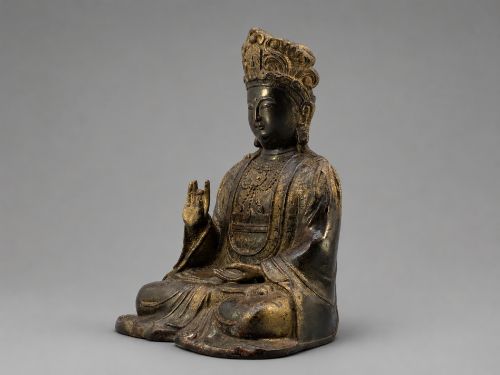
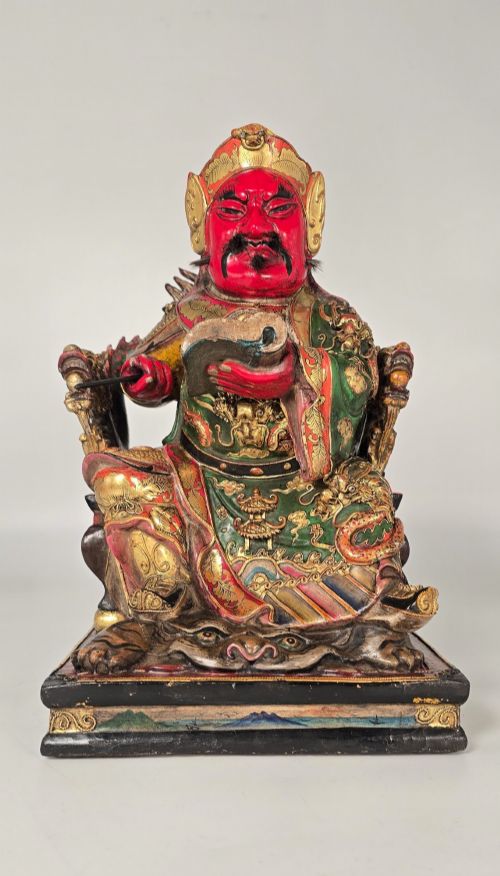
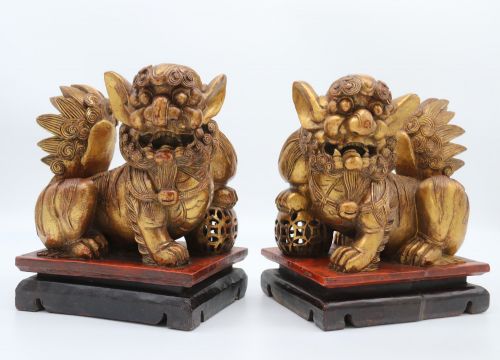
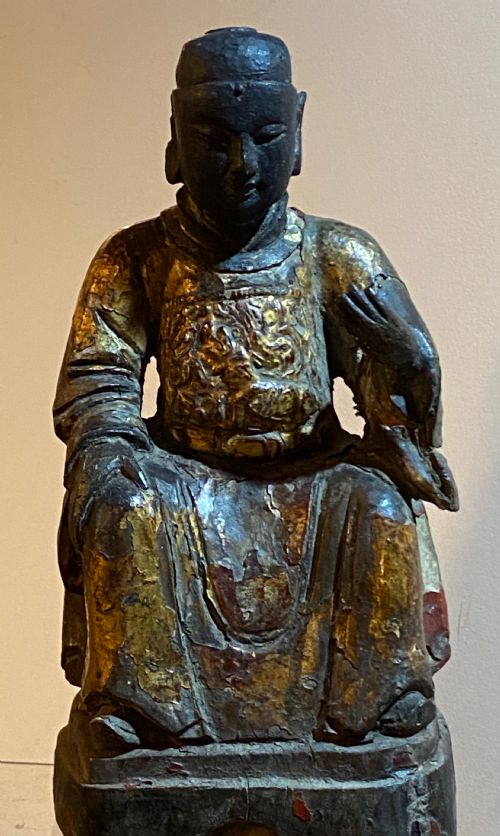
When you search for chinese gilt sculpture, you enter a field spanning temple figures, scholars' desk pieces, and guardian lions made across several centuries. The examples met most often on this page range from carved wood temple figures covered in gesso and gold leaf to cast bronze and gilt-bronze deities.
The materials reflect both court commissions and folk traditions, with pieces dating from the Ming and Qing dynasties up to the early twentieth century. You will encounter seated Buddhas, civil officials, temple guardians, and mythical beasts executed in media that combine wood, lacquer, bronze, and gold.
Forms vary from monumental temple guardians down to miniature scholar's desk paperweights and wall plaques. This breadth allows collectors to find both large devotional figures and small-scale scholar's objects within the same material tradition.
Materials and methods
Makers shaped these objects using carved wood, cast bronze, and iron, applying layers of gesso, lacquer, and gold leaf to the surfaces. Wood figures often received a base of gesso and polychrome paint beneath the gilding, while bronze pieces utilised solid casting techniques and selective fire-gilding.
Surface decoration frequently combined hand-painted details with lacquered elements and metal highlights. Craftspeople balanced sculptural carving with intricate finishing, incorporating materials like jade rims on metal vessels and silver enamelling on select decorative objects.
Chinese Gilt Sculpture Retail Price Guide 2026
Typical asking prices for chinese gilt sculpture among the pieces listed under this phrase on Sellingantiques today, from the lower quarter to the upper quarter. They describe what is for sale here now, not the wider market.
Materials recorded across the inventory include solid-cast bronze, carved wood, gesso, lacquer, and iron.
Assessing quality
Quality rests in the crispness of the carving and the control of the casting, which separates mass-produced decorative items from finely rendered temple commissions. The handling of the surface finish, whether through precise fire-gilding on bronze or the layered application of gold leaf over carved wood, dictates the visual depth of a piece.
Proportion, expression, and anatomical clarity distinguish the work of skilled regional or imperial workshops from simpler vernacular production. Surviving traces of original polychrome and lacquer alongside intact gilding indicate a higher degree of preservation and original craftsmanship.
The Chinese Gilt Sculpture Glossary
- Gilt bronze
- Metal cast sculpture treated with a gold and mercury amalgam or gold leaf to create a lustrous metallic surface. This technique protects the underlying bronze while providing a brilliant golden finish.
- Gesso
- A plaster-like mixture applied to wood surfaces to create a smooth ground for subsequent gilding and painting. It allows intricate surface carving to hold fine gold leaf layers.
- Lacquer
- A durable resin derived from tree sap, applied in multiple coats to seal and decorate wood or metal objects. It provides a hard, glossy protective coating often seen alongside gold leaf.
- Polychrome
- The practice of decorating sculptural surfaces in multiple colours using various pigments. It frequently appears beneath or alongside gilding on traditional wooden figures.
Chinese Gilt Sculpture: Frequently Asked Questions
Where were these figures placed?
Larger temple guardians and deities stood within religious sanctuaries or ancestral halls as objects of devotion and protection. Smaller scholar's pieces and bronze figures remained on desks and tables in private studies.
Pairs of temple lions typically guarded doorways or altars in both public and domestic settings.
How should I clean gilded wood?
Dusting should be performed gently with a dry, soft brush to avoid disturbing fragile layers of gold leaf and underlying gesso. Moisture and chemical cleaners must be avoided entirely as they strip the historical finishes.
Professional conservation is recommended for any stabilization work.
What is fire-gilding?
Fire-gilding involves bonding a gold and mercury paste to a bronze base through the application of heat. The mercury evaporates during the process, leaving a durable and brilliant gold layer.
This method produces a rich surface that differs visually from applied gold leaf.