


Chinese Foo Dog Carving
A chinese foo dog carving is a traditional guardian figure rendered in stone, bronze or wood to protect domestic spaces.
Chinese Foo Dog Carving
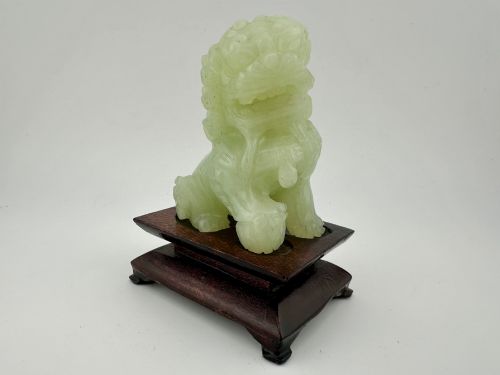
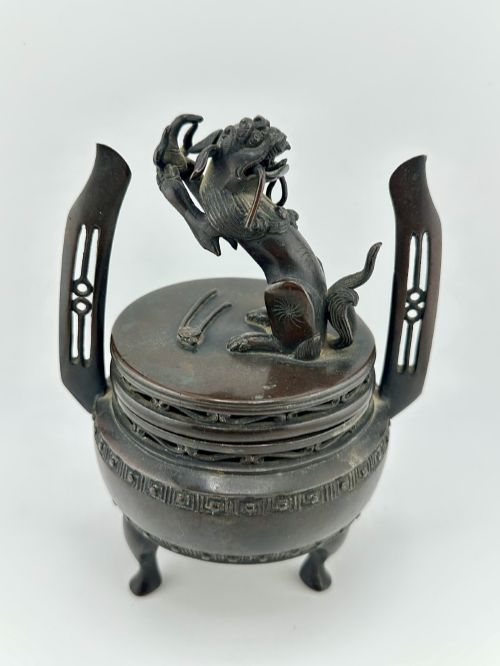
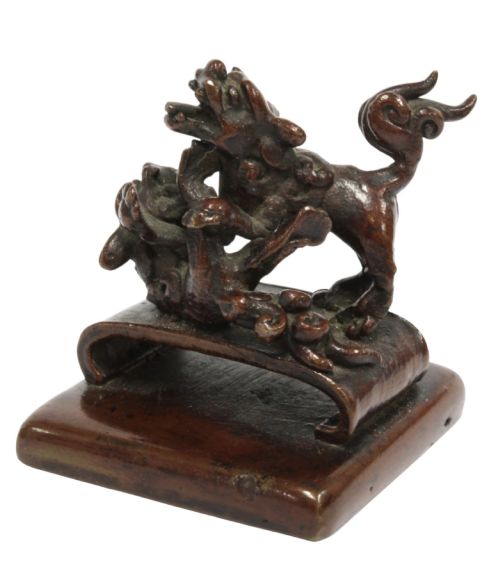
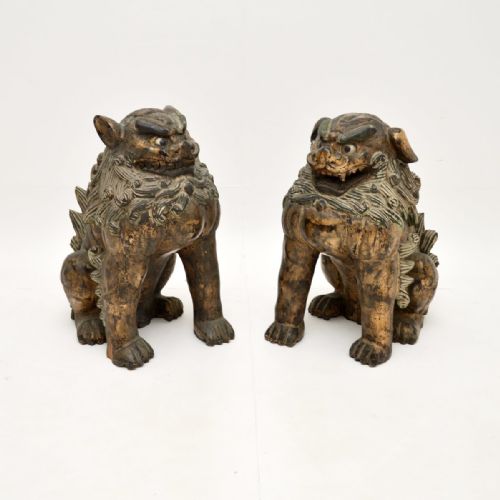
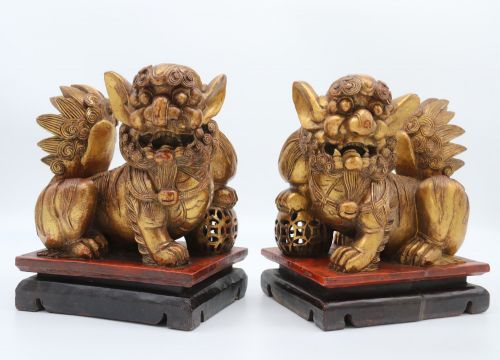
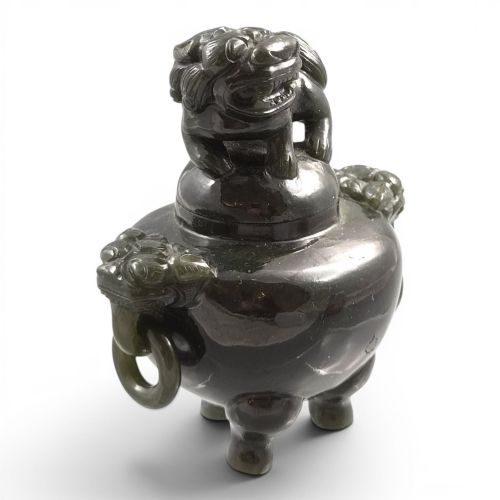
A chinese foo dog carving takes the form of temple guards, temple lions, or shishi, appearing as single statues, pairs of bookends, tripod censers with finials, and desk seals.
The selection includes pieces from the seventeenth century through to the nineteenth century, covering the Ming and Qing dynasties alongside Victorian chinoiserie interpretations.
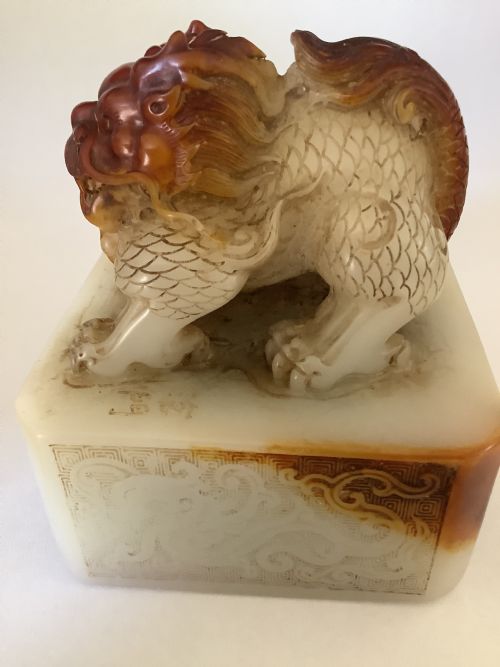
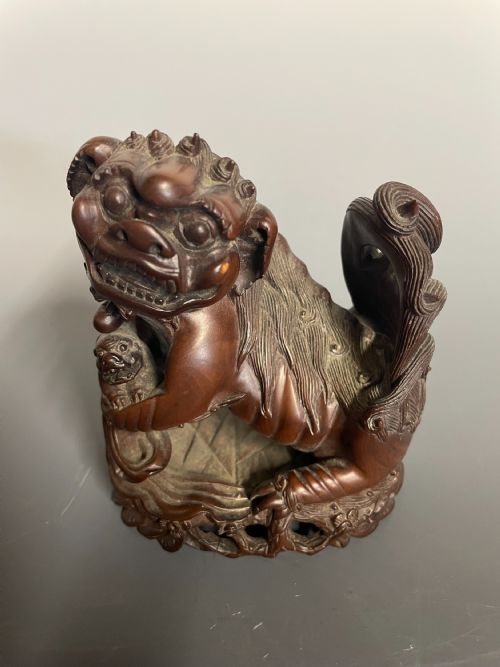
Forms range from large root wood temple guards and boxwood figures to jade and soapstone desk seals, reflecting both scholarly and domestic uses.
Materials and Techniques
Carvers shaped dense organic materials including boxwood, root wood, and padouk, alongside hardstones such as jade and soapstone.
Metalworkers utilised bronze casting techniques to create tripod censers and scholarly seals, occasionally adding gilt and polychrome paint surfaces to carved wood and lacquer structures.
Some nineteenth-century desk seals feature a tiny, intensely focused foo dog sitting atop a surprisingly chunky base.
Quality Variations
The choice of material, from common hardwoods to fine jade and heavy bronze, dictates the refinement of the finished object.
The Chinese Foo Dog Carving Glossary
- Shishi
- Stone lions or guardian dogs traditionally placed outside imperial tombs and temples. They symbolise protection and authority in Chinese tradition.
- Foo Dog
- A Western term for the guardian lions or shishi found in Chinese art. These mythical creatures combine the traits of a lion and a dog.
- Censer
- A vessel used for burning incense. Many examples feature a foo dog or qilin figure perched upon the cover.
- Seal
- A carved stamp utilised for official documents or scholarly signatures. These often incorporate a seated foo dog atop a chunky base.
- Chinoiserie
- A European artistic style reflecting Chinese motifs and techniques. This aesthetic appears in nineteenth-century decorative items and bookends.
Chinese Foo Dog Carving: Frequently Asked Questions
How were foo dog statues used?
Historically, large temple guards stood at entrances to ward off harmful spirits, while smaller figures rested on tables or desks. Functional items combined the guardian motif with censers, bookends, and seals.
Scholars and collectors utilised bronze and jade seals for stamping documents, integrating symbolic protection into daily administrative tasks.
How do I date an antique carving?
Dating relies on material analysis, stylistic markers of periods like the late Ming or Qing dynasties, and tool marks left by the carver. Seventeenth-century bronze and stone pieces display different wear patterns compared to nineteenth-century export items.
Examining the wood species, such as boxwood or root wood, alongside the depth of the carving helps place the piece within a specific century.
What materials are used in these carvings?
Makers utilised a wide array of materials depending on the intended function and period. Organic substances include carved wood, boxwood, root wood, and padouk.
Mineral materials feature prominently through soapstone, jade, hardstone, and bronze, frequently enhanced with gilt, lacquer, or polychrome paint.