



Chinese Floral Table Lamp
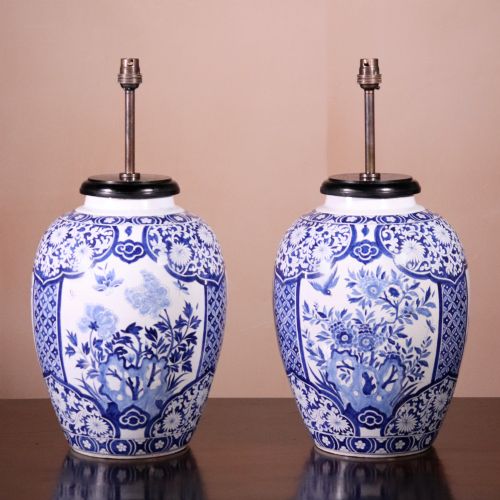
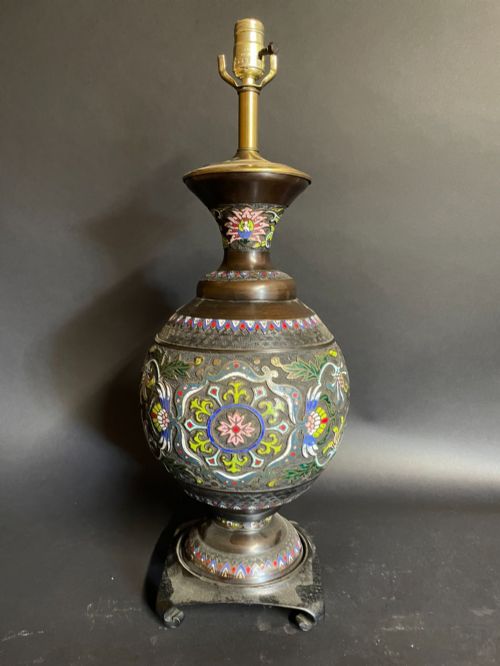
A chinese floral table lamp brings hand-painted porcelain or vibrant cloisonne enamel into a room, offering warm illumination paired with centuries of craftsmanship.
Chinese Floral Table Lamp
When you search for a chinese floral table lamp, you encounter pieces built from converted 19th century and early 20th century vases, ginger jars, and cloisonne vessels. The selection draws on periods such as the Victorian era, the Qing Dynasty, and the Chinese Republic, alongside Chinoiserie and Chinese Export interpretations.
The most common forms on this page pair blue and white porcelain jars or famille rose and famille verte baluster vases with fitted electrical hardware. Alongside these ceramic lamps, you will occasionally find occasional tables, jardiniere stands, and marble or wood furniture designed to display them.
Makers and workshops across different centuries adapted traditional vessels into lighting, preserving hand-painted floral motifs beneath modern wiring. These pieces suit studies, drawing rooms, and hallways where a focal point of colour and history is desired.
How they were made
The foundation of these lamps relies on porcelain or bronze bodies shaped as baluster vases, ginger jars, or bulbous vessels. Artisans applied hand-painted underglaze blue, famille rose enamels, or polychrome decoration depicting botanical subjects.
Cloisonne enamel pieces utilise thin metal wires soldered to a brass or copper base to form cellular compartments, which are then filled with coloured vitreous pastes and fired. Many ceramic examples incorporate ormolu, brass, or marble mounts fixed during later conversions into lighting.
Materials across these listings span brass, porcelain, fabric, wood, enamel, cloisonne enamel, copper, and marble.
What varies in quality
Quality rests in the crispness of the hand-painted floral detailing and the depth of the enamel work on the porcelain or cloisonne body. Finer examples display precise brushwork, balanced polychrome palettes, and careful integration of metal mounts without compromising the original vessel.
The standard of conversion hardware also distinguishes the pieces, separating simple utilitarian fittings from bespoke brass or ormolu mounts that complement the antique proportions of the base.
The Chinese Floral Table Lamp Glossary
- Famille Rose
- A palette of opaque rose-pink enamel introduced in the Qing Dynasty, used to render botanical and figurative scenes. This ceramic coloration allows for subtle shading across floral petals.
- Cloisonne
- A decorative metalwork technique where wire compartments are filled with enamel paste and fired. The resulting surface presents smooth, colourful patterns bounded by fine metal lines.
- Baluster
- An architectural or vase form characterised by a swollen lower portion tapering to a narrow neck. This shape provides stability and visual balance when converted into a table lamp.
- Chinoiserie
- European decorative style reflecting Chinese artistic influences, popular across various periods. It combines European forms with Asian motifs such as floral sprays and landscapes.
- Ormolu
- Gilded bronze mounts used to decorate or support ceramic vessels. This technique adds structural weight and a polished metallic accent to antique lamp bases.
Chinese Floral Table Lamp: Frequently Asked Questions
Are these lamps converted from old vases?
Many examples begin life as 19th century or early 20th century porcelain vases, ginger jars, or cloisonne vessels that are later adapted for electrical components.
This conversion process allows decorative arts from the Qing Dynasty and Victorian periods to function as modern table lighting while retaining their original hand-painted surfaces.
How do I identify a famille rose lamp?
Famille rose pieces feature a distinctive opaque pink enamel alongside other soft polychrome shades, typically depicting floral arrangements or botanical sprays.
This palette developed during the Qing Dynasty and appears frequently on porcelain baluster vases and jar lamps from the 19th century onward.
What is cloisonne enamel?
Cloisonne involves soldering thin metal wires onto a brass or copper base to create small cells, which are filled with coloured enamel pastes before firing.
When utilised for lamp bases, this technique produces a tactile, patterned surface defined by intricate floral and geometric motifs.
How do I style a table lamp with oriental porcelain?
These lamps function well on occasional tables, sideboards, or mahogany wine stands, providing ambient light and a splash of colour.
Pairing them with simple fabric shades ensures the hand-painted floral porcelain or cloisonne body remains the focal point of the room.