


Chinese Export Table Lamp
A chinese export table lamp brings hand-painted porcelain and rich colour into a room, offering both character and warm illumination.
Chinese Export Table Lamp
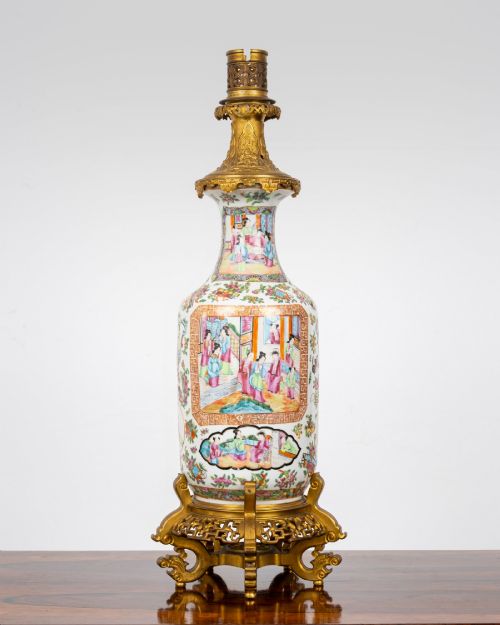
A chinese export table lamp typically begins life as a utilitarian vessel, later adapted for illumination with electrical fittings. Buyers searching for a chinese export table lamp encounter diverse ceramic forms, from ginger jars and tea canisters to large baluster vases.
The pieces span multiple periods, with nineteenth-century examples appearing most frequently on this page. Many originate from conversions of earlier decorative vessels, mounted on bases or fitted with metal hardware to serve as lighting.
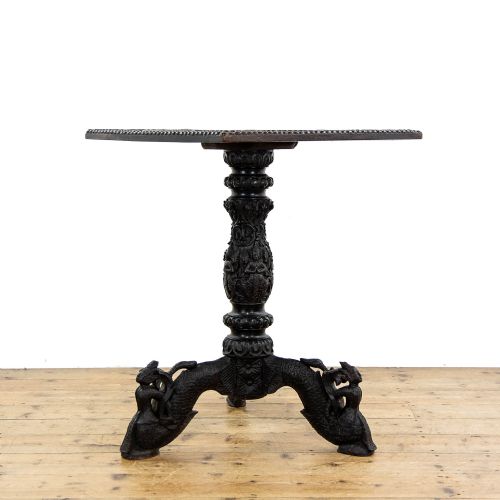
Alongside porcelain vessels, the selection includes related occasional furniture such as hardwood stands and marble-topped tables designed to display these objects. The resulting variety bridges utilitarian lighting and decorative arts.
Materials and construction
Makers utilised high-fired ceramic bodies decorated with hand-painted enamels, cobalt blue underglaze, or applied cloisonné wirework. These decorated surfaces often display traditional motifs, floral panels, and figural scenes.
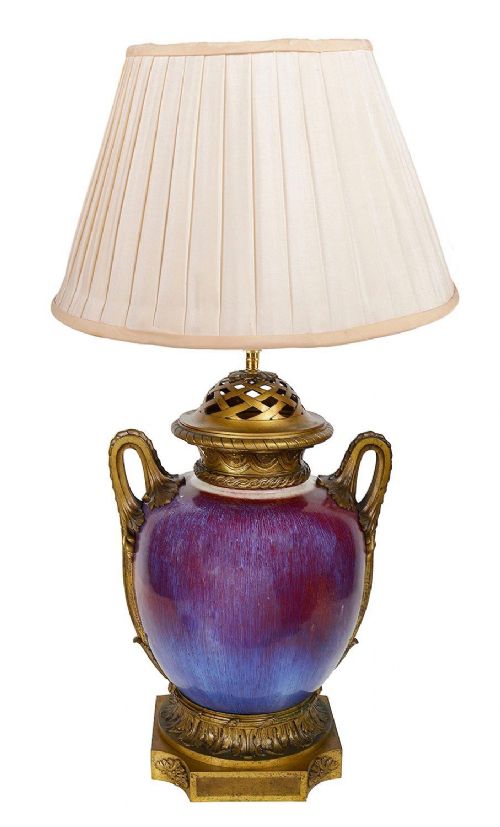
Metal mounts in brass, ormolu, and gilt bronze provide structural stability and aesthetic framing for the porcelain bodies. Hardwood and marble elements appear in associated stands and mounting bases, incorporating traditional joinery and hand carving.
Some nineteenth-century tea canisters found a second life as lighting after crossing oceans.
Judging the pieces
Quality rests upon the crispness of the hand-painted detail and the depth of the glaze colours. Superior pieces display finely delineated enamel work and balanced proportions between the ceramic body and its mounts.
The integration of metal mounts also dictates standard; cast bronze and ormolu mounts fitted precisely to the ceramic contours represent a higher tier of craftsmanship than simpler brass adaptations.
The Chinese Export Table Lamp Glossary
- Famille Rose
- A palette of opaque enamel colours dominated by pink, used extensively on Chinese porcelain from the eighteenth century onward.
- Cloisonné
- A metalwork technique where thin wire partitions are soldered to a base and filled with coloured enamel paste before firing.
- Ormolu
- Gilded bronze used for decorative mounts on furniture and porcelain vessels, popular in European adaptations.
- Celadon
- A pale green jade-like glaze applied to high-fired porcelain, valued for its subtle tone and crackle texture.
- Rose Medallion
- A distinct pattern featuring panels of figures alternating with birds and flowers, executed in bright enamels.
Chinese Export Table Lamp: Frequently Asked Questions
How are lamps converted?
Most lamps are created by adapting existing porcelain vessels, such as ginger jars or vases, by drilling the base or running external wiring to hold a bulb socket.
Older conversions often retain period wiring that requires updating to meet current safety standards, while maintaining the original ceramic body intact.
What periods do they date from?
The pieces span the eighteenth, nineteenth, and early twentieth centuries, with Victorian and Edwardian adaptations appearing alongside earlier ceramic bodies.
Distinguishing the age involves looking at the style of the hand-painted enamels, the composition of the porcelain body, and the characteristics of any metal mounts.
How do I choose a shade?
Selecting a shade involves balancing the visual weight of the patterned porcelain base with appropriate fabric proportions and neutral tones.
Silk and textured fabrics are common choices that complement the reflective glazed surface of the ceramic without competing with the painted decoration.
Where should I place one?
These lamps function effectively on side tables, credenzas, and occasional furniture, where their decorative painted panels can catch ambient light.
Pairing a lamp with matching hardwood stands or marble-topped tables creates a cohesive display that anchors the surrounding interior space.