




Gilt Painted Table Lamps
Gilt painted table lamps bring metallic warmth and hand-decorated colour to an interior, drawing the eye with layers of gilt and paint.
Gilt Painted Table Lamps
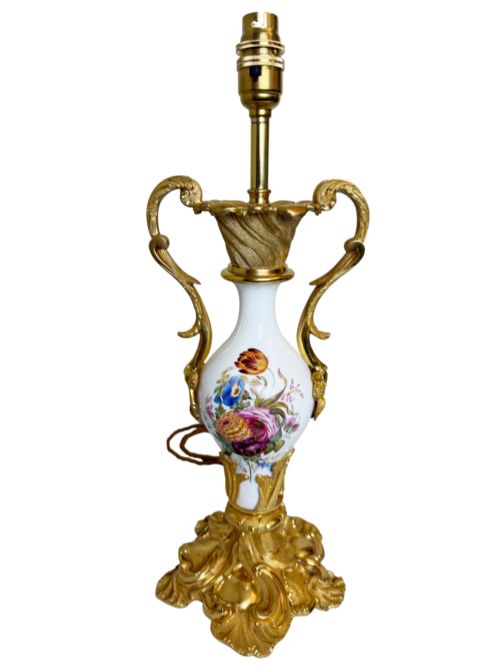
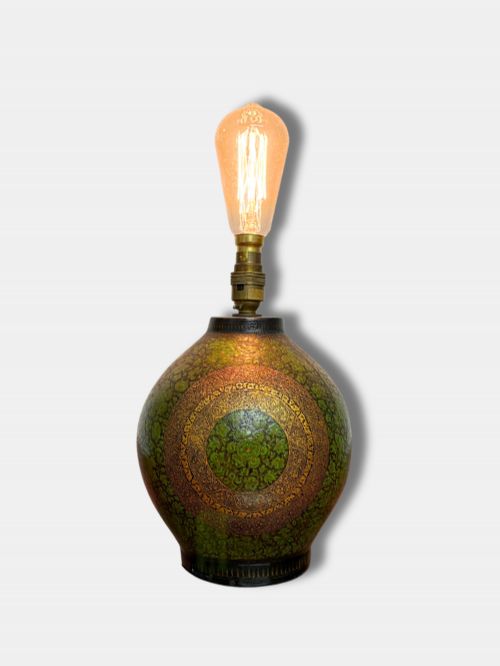
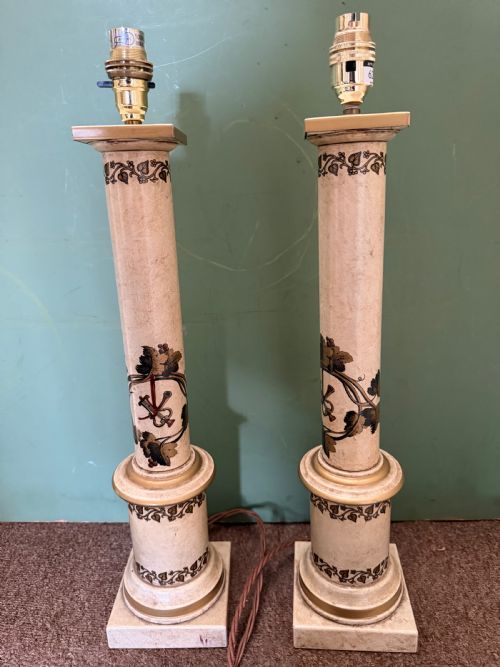
Gilt painted table lamps combine metallic leaf with surface painting on varied forms, including converted porcelain vases and traditional column shapes. These items emerge from the nineteenth century into the early decades of the twentieth century, carrying the decorative weight of Victorian and continental aesthetics.
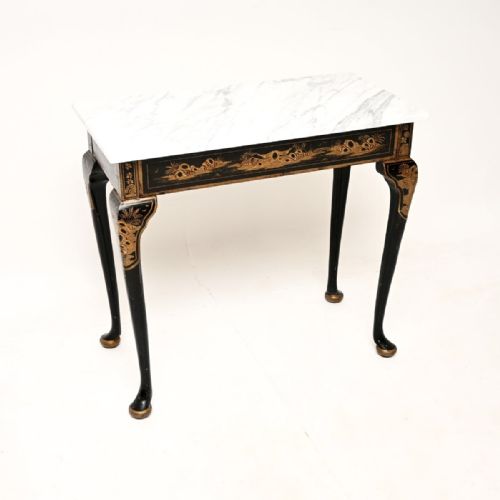
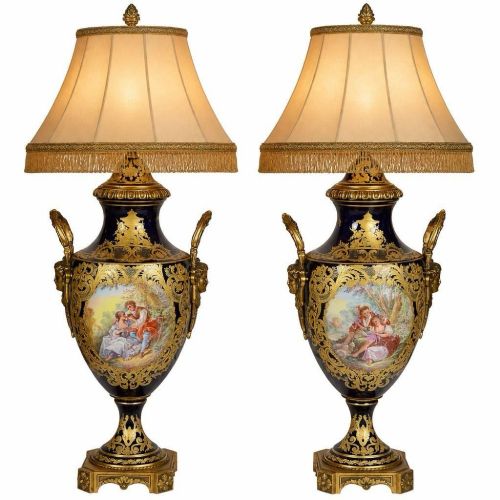
The most frequent examples on this page are ceramic vessels adapted for lighting, alongside toleware columns and lacquered wooden bodies. They draw upon styles ranging from French rococo revival to Chinoiserie and Japanese Imari, reflecting international taste in domestic illumination.
How they were made
Makers utilised porcelain, brass, and tole-peinte as foundations for oil and electric illumination, applying hand-mixed pigments directly onto the prepared surface. Gilt, ormolu mounts, and lacquer were then layered by hand to create durable decorative schemes.
Ceramic bodies such as Satsuma and Sevres-style porcelain were fitted with metal collars, while wooden structures received painted finishes sealed with protective varnish.
Listings feature items spanning the nineteenth century up to 1930, utilising porcelain, brass, lacquer, and toleware.
What varies in quality
The standard of these lamps rests upon the precision of the hand-painting and the integrity of the gilding applied to the surface. Finer examples display crisp brushwork and well-preserved metallic leaf that has retained its original brilliance.
Quality also depends on the weight and casting of the metal mounts, such as ormolu or brass, and whether the conversion from an oil lamp or vase preserves the balance of the original object.
The Gilt Painted Table Lamps Glossary
- Gilt
- Covered thinly with gold leaf or gold paint. This technique gives metallic highlights to surfaces.
- Tole-peinte
- Painted sheet metal, typically tin or steel. It was frequently used for decorative columns and desk lamps.
- Ormolu
- Gilded bronze used for mounts and decorative fittings. It provides heavy metallic contrast to porcelain and painted bodies.
- Chinoiserie
- European imitation of Chinese artistic traditions. It appears on lacquered and painted lamp bodies.
- Imari
- Japanese export porcelain decorated in underglaze blue and iron red with gilt additions. These vases are often adapted into lamps.
Gilt Painted Table Lamps: Frequently Asked Questions
Were these lamps originally electric?
Most pieces from the nineteenth and early twentieth centuries began life as oil lamps, vases, or candlesticks before later conversion to electricity. This adaptation process is standard for antique lighting.
Retaining the original ceramic or metal body while updating the internal fittings allows these items to function safely in modern rooms.
How can I tell the period of a lamp?
Dating relies on the materials, the style of the hand-painting, and the construction methods of the base or mounts. Victorian and Edwardian examples often show specific regional motifs and manufacturing techniques.
Comparing the decorative style, such as French toleware or Chinoiserie lacquer, helps narrow down the era of production.
How do I style these lamps in a room?
These pieces function well on side tables, desks, and cabinets, where their metallic surfaces reflect ambient light. They anchor a traditional interior or provide contrast within a modern setting.
Pair them with simple fabric shades to let the painted and gilt body remain the primary focus of the arrangement.