




Chinese Export Style Lamp
These chinese export style lamp pieces bring porcelain and ormolu into the room with genuine period character.
Chinese Export Style Lamp
A chinese export style lamp takes a porcelain vase or a jardiniere stand and turns it into a lighting fixture or table. The pieces on this page span the eighteenth and nineteenth centuries, alongside Victorian and Edwardian examples. They cross chinoiserie and Chinese export styles with French interpretations.
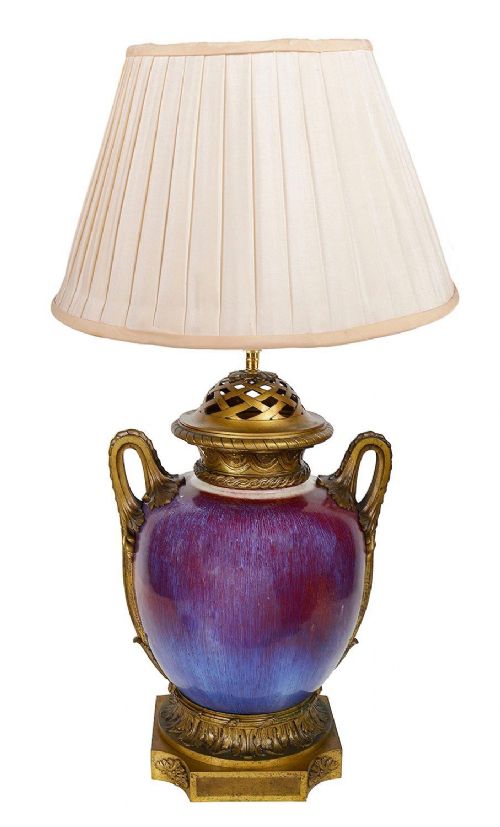
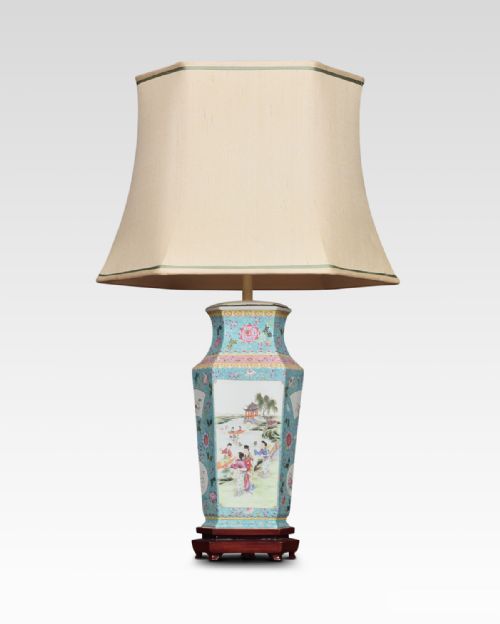
Most examples take the form of table lamps built from porcelain vases, supplemented by occasional jardiniere stands. The ceramic bodies range from blue and white and celadon to famille rose and sang de bouef. Makers mounted these vessels in brass, ormolu, and gilt bronze, often pairing them with fabric or silk shades.
How they were made
Craftsmen utilised porcelain as the primary body for these vessels, applying hand-painted glazes in blue and white, famille verte, and famille rose palettes. Potters shaped these vases before mounting them into metalwork settings.
Metalworkers added brass, ormolu, and gilt bronze mounts to secure and elevate the porcelain bodies. Wood and marble also appear in the construction of the stands and bases, while silk and fabric complete the lamps.
Even a sturdy marble jardiniere stand can end up moonlighting as a lamp table.
What varies in quality
Quality rests in the precision of the hand-painted porcelain decoration and the crispness of the gilt bronze or ormolu mounts. Finer pieces display careful brushwork on the ceramic surface and secure, well-fitted metal mounts.
The integration of the electrical wiring and the condition of the original ceramic body determine the overall integrity of the piece. Superior examples maintain the original glaze colour and stability without excessive wear.
The Chinese Export Style Lamp Glossary
- Famille Rose
- A palette of opaque enamels dominated by pink, introduced in the Qing dynasty. It allows for subtle gradations of colour on porcelain vessels.
- Ormolu
- Gilt bronze mounted onto decorative objects and furniture. It provides a bright golden finish that frames the ceramic body.
- Chinoiserie
- European artistic styles that reflect Chinese decorative motifs. It appears across furniture and lighting from the eighteenth and nineteenth centuries.
- Celadon
- A pale green glaze developed in China, prized for its resemblance to jade. It coats several of the vase lamps found here.
Chinese Export Style Lamp: Frequently Asked Questions
What periods do these lamps come from?
The pieces span the eighteenth and nineteenth centuries, including Victorian and Edwardian periods.
Specific dates such as eighteen-eighty also appear among the selections.
What materials make up these lamps?
Porcelain forms the main body of the lamps, decorated with hand-painted glazes.
Mounts utilise brass, ormolu, and gilt bronze, while stands incorporate wood and marble.
Are these lamps rewired?
Several listings note that the pieces have been rewired for modern use.
This updates the electrical components while retaining the antique porcelain body.
What styles define these pieces?
Chinese export and chinoiserie styles dominate the selection of lamps.
French chinoiserie and nineteenth-century French interpretations also occur in the listings.