





Chinese Export Seating
Chinese export seating encompasses heavily carved hardwood chairs, benches, and porcelain garden seats made for Western markets.
Chinese Export Seating
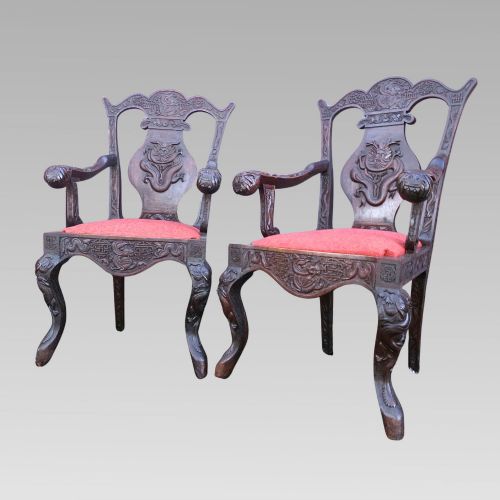
Buyers most frequently encounter nineteenth century hardwood armchairs and benches, alongside distinctive porcelain garden seats featuring turquoise glazes or Rose Medallion decoration. Rosewood, teak, and elm provide the primary timber foundations for these substantial seats and suites.
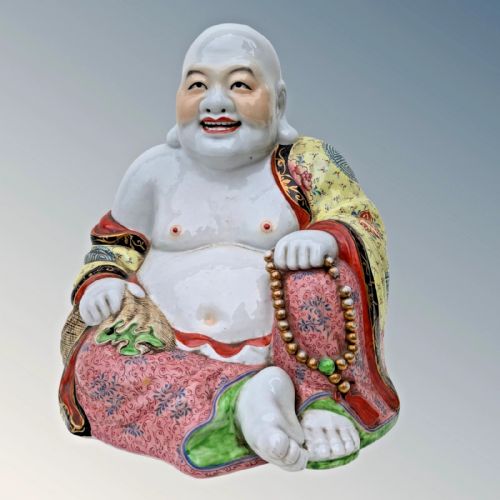
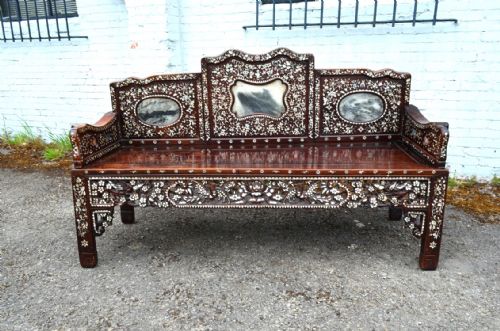
Forms range from simple hall chairs to eccentric corner armchairs and large inlaid benches decorated with mother of pearl. Certain items incorporate figurative elements, such as porcelain laughing Buddha figures and seated apes serving as garden seats.
Evaluating Quality
Depth and crispness of the carved ornamentation separate superior timber chairs from simpler workshop output. Dense hardwoods like rosewood and teak demonstrate greater durability and allow for sharper sculptural detail in dragon motifs.
Vibrancy of glaze and precision of enamel work dictate the merit of porcelain garden seats and figurative pieces. Integration of mother of pearl inlay and overall structural proportion define the refinement of larger benches and suites.
Listings feature items spanning the eighteenth, nineteenth, and early twentieth centuries, constructed from hardwoods, porcelain, and ironstone.
The Chinese Export Seating Glossary
- Rose Medallion
- A nineteenth century Chinese export porcelain style distinguished by panels of enamelled figures and floral motifs. This palette frequently adorns garden seats.
- Clobbered
- Refers to older porcelain or ironstone decorated with an overglaze in Europe, typically adding rich colours to earlier blue and white designs.
- Qing Dynasty
- The final imperial dynasty of China, spanning from the seventeenth to the early twentieth century. Many carved hardwood chairs date to the later decades of this era.
- Regency Chinoiserie
- A British design style from the early nineteenth century borrowing motifs from Chinese art and architecture. It influences several export seating forms.
Chinese Export Seating: Frequently Asked Questions
Where were Chinese export seats used?
These pieces served practical and decorative functions in grand British and European homes, often placed in hallways, reception rooms, and garden settings.
Garden seats in porcelain suited both indoor display and outdoor placement on patios or within conservatories.
How do I care for hardwood furniture?
Maintain timber chairs and benches by keeping them away from direct heat sources and sudden humidity changes to prevent wood splitting.
Apply a microcrystalline wax periodically to nourish the surface of rosewood, teak, and mahogany without building up heavy residues.
Are porcelain garden seats heavy?
Ceramic and ironstone garden seats possess considerable weight due to their dense construction and thick potting walls.
This heft provides stability when placed on lawns, stone terraces, or hard floors.
How are different periods identified?
Dating relies on timber selection, carving styles, and ceramic glaze characteristics that shift between the eighteenth and early twentieth centuries.
Early pieces often display restrained lines, while late nineteenth and twentieth century items frequently feature deep relief dragon carvings and mother of pearl inlay.