
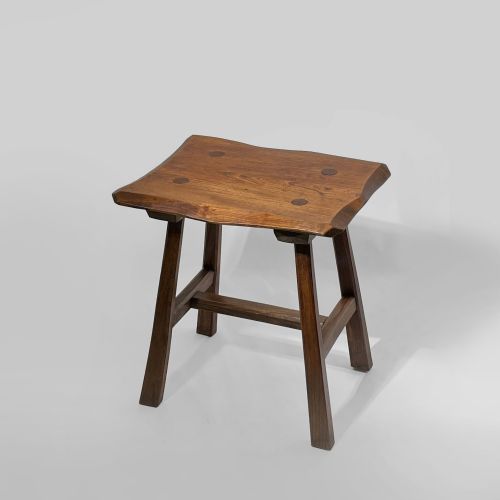
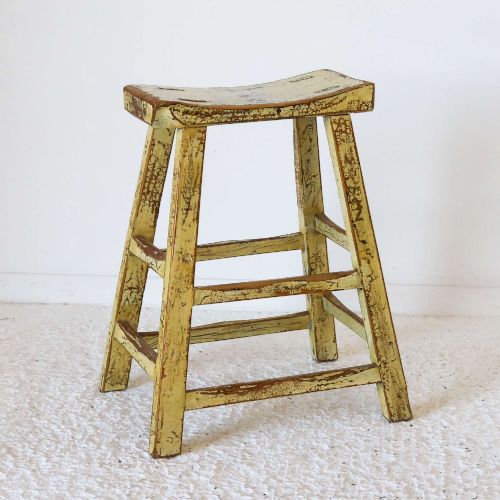
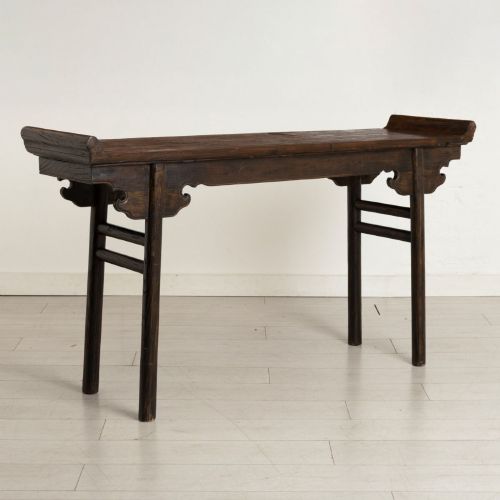
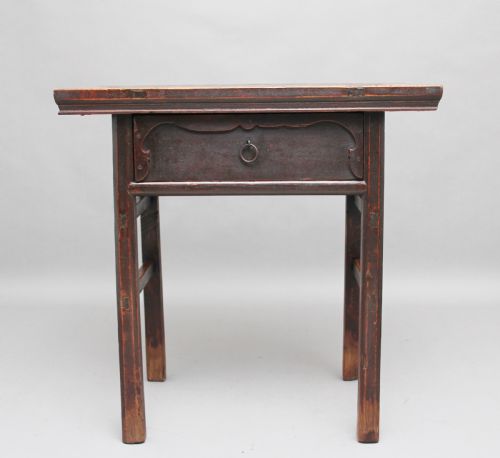


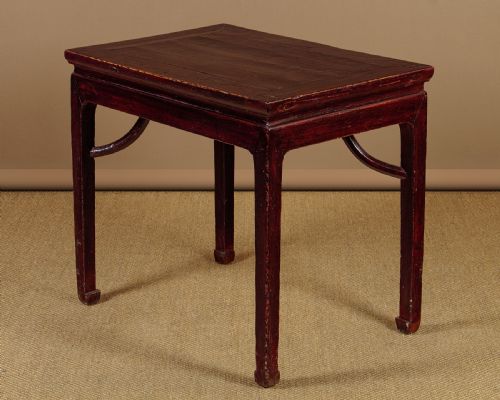


Chinese Elm Side Table
A Chinese elm side table brings rustic utility and provincial character into a modern room through honest timber construction.
Chinese Elm Side Table
A Chinese elm side table is a utilitarian form rooted in provincial traditions, often functioning as a low table, console, or altar table. You will frequently encounter examples dating from the nineteenth century alongside pieces from the early twentieth century.
The domestic inventory spans several formats, including small stools, writing desks, and demi-lune tables alongside standard side tables. These objects reflect the straightforward furniture-making traditions of rural workshops and traditional households.
Makers produced these tables to serve daily domestic life rather than court display, utilising indigenous timber. The resulting pieces combine practical proportions with enduring structural simplicity.
What varies in quality
The integrity of the original timber surface and finish separates standard examples from superior ones. Tables retaining their early or original lacquer and untouched patination hold greater visual depth than stripped or heavily refinished surfaces.
Proportion and structural balance dictate the refinement of each piece, from simple rustic stools to grand altar tables. Well-balanced joinery and restrained carving elevate provincial utility into balanced vernacular art.
The listings span the eighteenth, nineteenth, and early twentieth centuries, incorporating elm, iron, and lacquer.
The Chinese Elm Side Table Glossary
- Elm
- A resilient hardwood native to China, utilised extensively for provincial furniture due to its strong, interlocking grain. It accepts lacquers and transparent finishes particularly well.
- Altar table
- A traditional rectangular form characterised by elevated ends or upturned flanges, originally used for ancestral rites. These tables now serve as striking console surfaces.
- Lacquer
- A natural resin applied in multiple coats to wooden surfaces to provide a durable, glossy protective layer. It frequently appears in traditional red or dark tones on antique provincial pieces.
- Demi-lune
- A half-moon shape used for console tables designed to sit flush against a wall. This format optimises floor space in narrow hallways and living areas.
- Provincial
- A descriptive category indicating manufacture in regional workshops rather than imperial urban centres. These pieces emphasise practical utility over elaborate court decoration.
Chinese Elm Side Table: Frequently Asked Questions
How do I use a Chinese elm side table at home?
These tables adapt easily to modern interiors as lamp stands, hallway consoles, or bedside surfaces. Their modest proportions and warm timber tones complement both contemporary and traditional rooms.
Place smaller stool-style versions beside seating or utilise longer altar tables in narrow entryways to display objects. The durable elm surface accommodates daily use without demanding delicate treatment.
What is the difference between an altar table and a side table?
Altar tables typically feature greater length and distinct upturned flanges or recessed legs derived from ritual furniture traditions. Standard side tables offer simpler square or rectangular top formats suited for general domestic tasks.
Both forms share the same sturdy elm construction and provincial aesthetic, but altar tables carry a stronger architectural presence.
How can I tell the age of these tables?
Dating relies on assessing the wear patterns, joinery construction, and surface patination of the elm timber. Nineteenth-century examples often display deeper grain texture and older lacquer remnants compared to later twentieth-century pieces.
Hardware elements such as handmade iron or brass fixings also provide clues to the period of manufacture.
Are these tables made entirely of solid elm?
Most examples feature solid elm throughout the top, frame, and legs, reflecting traditional rural construction methods. Some listings note related regional hardwoods or specific varieties like locust wood.
Checking the undersides and interior drawer linings reveals the consistent use of solid timber across the form.